lolI try not to think about witches much, except to stay away from them lol
But, you did remind me of this thing I seen about how to tell the difference between a watch and a warning...
View attachment 275110

lolI try not to think about witches much, except to stay away from them lol
But, you did remind me of this thing I seen about how to tell the difference between a watch and a warning...
View attachment 275110

yippie I oh Ky yeah


Thanks. oh wow, you know it's actually Ojibway and its actually 2 words.Nice weather you got there
I admit, I actually looked up how to pronounce Penetanguishene. Neat!
Thanks. oh wow, you know it's actually Ojibway and its actually 2 words.
I would say thanks but I didn't have anything to do with naming the town lol. no it doesn't I can't find the email but it actually means a place people come to like a gate way at sunset. Well I forget the exact meaning but it's simular to that. I found a native translator online who told me what it meant, I used it in an assignment I used for Tourism. I can't find the email.I like the way it's pronounced. Yes, I said it out loud! When I looked it up, I saw that it means white rolling sands, but didn't know that it's two words. Fascinating.
I would say thanks but I didn't have anything to do with naming the town lol. no it doesn't I can't find the email but it actually means a place people come to like a gate way at sunset. Well I forget the exact meaning but it's simular to that. I found a native translator online who told me what it meant, I used it in an assignment I used for Tourism. I can't find the email.
IT took my dad a while to get the pronounciation correct as well.Interesting! There are towns/places here that visitors will (try) to pronounce and it can be comical how they pronounce it, like Pawhuska and Pushmataha. So, when I saw Penetanguishene, I had to give it a try...and put myself in the place of those struggling with a word/name lol.
I found a copy of the email I sent to one of the teams I worked with.
To:You
Cc:Translation
Tue 10/8/2024 10:39 AM
Good day, Michael
I will do my best to answer your question regarding the word translation of “Penetanguishene”.
My objective view of this word as a fluent Ojibwe speaker and translator says, that this word is two words put together. “Penetang” would be the first word which describes, ” a place you come too” and the second word attached is “guishene” which root words are of that of “dagoshin” which translates, “to arrive” or more specifically the goshin suffix says it faces the sunset direction in the West as one sees night fall. So, the combined compound translation to me would mean, “at this place you come to arrive”. So, essentially, it is a word that describes a statement to all, “that this is the place where one comes to arrive like a port or point of entry, ideally at the time of sunset”.
This is the best I can tell you as our language has layers of hidden descriptions within it to describe places in a verb-based way. The online version translation likely is correct that it cites the location English description from the writer’s observation of a “place of the white rolling sands” in the view of cited author to the location of the word Penetanguishene.
I must point out that there is no word, “white(Waabishkaa)” or “sand(ginoodaawangaa)” or the word for “rolling” in this whole word of Penetanguishene. The only part I feel they got correct partially is the Penetang translation of “a place”, which is still not , “at this place you come too”.
I hope this assist’s you in the transition as the Abenaki, Algonquin and Ojibwe languages are almost identical in language as dialects never started happened in till much later in the 19th century so essentially this translations I am giving you is likely the correct one with the indigenous world view.
Thank you,
I got the translation from
https://www.nationstranslation.com/indigenous-languages

Nice weather you got there

Thanks, it pays to do research, because anyone can post anything on the internet. The internet is a hoarders paradise of useless crap lolVery interesting information. And it's a good example of how there's more to things than what we mostly find online...because I think there were 10+ sites that said "white rolling sands" lol
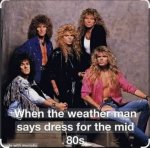
sounds like a song lol. It's raining men.Actually, it was 90 yesterday. Too hot for the clothes and hair spray these fellas are wearing.
View attachment 275324
It's raining men.