

Calvinism is Gospel !
- Thread starter brightfame52
- Start date
-
Christian Chat is a moderated online Christian community allowing Christians around the world to fellowship with each other in real time chat via webcam, voice, and text, with the Christian Chat app. You can also start or participate in a Bible-based discussion here in the Christian Chat Forums, where members can also share with each other their own videos, pictures, or favorite Christian music.
If you are a Christian and need encouragement and fellowship, we're here for you! If you are not a Christian but interested in knowing more about Jesus our Lord, you're also welcome! Want to know what the Bible says, and how you can apply it to your life? Join us!
To make new Christian friends now around the world, click here to join Christian Chat.
You are using an out of date browser. It may not display this or other websites correctly.
You should upgrade or use an alternative browser.
You should upgrade or use an alternative browser.
- Status
- Not open for further replies.

While you contradict what Jesus said... Typical.I have learned from Jesus whom I follow that if they do not receive his words that we should let them be.

What Say You? ~ When Scripture says there are none good, does it mean some are good? When Scripture says we all fall short, does it mean there are some who meet God's standards? When Scripture says, "The natural man does not accept the things that come from the Spirit of God, for they are foolishness to him, and he cannot understand them, because they are spiritually discerned..." Does it mean the natural man can understand the spiritual things of God? Does it mean he really can understand the gospel message even though it is heard as foolishness to him as Scriptures say? Is the natural man gifted with wisdom even though he has no fear of God, which is the beginning of wisdom? Will the lover of darkness come into the light even though Scripture says he will not, because he suppresses the truth of God in unrighteousness and is actually defined as darkness itself, hates the light, and is a slave to sin, blinded to the truth and captive to the will of the devil, which many define as being free? Is the heart of the natural man, the stony ground which needs to be replaced, fit for receiving and growing the Seed of God's Word into faith? Will that incurably wicked heart choose of its own accord to believe? Will that bad tree bring forth the good fruit of faith even though Jesus said it was not possible?

Just look at the Jehovah Witnesses. Look at Mormons. Look at Pentecostals. Etc...
Each found false teachings that fit the desires of their religious flesh like a glove.
The same glove they will punch back with.
They refuse to deny self and take up their cross as sound doctrine gets in their face about.
These sects certainly mangle scripture and then they think this mangling is correct, it really is something!
yes I do feel like this horse is dead, lol, and I did provide scripture and I have done what was needed on this thread, I have learned from Jesus whom I follow that if they do not receive his words that we should let them be. This is probably one of the last post on this thread, I have done what I could and I believe it is time for me to move on. Some will be pleased....
Blessings!
You know you are dealing with a captured mind (to put it nicely, lol) when they always revert back to their very limited proof texts and ready formula.... rarely deal with the evidence to the contrary.
Sometimes a break is helpful.... but generally speaking it is a waste of time.
Are those who believe/trust in the Lord Jesus Christ. Acts 16:31.those He saves
Spontaneous salvation is nowhere in the scripture.
If it were.......many more people would be saved. He is not willing that any should perish.

Did you produce this music? Real man singing? Or is this ai music?Stone Heart Funk

I composed the song/lyrics and gave the style prompt to the ai music generator which is like trying to herd cats...Did you produce this music? Real man singing? Or is this ai music?
I started writing praise and worship earlier this year after putting old poems to music.
I think there are about 90 songs on my channel now, a mix of genres and music styles but mostly praise.
Thank you for asking! This is the song that is playing on my phone right now:
It is one of my faves but I like them all!

Spontaneous salvation is nowhere in the scripture.
Yes, it is found in Scripture, and yes, it is spontaneous. It happens only by/when God chooses to take an elect from under the law of sin and death and place them under the law of the Spirit of life in Christ Jesus. All God's work, none of it man's, and happens at the speed of His will.
[Rom 8:2 KJV] 2 For the law of the Spirit of life in Christ Jesus hath made me free from the law of sin and death.
Those whom the Lord is not willing any of them should perish are only His elect identified as "beloved" in 2 Pe 2:8 and are the "us-ward" of 3:9
[2Pe 3:8 KJV] 8 But, beloved, be not ignorant of this one thing, that one day [is] with the Lord as a thousand years, and a thousand years as one day.
[2Pe 3:9 KJV] 9 The Lord is not slack concerning his promise, as some men count slackness; but is longsuffering to us-ward, not willing that any should perish, but that all should come to repentance.
[2Th 2:13 KJV] 13 But we are bound to give thanks alway to God for you, brethren beloved of the Lord, because God hath from the beginning chosen you to salvation through sanctification of the Spirit and belief of the truth:

Are you saying the gospel is not 1 Corinthians 15:1-4?one Gospel, that is the words of Jesus the son of God
Because they were Chosen in Christ before the foundation of the world!The sheep hear because they know his voice and respond in kind.
Unless you are born again first you dead to God!If any man willeth to do his will, he shall know of the teaching, whether it is of God, or whether I speak from myself. (John 7:17, ASV)
Ye will not come to me, that ye may have life. (John 5:40, ASV)
Do not Forget we have now access to the Holy Spirit God sends us to help us and Guide us that is now the case but was not before.
Do not forget what Scripture says, eh?Do not Forget we have now access to the Holy Spirit God sends us to help us and Guide us that is now the case but was not before.
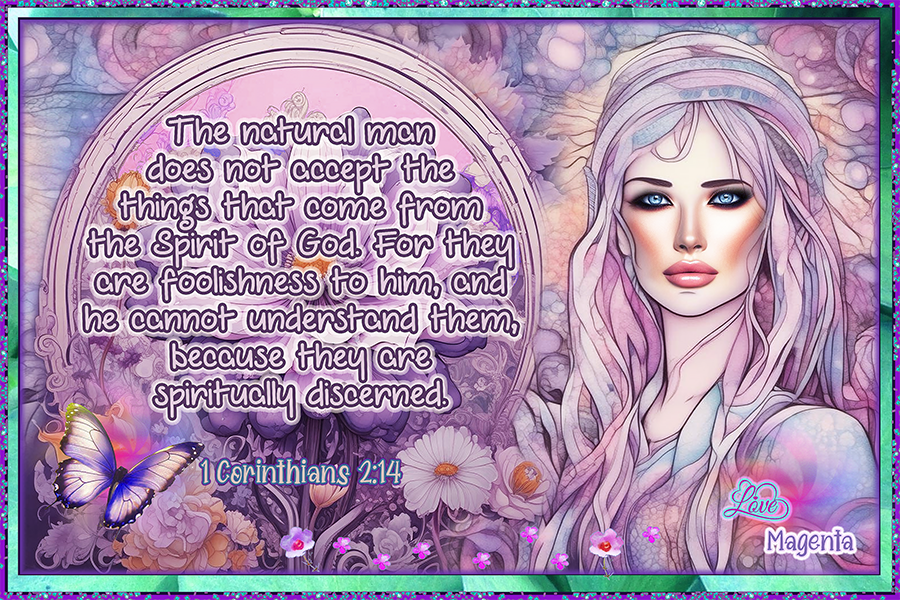
The natural man does not accept the things that come from the Spirit of God. For they are foolishness to him, and he cannot understand them, because they are spiritually discerned. 1 Corinthians ch 2 v 14

I can do nothing good without Christ.Are you going to answer the questions I asked? Here they are again:
Did God do something that allowed you to believe?
God is the source of Life. God is constantly doing good. Helping those that He loves. He loves all.
God did. He gave me life, He gave me choice, He gave me the Bible, He gave me witnesses, and many more good things that I am ignorant of.
Did I answered your question?
question 2 and 3...Or are you just like some here who claim they needed no help from God at all?
That people have evolved from whenever, who needs God to open our
eyes and open our ears and circumcise our hearts so we may love Him?
My first answer states that I can not do anything good without Christ.
Phi 4:13 I can do all things through Christ which strengtheneth me.
People have not evolved for better. We have become worse because of sin.
God does not force us to open our eyes.
He will let us choose, God provides the signs and words and love in multiple ways which results in us choosing to open our hearts, eyes, ears, etc.. to believe and follow.
We may have a little faith at first but if we continue to follow God, it will grow.
Mat 4:19 And he saith unto them, Follow me, and I will make you fishers of men.
I hope I answered these questions.
Question 4 and 5Were you able to believe before then?
When you were a slave to sin, blinded by the god of this age, refusing to come into the Light,
opposed to the spiritual things of God, hearing the gospel as foolishness, unable to receive or
comprehend ... you want us to believe you would have chosen to believe then?
When I choose to believe is when I did.
I'm sure I could have choosen to follow Jesus sooner but I was stupid. I rejected the love and call, I was too busy being selfish. But the choice to follow Jesus is a daily choice for me. I could walk away today or choose to follow today.
Being a slave to sin is no excuse to turn and be saved.
The salvation is always there for everyone. Choosing to die to self and walk in the Spirit is a free gift from Jesus. As a free gift Jesus does not offer it to some and not to others.
Rom 7:24-25
24 O wretched man that I am! who shall deliver me from the body of this death? 25 I thank God through Jesus Christ our Lord. So then with the mind I myself serve the law of God; but with the flesh the law of sin.
The ability to transition from a slave of sin to a servant of God is based on the decision of the individual. It is for everyone to decide who will be their master, and once we choose God, He leads us.
Yes. Free to choose, but freedom comes by the power of Christ.That captive to the will of the devil while you served the law of sin, you were free to choose?
When we believe on the Lord Jesus Christ as the sin-pardoning Savior, we are reconciled to God and delivered from sin. Acts 16:31
The Spirit of God alone can make and keep a person pure, raising the soul from the slavery of sin into the liberty of obedient children. Abiding in the word of Christ brings a knowledge of the truth that makes the captive "free indeed" John 8:31-36.
Freedom is not merely a legal standing but an experimental change of character that allows us to walk in newness of life Romans 6:4
Being made free from sin, we become servants of righteousness under the "Captain of our salvation" Romans 6:18
Divine help, God does not ask us to fight the battle against sin in our own strength; He has given Christ to be our helper in every time of need.
To sum it up...
Choosing to remain in bondage leads to death, while choosing Christ leads to holiness and eternal life.
Hope I answered all your questions.

its because you refuse to see, NOT good at all................ time is short, Repent for the Kingdom of Heaven is at hand the the doors are about to be Shut. Dont be like one of the virgins without oil!I have never seen even so much as one Scripture articulating the free will of the natural man.
One must be first liberated from slavery to sin by Christ, and that is salvation Jn 8:34,36Being a slave to sin is no excuse to turn and be saved.
34 Jesus answered them, Verily, verily, I say unto you, Whosoever committeth sin is the servant of sin.
36 If the Son therefore shall make you free, ye shall be free indeed. Make you free here the greek eleutheroō :
- to make free
- set at liberty: from the dominion of sin
It means also to deliver Rom 8:21
Because the creature itself also shall be delivered from the bondage of corruption into the glorious liberty of the children of God.
And that salvation. We cannot turn from slavery to sin, Christ must libertate us, and He must get all the Glory, you didn't help Him , we are passive He is active in liberating from the dominion of sin !
To answer the O.P., Calvinism's TULIP system is often presented as the gospel itself, but when compared carefully with the words of Jesus, many of its central claims conflict with what Christ taught. The gospel of Christ repeatedly calls all people to repent, believe, obey, endure, and choose life. TULIP replaces much of that with a system where the outcome is fixed beforehand for each individual.A Defense of Calvinism as the Gospel
T - Total Depravity
Calvinism teaches that man is so fallen that he cannot respond to God unless first regenerated.The Bible certainly teaches that man is sinful, but Jesus continually treated people as capable of responding to God's call.
Come unto me, all ye that labour and are heavy laden, and I will give you rest. (Matthew 11:28, ASV)
A command to come assumes the hearer can respond.
And ye will not come to me, that ye may have life. (John 5:40, ASV)
Jesus did not say they could not come. He said they would not come.
In the Old Testament God repeatedly calls people to choose:
I have set before thee life and death, the blessing and the curse: therefore choose life. (Deuteronomy 30:19, ASV)
A person who is incapable of responding cannot meaningfully be commanded to choose.
U - Unconditional Election
Calvinism teaches that before creation God chose certain individuals for salvation and passed over the rest regardless of anything they would do.Jesus taught that God's desire extends to all.
For God so loved the world, that he gave his only begotten Son, that whosoever believeth on him should not perish, but have eternal life. (John 3:16, ASV)
The invitation is to "whosoever."
Jesus also lamented over those who refused Him:
How often would I have gathered thy children together, even as a hen gathereth her chickens under her wings, and ye would not! (Matthew 23:37, ASV)
Christ desired one thing; they chose another.
If individuals were eternally decreed to reject Him, Christ's lament becomes difficult to explain.
L - Limited Atonement
Calvinism teaches that Christ died only for the elect.Jesus taught a much broader message;
For the bread of God is that which cometh down out of heaven, and giveth life unto the world. (John 6:33, ASV)
And I, if I be lifted up from the earth, will draw all men unto myself. (John 12:32, ASV)
John wrote:
And he is the propitiation for our sins; and not for ours only, but also for the whole world. (1 John 2:2, ASV)
The language repeatedly points outward to the world, not merely a hidden group chosen beforehand.
I - Irresistible Grace
Calvinism teaches that when God decides to save someone, that person cannot finally resist His saving grace.Yet Jesus frequently describes people resisting God.
Ye stiffnecked and uncircumcised in heart and ears, ye do always resist the Holy Spirit. (Acts 7:51, ASV)
Jesus said:
And ye will not come to me, that ye may have life. (John 5:40, ASV)
And in the parable of the wedding feast many invited guests refused the invitation. God calls. Man can resist. Otherwise the repeated warnings against refusing, rejecting, hardening the heart, and neglecting salvation become meaningless.
P - Perseverance of the Saints
Calvinism teaches that every truly saved person will inevitably persevere to the end.Jesus taught the necessity of continuing faithfully.
If ye abide in my word, then are ye truly my disciples. (John 8:31, ASV)
He that endureth to the end, the same shall be saved. (Matthew 24:13, ASV)
Notice the condition: "if" and "endure."
Jesus repeatedly warned believers about falling away.
In the parable of the sower, some receive the word with joy and later fall away.
And those on the rock are they who, when they have heard, receive the word with joy; and these have no root, who for a while believe, and in time of temptation fall away. (Luke 8:13, ASV)
A person who never truly believed cannot be described as one who "for a while believe."
The Deeper Problem
The deepest error of TULIP is that it shifts the focus away from the relationship Jesus preached.Jesus constantly calls people to:
Repent. (Matthew 4:17)
Believe the gospel. (Mark 1:15)
Follow me. (Matthew 4:19)
Keep my commandments. (John 14:15)
Abide in me. (John 15:4)
Endure unto the end. (Matthew 24:13)
The gospel of Christ is a genuine invitation to all people. God loves the world, calls the world, warns the world, and judges people according to their response to His Son.
Under TULIP, many of these invitations become difficult to take at face value. If people cannot respond, why call them? If Christ did not die for all, why offer salvation to all? If grace cannot be resisted, why warn against resisting? If salvation cannot be abandoned, why so many warnings about falling away?
The gospel preached by Jesus is simple: God calls, man must respond. God offers mercy, man must repent and believe. God gives grace, man must continue in faithfulness.
Enter ye in by the narrow gate: for wide is the gate, and broad is the way, that leadeth to destruction, and many are they that enter in thereby. For narrow is the gate, and straitened the way, that leadeth unto life, and few are they that find it. (Matthew 7:13-14, ASV)
Jesus spoke as though people truly can choose whether they will enter that gate or refuse it. That is fundamentally different from the deterministic framework of TULIP.
This was my last post on this thread.
- Status
- Not open for further replies.