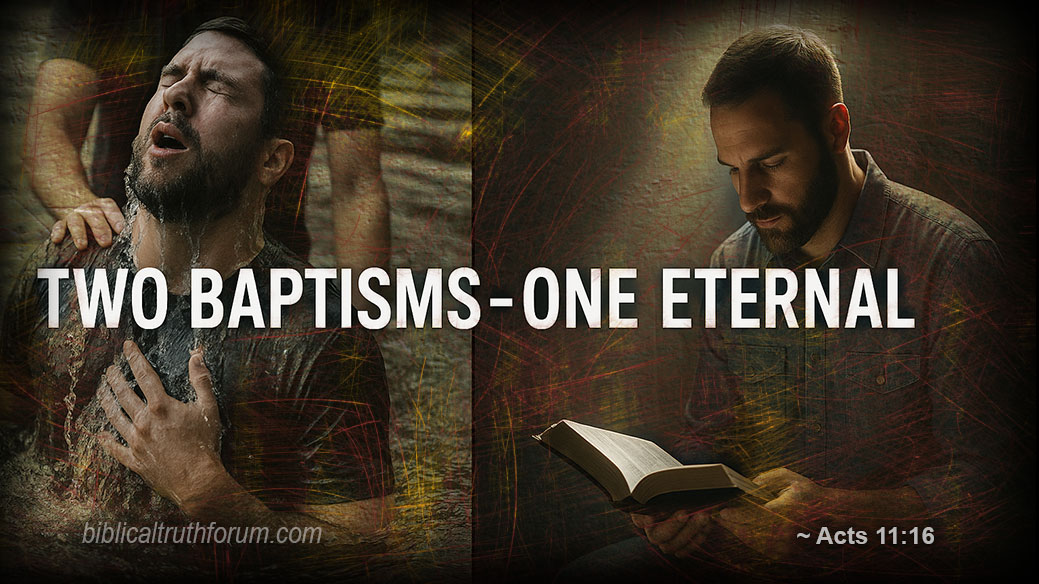
False teaching by separating Scripture from Scripture

  • Christian Chat is a moderated online Christian community allowing Christians around the world to fellowship with each other in real time chat via webcam, voice, and text, with the Christian Chat app. You can also start or participate in a Bible-based discussion here in the Christian Chat Forums, where members can also share with each other their own videos, pictures, or favorite Christian music.

    If you are a Christian and need encouragement and fellowship, we're here for you! If you are not a Christian but interested in knowing more about Jesus our Lord, you're also welcome! Want to know what the Bible says, and how you can apply it to your life? Join us!

    To make new Christian friends now around the world, click here to join Christian Chat.
Rom 8:3
For what the law could not do, in that it was weak through the flesh, God sending his own Son in the likeness of sinful flesh, and for sin, condemned sin in the flesh:

Jesus came in the flesh, because we sinned, and by His unjust death condemn our sins in His own flesh.
1 Peter 2:23
Who his own self bare our sins in his own body on the tree,

He bare our sins on His own body, not on His soul. That on His body all men see and know the wickedness and death of all sinful deeds.

He gave His body for us to sin against, and died for us to repent of our own sins, as those of the wicked hands that slew Him.

Jesus died not to justify sinners, but to bring sinner to repentance, by making all men's sins exceeding sinful. He rose again to justify us that repent, that we should not pay the price of our own sins and trespasses in the grave.
 
There's a difference between being made guilty by men, vs being made guilty by God. There's a difference between being judged guilty by men, which can be unjust and false, vs being judged guilty by God, which is already just and true.

By commandment of the Father, the Son allowed Himself to be judged and condemned by unjust men. He was not judged and condemend by the righteous Father.

Isaiah{50:5}
The Lord GOD hath opened mine ear, and I was not rebellious, neither turned away back. I gave my back to the smiters, and my cheeks to them that plucked off the hair: I hid not my face from shame and spitting.

Isa 53:7
He was oppressed, and he was afflicted, yet he opened not his mouth: he is brought as a lamb to the slaughter, and as a sheep before her shearers is dumb, so he openeth not his mouth.

None believed Jesus was the Son of God on the cross, because He neither defended Himself, nor accused His oppressors of being unjust, nor called upon the angels nor the Father to save Him, and smite His persecuted.

A righteous man might die unjustly accused, but no righteous man offers no defence before his accusers.

By commandment of the Father, the Son made Himself to be condemned as a sinner before the unjust, that by unlawfully slaying Him, all might become guilty of His innocent shed blood.

All that sin must be made guilty at the cross, that we might repent of our own wicked sins against Him, as being the wicked hands that slew Him.

Rom 7:13
Was then that which is good made death unto me? God forbid. But sin, that it might appear sin, working death in me by that which is good; that sin by the commandment might become exceeding sinful.

All that sin, must be made to be sinners indeed, even against God and His Son, else sin is not sinful enough to repent of.

If we count not ourselves guilty of Jesus' death on the cross by our own sin against Him, then we count not our own sins sinful indeed, and ourselves righteous with no need of repentance for Jesus' sake.

Mark 2;17
When Jesus heard it, he saith unto them, They that are whole have no need of the physician, but they that are sick: I came not to call the righteous, but sinners to repentance.


Journey_man said:
Believers are not guilty for the death of His Son.
I rejoice in the knowledge that I'm not going to be condemned for my past, present or future sins.


Matth 12:37
For by thy words thou shalt be justified, and by thy words thou shalt be condemned…for of the abundance of the heart his mouth speaketh.
I don't know what your motive is in denying what Gods Word says regarding the matter. But you make God a liar, when reject His Word and oppose Him. By doing this, you reveal that there is no truth in you.

1 John 1:8, 10: "If we say we have no sin, we deceive ourselves, and the truth is not in us... If we say we have not sinned, we make him a liar, and his word is not in us." (John writes directly to believers, using "we," to confirm that Christians still commit sin).

Romans 7:19, 24-25: "For I do not do the good I want, but the wicked thing I do not want is what I keep doing... Wretched man that I am! Who will deliver me from this body of death? Thanks be to God through Jesus Christ our Lord!" (in this passage, Paul is describing his actual, present experience as a mature believer battling remaining sin).

Galatians 5:17: "For the desires of the flesh are against the Spirit, and the desires of the Spirit are against the flesh, for these are opposed to each other, to keep you from doing the things you want to do." (Paul explains the internal civil war within every Christian).

James 3:2: "For we all stumble in many ways." (James includes himself and fellow believers in daily moral failure).


I don't expect you to agree with me, but denying Gods Word is a serious matter. Gods Word reveals that sin in a Christian's life does not undo their justification; rather, it activates the lifelong, Spirit-led process of putting sin to death (mortification) and growing in holiness.
 
If we say we have no guilt for the death of Jesus Christ, then we say the same as them, who say they had no guilt for the death of the prophets.

Scripture concludes that we all have sinned against Christ, and we all are guilty of His shed innocent blood. If we have been in His day, we also would have forsaken Him for a murderer Barabas.

Act 7:51
Ye stiffnecked and uncircumcised in heart and ears, ye do always resist the Holy Ghost: as your fathers did, so do ye.

No man takes Jesus' righteousness by unjustly condemning and crucifying Him.


Ps 12:3
The LORD shall cut off all flattering lips, and the tongue that speaketh proud things: Who have said, With our tongue will we prevail; our words are our own: who is lord over us?


Pro 2:14
Who rejoice to do evil, and delight in the frowardness of the wicked;

1Th 5:3
For when they shall say, Peace and safety; then sudden destruction cometh upon them, as travail upon a woman with child; and they shall not escape.

The saints rejoice in the knowledge of doing God's righteousness.

Psa 106:3
Blessed are they that keep judgment, and he that doeth righteousness at all times.


God does not punish the innocent with the guilty. Nor do the guilty have part with the innocent.

Only the sinner is guilty of sin and is punished for his own sin.

Deu 24:16
The fathers shall not be put to death for the children, neither shall the children be put to death for the fathers: every man shall be put to death for his own sin.

The righteous suffering for sins of the wicked, is not guilty of their wickedness. The wicked that slay the innocent have wicked hands.

Act 2:23
Him, being delivered by the determinate counsel and foreknowledge of God, ye have taken, and by wicked hands have crucified and slain:


The disobedient are not obedient nor holy to God.


2Co 5:17
Therefore if any man be in Christ, he is a new creature: old things are passed away; behold, all things are become new. And all things are of God, who hath reconciled us to himself by Jesus Christ, and hath given to us the ministry of reconciliation;

1 Peter 1:21
Who by him do believe in God, that raised him up from the dead, and gave him glory; that your faith and hope might be in God. Seeing ye have purified your souls in obeying the truth through the Spirit unto unfeigned love of the brethren, see that ye love one another with a pure heart fervently:


Rom 10:16
But they have not all obeyed the gospel. For Esaias saith, Lord, who hath believed our report…For what if some did not believe? shall their unbelief make the faith of God without effect? God forbid: yea, let God be true, but every man a liar;


This transfer of guilt to the righteous, and innocense to the guilty by killing the righteous, only works in the spiritual darkness of a false Christ, making the exchange completely unjust and delusional.

Mat 6:23
But if thine eye be evil, thy whole body shall be full of darkness. If therefore the light that is in thee be darkness, how great is that darkness!

Rev 2:24
But unto you I say, and unto the rest in Thyatira, as many as have not this doctrine, and which have not known the depths of Satan, that they speak;
It sounds like you're doing what Adolf Hitler did, his method of deception was to repeat the same lies over and over until the people grow weary and just accept them. The only difference here is, you are lying to someone who has the truth in them.

For your information, it is impossible to deceive an elect saint of God. Matthew 24:24 For false christs and false prophets will rise and show great signs and wonders to deceive, if possible, even the elect.

As you can see, not even the powers of darkness can deceive Gods elect. They perform great wonders, which easily deceive the world but not Gods elect. So there is no chance of persuading me to accept your false doctrines.
 
I have never said a person receives the Holy Ghost in water baptism. Why would I? Scripture consistently distinguishes between water baptism and the receiving of the Holy Ghost.

What I have said is what the biblical record reveals: believers are commanded to repent and be baptized in the name of Jesus for the remission of sins (Acts 2:38; Acts 22:16), and God promises that those who believe and obey His gospel will receive the gift of the Holy Ghost. The sequence varies, but in every case, both are presented as essential elements of the NT rebirth, not as competing alternatives or as the same event.

So my position has always been that Scripture presents repentance, water baptism in the name of Jesus for remission of sin, and receiving the Holy Ghost as distinct yet inseparable parts of God's New Covenant plan of salvation.
 
  • Like
Reactions: Journey_man
I don't know what your motive is in denying what Gods Word says regarding the matter. But you make God a liar, when reject His Word and oppose Him. By doing this, you reveal that there is no truth in you.

1 John 1:8, 10: "If we say we have no sin, we deceive ourselves, and the truth is not in us... If we say we have not sinned, we make him a liar, and his word is not in us." (John writes directly to believers, using "we," to confirm that Christians still commit sin).


Romans 7:19, 24-25: "For I do not do the good I want, but the wicked thing I do not want is what I keep doing... Wretched man that I am! Who will deliver me from this body of death? Thanks be to God through Jesus Christ our Lord!" (in this passage, Paul is describing his actual, present experience as a mature believer battling remaining sin).

Galatians 5:17: "For the desires of the flesh are against the Spirit, and the desires of the Spirit are against the flesh, for these are opposed to each other, to keep you from doing the things you want to do." (Paul explains the internal civil war within every Christian).


James 3:2: "For we all stumble in many ways." (James includes himself and fellow believers in daily moral failure).

I don't expect you to agree with me, but denying Gods Word is a serious matter. Gods Word reveals that sin in a Christian's life does not undo their justification; rather, it activates the lifelong, Spirit-led process of putting sin to death (mortification) and growing in holiness.
These verses are all true, but, as some would claim, they do not teach that Christians must sin or cannot stop sinning; they teach that sin remains present in the believer, not sovereign over the believer.
1 John 1:8–10 addresses denial, not inevitability — John condemns the claim “we have no sin,” but in the same letter he says, “whoever is born of God does not keep on sinning” (1 John 3:9), proving he is talking about ongoing rebellion, not unavoidable failure.
Romans 7 describes Paul under the law, not Paul as a Spirit‑filled apostle — his actual present experience is Romans 8: “the righteous requirement of the law is fulfilled in us who walk not according to the flesh but according to the Spirit.”
Galatians 5:17 describes conflict, not defeat — the flesh opposes the Spirit “to keep you from doing the things you want,” yet Paul immediately says, “walk by the Spirit, and you will not fulfill the lust of the flesh” (5:16). James 3:2 (“we all stumble”) refers to teachers misusing the tongue, not a doctrinal claim that Christians sin daily.
Scripture’s synthesis is simple: believers can sin, believers do sin, but believers are not enslaved to sin (Rom 6:14), and the Spirit empowers real victory (Rom 8:13).
Sin in a Christian does not undo justification — but neither does Scripture teach that sin is inevitable or normal; it teaches warfare, mortification, and Spirit‑enabled obedience.
 
  • Like
Reactions: GWH
I have never said a person receives the Holy Ghost in water baptism. Why would I? Scripture consistently distinguishes between water baptism and the receiving of the Holy Ghost.

What I have said is what the biblical record reveals: believers are commanded to repent and be baptized in the name of Jesus for the remission of sins (Acts 2:38; Acts 22:16), and God promises that those who believe and obey His gospel will receive the gift of the Holy Ghost. The sequence varies, but in every case, both are presented as essential elements of the NT rebirth, not as competing alternatives or as the same event.

So my position has always been that Scripture presents repentance, water baptism in the name of Jesus for remission of sin, and receiving the Holy Ghost as distinct yet inseparable parts of God's New Covenant plan of salvation.

You hold that position because you ignore Paul's teaching that there is only ONE baptism by the Spirit into the body of Christ
(Eph. 4:4-6, 1Cor. 12:13), which occurs when a sinner repents and satisfies God's condition of saving faith in the atonement of Jesus as Messiah and Lord (Rom. 3:20-5:5, 8:9).

Separating scripture from scripture is failure to harmonize Scripture, which causes false teaching.
I encourage you to open your heart and be a lifelong truthseeker/harmonizer (Matt. 4:4, 2Thes. 2:10).
Here is the way I harmonize Scripture regarding this subject:

Confusion may arise from the fact that in Eph. 4:5 Paul says there is only one baptism, but elsewhere the NT seems to refer to two types of baptism: one by water and another by the HS. In His “Great Commission” Jesus tied saving faith closely to the work of water baptism when He said “Make disciples of all nations, baptizing them” (Matt. 28:19). Yet, in 1 Cor. 12:13 Paul wrote that “We were all baptized by one Spirit into one body.” This suggests that spirit baptism occurs at the moment of conversion, when the HS unites the new saint (saved sinner/soul) with Christ. The indwelling of the HS may also be called the initial filling by the HS, because at the point of confession and conversion a person is cooperating fully with God (cf. Rom. 6:3-7, Gal. 2:20). The evidence that a person has been baptized by God’s HS or included in Christ’s spiritual body is love in its myriad of forms (John 13:35, Gal. 5:22-23).

Any confusion is resolved by understanding that the two types of baptism are united if baptism with water is viewed as a symbolic work/way of portraying baptism by the HS. The details for this rite are vague, but the mode of immersion best portrays a believer’s spiritual union with Christ in His death, burial and resurrection to eternal life (Col. 2:12, Rom. 6:4). As a practical matter, a new believer normally would be baptized by the local congregation of the catholic/worldwide church in which he/she will want to participate as an acknowledged member. Water baptism symbolizes spiritual baptism and thus, like physical circumcision, is optional, although apt.

Instead of commanding water baptism for salvation, Paul said in one place (Rom. 10:9-10) that a convert should confess “with your mouth” in order to be saved, even though elsewhere (Eph. 2:8-9) he taught that one is saved by faith. Both outward confession and water baptism may be seen as works manifesting love for God that every new Believer will want to (but we cannot say “must”) perform as soon as possible following his/her decision to have saving faith (cf. Matt. 3:13-15, Acts 2:38). Although Paul did not command baptism, he administered it (in Acts 16:33, 18:8, 19:5 & 1Cor. 1:114-16) even though he said Christ did not send him to baptize but to preach the gospel (1Cor. 1:17). IOW, Paul’s focus was on preaching (spirit baptism) and he probably left the water baptizing to his assistants.
 
  • Like
Reactions: rewriter
These verses are all true, but, as some would claim, they do not teach that Christians must sin or cannot stop sinning; they teach that sin remains present in the believer, not sovereign over the believer.
1 John 1:8–10 addresses denial, not inevitability — John condemns the claim “we have no sin,” but in the same letter he says, “whoever is born of God does not keep on sinning” (1 John 3:9), proving he is talking about ongoing rebellion, not unavoidable failure.
Romans 7 describes Paul under the law, not Paul as a Spirit‑filled apostle — his actual present experience is Romans 8: “the righteous requirement of the law is fulfilled in us who walk not according to the flesh but according to the Spirit.”
Galatians 5:17 describes conflict, not defeat — the flesh opposes the Spirit “to keep you from doing the things you want,” yet Paul immediately says, “walk by the Spirit, and you will not fulfill the lust of the flesh” (5:16). James 3:2 (“we all stumble”) refers to teachers misusing the tongue, not a doctrinal claim that Christians sin daily.
Scripture’s synthesis is simple: believers can sin, believers do sin, but believers are not enslaved to sin (Rom 6:14), and the Spirit empowers real victory (Rom 8:13).
Sin in a Christian does not undo justification — but neither does Scripture teach that sin is inevitable or normal; it teaches warfare, mortification, and Spirit‑enabled obedience.
I often see Romans 7 as referring to Paul, might I inquire as to when you think that Paul, born well after the law was given to humanity, was not under the authority of the law prior to his conversion?

Now I know that many. perhaps most, people are unaware of the ancient literary practice of invoking a historic figure and putting words in their mouths to make a point, but the only recorded human to ever live without the law in existence is Adam. That would imply that the speaker in Romans 7 is a hypothetical Adam created before the law, coming under t he law and then through faith discovering Jesus.
 
I often see Romans 7 as referring to Paul, might I inquire as to when you think that Paul, born well after the law was given to humanity, was not under the authority of the law prior to his conversion?

Now I know that many. perhaps most, people are unaware of the ancient literary practice of invoking a historic figure and putting words in their mouths to make a point, but the only recorded human to ever live without the law in existence is Adam. That would imply that the speaker in Romans 7 is a hypothetical Adam created before the law, coming under t he law and then through faith discovering Jesus.
Paul explicitly says he was “alive apart from the law once” (Rom 7:9)
Adam was never “alive apart from the law,” because the moment he existed he was under a divine command.
Paul is describing his own pre‑conversion self‑perception: he once thought he was spiritually “alive,” not condemned, not slain by the law, until the commandment came home to him and he realized he was dead.
Romans 7 is not about a hypothetical Adam; it is about Paul’s own experience of the law’s killing power before regeneration.
The “I” is autobiographical, not literary ventriloquism.
And the whole point is that the law exposes sin but cannot free from it, driving the sinner to Christ — which is why Romans 7 ends in despair and Romans 8 begins in deliverance.
 
These verses are all true, but, as some would claim, they do not teach that Christians must sin or cannot stop sinning; they teach that sin remains present in the believer, not sovereign over the believer.
1 John 1:8–10 addresses denial, not inevitability — John condemns the claim “we have no sin,” but in the same letter he says, “whoever is born of God does not keep on sinning” (1 John 3:9), proving he is talking about ongoing rebellion, not unavoidable failure.
Romans 7 describes Paul under the law, not Paul as a Spirit‑filled apostle — his actual present experience is Romans 8: “the righteous requirement of the law is fulfilled in us who walk not according to the flesh but according to the Spirit.”
Galatians 5:17 describes conflict, not defeat — the flesh opposes the Spirit “to keep you from doing the things you want,” yet Paul immediately says, “walk by the Spirit, and you will not fulfill the lust of the flesh” (5:16). James 3:2 (“we all stumble”) refers to teachers misusing the tongue, not a doctrinal claim that Christians sin daily.
Scripture’s synthesis is simple: believers can sin, believers do sin, but believers are not enslaved to sin (Rom 6:14), and the Spirit empowers real victory (Rom 8:13).
Sin in a Christian does not undo justification — but neither does Scripture teach that sin is inevitable or normal; it teaches warfare, mortification, and Spirit‑enabled obedience.
I almost rejoiced when I read the first line of your reply, "these verses are all true", I thought you finally admitted that the Word of God is true. But then you followed on by expressing your unbiblical, untrue opinion, by stating, "that they do not teach that Christians cannot stop sinning" . Even though Gods Word reveals that those who say they have no sin are liars and the truth (Christ) is not in them.

Why don't you allow the scriptures to speak for themselves, instead of twisting them to make them say something other than what they are plainly saying.

As a regenerated (saved person) I am no longer ruled by sin. Sin has lost it's power over me, that doesn't mean I no longer sin, it simply means that I will not be punished for my sin. The Bible talks about the penalty of sin, which is "death". I will not die the second death, because the Lord Jesus has already died that death for me so I don't need to.

To be saved is to be freed from bondage to sin and Satan. I' am now fighting the good fight against the enemy (my old nature and Satan). I don't win every battle but Christ has already won the war for me and I will inherit His righteousness and become Christ-like in the life to come.
 
I almost rejoiced when I read the first line of your reply, "these verses are all true", I thought you finally admitted that the Word of God is true. But then you followed on by expressing your unbiblical, untrue opinion, by stating, "that they do not teach that Christians cannot stop sinning" . Even though Gods Word reveals that those who say they have no sin are liars and the truth (Christ) is not in them.

Why don't you allow the scriptures to speak for themselves, instead of twisting them to make them say something other than what they are plainly saying.

As a regenerated (saved person) I am no longer ruled by sin. Sin has lost it's power over me, that doesn't mean I no longer sin, it simply means that I will not be punished for my sin. The Bible talks about the penalty of sin, which is "death". I will not die the second death, because the Lord Jesus has already died that death for me so I don't need to.

To be saved is to be freed from bondage to sin and Satan. I' am now fighting the good fight against the enemy (my old nature and Satan). I don't win every battle but Christ has already won the war for me and I will inherit His righteousness and become Christ-like in the life to come.
You’re saying you “almost rejoiced” when I affirmed the verses, then accusing me of denying the Word of God, but the issue isn’t whether the text is true — it’s whether you’re letting all of it speak.

1 John 1:8–10 absolutely condemns anyone who claims, “we have no sin”; I agree.
But in the same letter John also says, “whoever is born of God does not keep on sinning” (1 John 3:9), and you never reckon with that tension — you use 1 John 1 to prove perpetual sin, but ignore 1 John 3 where John describes a break with ongoing rebellion.

Likewise, you treat Romans 7 as Paul’s settled Christian experience, while Paul himself immediately moves to Romans 8 and says “the righteous requirement of the law is fulfilled in us who walk…according to the Spirit” and “if by the Spirit you put to death the deeds of the body, you will live” — language of real mortification, not mere forensic comfort.

When you say, “that doesn’t mean I no longer sin, it simply means I will not be punished for my sin,” you’ve reduced salvation to immunity from penalty while downplaying transformation, yet Romans 6–8 and Titus 2:11–14 insist that grace not only removes condemnation but trains us to deny ungodliness and live righteously in the present age.

I agree with you that believers are freed from bondage to sin and Satan and that we don’t win every battle; what I’m rejecting is the idea that ongoing sin is inevitable or normal for the regenerate, when the New Testament describes a Spirit‑empowered warfare in which real obedience, real victory, and real growth are expected fruits of new birth.
 
You’re saying you “almost rejoiced” when I affirmed the verses, then accusing me of denying the Word of God, but the issue isn’t whether the text is true — it’s whether you’re letting all of it speak.

1 John 1:8–10 absolutely condemns anyone who claims, “we have no sin”; I agree.
But in the same letter John also says, “whoever is born of God does not keep on sinning” (1 John 3:9), and you never reckon with that tension — you use 1 John 1 to prove perpetual sin, but ignore 1 John 3 where John describes a break with ongoing rebellion.

Likewise, you treat Romans 7 as Paul’s settled Christian experience, while Paul himself immediately moves to Romans 8 and says “the righteous requirement of the law is fulfilled in us who walk…according to the Spirit” and “if by the Spirit you put to death the deeds of the body, you will live” — language of real mortification, not mere forensic comfort.

When you say, “that doesn’t mean I no longer sin, it simply means I will not be punished for my sin,” you’ve reduced salvation to immunity from penalty while downplaying transformation, yet Romans 6–8 and Titus 2:11–14 insist that grace not only removes condemnation but trains us to deny ungodliness and live righteously in the present age.

I agree with you that believers are freed from bondage to sin and Satan and that we don’t win every battle; what I’m rejecting is the idea that ongoing sin is inevitable or normal for the regenerate, when the New Testament describes a Spirit‑empowered warfare in which real obedience, real victory, and real growth are expected fruits of new birth.
All of that is based on the "saved by works" version of the gospel. But the Bible reveals that it's a false version, which can't save anyone. Your version of the gospel is not the true gospel.

You claim that you are saved by your obedience, but the Bible reveals that nobody is saved by their obedience. Only those who are saved by Christ's obedience are saved.

Your version of the gospel trains you to deny ungodliness and live righteously in the present age to earn salvation. But the true gospel, teaches that we are saved by grace and not by works as you claim.

The true gospel message teaches you don't have the power to deny ungodliness, the truth is that the Holy Spirit leads the elect into all truth and godliness.

The true gospel message teaches that you can't live righteously in the present age, so your righteousness can't save you. The elect of God are saved by having Christs righteousness imputed to us, as we have no righteousness of our own.
 
All of that is based on the "saved by works" version of the gospel. But the Bible reveals that it's a false version, which can't save anyone. Your version of the gospel is not the true gospel.

You claim that you are saved by your obedience, but the Bible reveals that nobody is saved by their obedience. Only those who are saved by Christ's obedience are saved.

Your version of the gospel trains you to deny ungodliness and live righteously in the present age to earn salvation. But the true gospel, teaches that we are saved by grace and not by works as you claim.

The true gospel message teaches you don't have the power to deny ungodliness, the truth is that the Holy Spirit leads the elect into all truth and godliness.

The true gospel message teaches that you can't live righteously in the present age, so your righteousness can't save you. The elect of God are saved by having Christs righteousness imputed to us, as we have no righteousness of our own.
You keep accusing me of a “saved‑by‑works gospel,” but nothing I said even leans in that direction — I’m arguing that regeneration produces actual transformation, not that transformation earns salvation.
You’re collapsing two categories Scripture keeps distinct:
the ground of salvation (Christ’s obedience, imputed righteousness, justification by grace alone) and
the fruit of salvation (Spirit‑empowered obedience, mortification, holiness).

When you say “you claim you are saved by your obedience,” that’s simply false; I said the Spirit enables real obedience because we are saved, not in order to be saved.
Romans 6–8 does not teach helplessness — it teaches liberation: “sin shall not have dominion over you,” “you have been set free from sin,” “by the Spirit you put to death the deeds of the body.”
Titus 2 does not teach moral paralysis — it teaches that grace “trains us to deny ungodliness.”
And 1 John does not teach perpetual defeat — it teaches both the presence of sin (1:8) and the break with ongoing rebellion (3:9).

You’re defending justification; I agree with you.
What you’re denying is sanctification — not as the basis of salvation, but as the inevitable result of salvation.
The true gospel doesn’t leave the elect powerless; it gives them the Spirit who actually changes them.
 
You’re saying you “almost rejoiced” when I affirmed the verses, then accusing me of denying the Word of God, but the issue isn’t whether the text is true — it’s whether you’re letting all of it speak.

1 John 1:8–10 absolutely condemns anyone who claims, “we have no sin”; I agree.
But in the same letter John also says, “whoever is born of God does not keep on sinning” (1 John 3:9), and you never reckon with that tension — you use 1 John 1 to prove perpetual sin, but ignore 1 John 3 where John describes a break with ongoing rebellion.

Likewise, you treat Romans 7 as Paul’s settled Christian experience, while Paul himself immediately moves to Romans 8 and says “the righteous requirement of the law is fulfilled in us who walk…according to the Spirit” and “if by the Spirit you put to death the deeds of the body, you will live” — language of real mortification, not mere forensic comfort.

When you say, “that doesn’t mean I no longer sin, it simply means I will not be punished for my sin,” you’ve reduced salvation to immunity from penalty while downplaying transformation, yet Romans 6–8 and Titus 2:11–14 insist that grace not only removes condemnation but trains us to deny ungodliness and live righteously in the present age.

I agree with you that believers are freed from bondage to sin and Satan and that we don’t win every battle; what I’m rejecting is the idea that ongoing sin is inevitable or normal for the regenerate, when the New Testament describes a Spirit‑empowered warfare in which real obedience, real victory, and real growth are expected fruits of new birth.
I'm sure you'd agree that 1 John 3:9 does not teach that regenerated people achieve sinless perfection in this life. And I'm sure you would agree that a genuine believer cannot live an unbroken, habitual lifestyle of unrepentant sin either.

John is describing a person who makes a habit out of sinning. Regeneration breaks the ruling power of sin over a person. While sin is no longer our master, we still live in unredeemed bodies and we struggle with remaining sin.

When we sin, it's an alien intrusion against our new nature, it's not our settled identity.
Paul is not describing a momentary lapse or a temporary "un-Christian" experience in Romans 7. Instead, Romans 7:14-25 describes the normal, ongoing, and lifelong internal struggle of the regenerate believer.

The transition to Romans 8 does not mean the struggle of Romans 7 has ceased; rather, Romans 8 provides the theological framework (justification and the empowerment of the Holy Spirit) that makes the believer's ongoing fight possible and ultimately victorious.

The Bible teaches that as a regenerated person, I will not face eternal or judicial punishment for my sin, because all of my—past, present, and future sins—have been fully paid for by Jesus Christ on the cross. The Bible teaches that regeneration (being born again by the Holy Spirit) is inseparably linked to justification. Romans 8:1 states there is "no condemnation for those who are in Christ Jesus."

God [imputes] (counts) Christ’s perfect righteousness to me, and my sin is counted to Christ. The legal penalty for my sin is fully satisfied. God cannot demand payment twice for the same sin.

I still commit sins because regeneration did not completely eradicate my sinful nature. While I will not face judicial wrath or eternal punishment, the Bible teaches that God acts as a loving Father who may discipline me when I sin (Hebrews 12:6). This discipline is corrective and restorative, not punitive or wrathful.

I grieve over my sin, I confess it, and mortify remaining sinful habits through the power of the Holy Spirit. So despite your objection to this truth, ongoing sin is inevitable.
 
I'm sure you'd agree that 1 John 3:9 does not teach that regenerated people achieve sinless perfection in this life. And I'm sure you would agree that a genuine believer cannot live an unbroken, habitual lifestyle of unrepentant sin either.

John is describing a person who makes a habit out of sinning. Regeneration breaks the ruling power of sin over a person. While sin is no longer our master, we still live in unredeemed bodies and we struggle with remaining sin.

When we sin, it's an alien intrusion against our new nature, it's not our settled identity.
Paul is not describing a momentary lapse or a temporary "un-Christian" experience in Romans 7. Instead, Romans 7:14-25 describes the normal, ongoing, and lifelong internal struggle of the regenerate believer.

The transition to Romans 8 does not mean the struggle of Romans 7 has ceased; rather, Romans 8 provides the theological framework (justification and the empowerment of the Holy Spirit) that makes the believer's ongoing fight possible and ultimately victorious.

The Bible teaches that as a regenerated person, I will not face eternal or judicial punishment for my sin, because all of my—past, present, and future sins—have been fully paid for by Jesus Christ on the cross. The Bible teaches that regeneration (being born again by the Holy Spirit) is inseparably linked to justification. Romans 8:1 states there is "no condemnation for those who are in Christ Jesus."

God [imputes] (counts) Christ’s perfect righteousness to me, and my sin is counted to Christ. The legal penalty for my sin is fully satisfied. God cannot demand payment twice for the same sin.

I still commit sins because regeneration did not completely eradicate my sinful nature. While I will not face judicial wrath or eternal punishment, the Bible teaches that God acts as a loving Father who may discipline me when I sin (Hebrews 12:6). This discipline is corrective and restorative, not punitive or wrathful.

I grieve over my sin, I confess it, and mortify remaining sinful habits through the power of the Holy Spirit. So despite your objection to this truth, ongoing sin is inevitable.
Everything you wrote about justification, imputation, discipline, and the believer’s grief over sin is true, but your conclusion doesn’t follow from your premises; you’re treating “remaining sin” as “inevitable sin,” and Scripture never makes that jump.
John says the regenerate do not live in unbroken practice of sin (1 John 3:9), not because they achieve sinless perfection, but because the new birth produces a real, observable break with rebellion.
Paul’s Romans 7 struggle is real, but it is not the definition of Christian experience —
Romans 8 is; the Spirit empowers believers to “put to death the deeds of the body” (Rom 8:13), which is the opposite of inevitability. When you say sin is “inevitable,” you’re smuggling fatalism into texts that teach warfare, mortification, and Spirit‑enabled victory.
Yes, we still sin; yes, we grieve; yes, we confess; yes, we fight — but the New Testament never says the regenerate must sin, only that the regenerate can sin and do sin, while also insisting that the Spirit produces real obedience, real transformation, and real growth. The tension is not between “perfection” and “inevitability”; it’s between remaining sin and defeated sin
 
You keep accusing me of a “saved‑by‑works gospel,” but nothing I said even leans in that direction — I’m arguing that regeneration produces actual transformation, not that transformation earns salvation.
You’re collapsing two categories Scripture keeps distinct:
the ground of salvation (Christ’s obedience, imputed righteousness, justification by grace alone) and
the fruit of salvation (Spirit‑empowered obedience, mortification, holiness).

When you say “you claim you are saved by your obedience,” that’s simply false; I said the Spirit enables real obedience because we are saved, not in order to be saved.
Romans 6–8 does not teach helplessness — it teaches liberation: “sin shall not have dominion over you,” “you have been set free from sin,” “by the Spirit you put to death the deeds of the body.”
Titus 2 does not teach moral paralysis — it teaches that grace “trains us to deny ungodliness.”
And 1 John does not teach perpetual defeat — it teaches both the presence of sin (1:8) and the break with ongoing rebellion (3:9).

You’re defending justification; I agree with you.
What you’re denying is sanctification — not as the basis of salvation, but as the inevitable result of salvation.
The true gospel doesn’t leave the elect powerless; it gives them the Spirit who actually changes them.
I'm not accusing you of anything, I'm merely pointing out that everything you say reveals that you're version of the gospel is the exact same version that Jacob Arminius taught.

Like yourself, he was a great proponent of the "saved by works" version of the gospel. He rejected Gods Word which reveals that we are "saved by grace" and not by works, yet you keep on trying to justify your version while denying the Biblical truth of the gospel.

Regeneration is salvation, it doesn't produce the ability to save yourself by obedience or any other work to earn salvation. When God regenerates a dead sinner, they are immediately saved and nothing can cause them to lose that salvation as it's a one time event.

You keep inventing conditions to salvation, but the Bible teaches that there are no conditions because those who were saved and died, and those who are saved and living now and those who are saved but haven't been born yet, were all added to the Church before the world was created.

God chose to save a specific number of people, before time began. He wrote our names in His book of life, and no more names can be added and no names can be removed. The book was closed in eternity past, so all this talk about getting saved by good works is rubbish.
 
I'm not accusing you of anything, I'm merely pointing out that everything you say reveals that you're version of the gospel is the exact same version that Jacob Arminius taught.

Like yourself, he was a great proponent of the "saved by works" version of the gospel. He rejected Gods Word which reveals that we are "saved by grace" and not by works, yet you keep on trying to justify your version while denying the Biblical truth of the gospel.

Regeneration is salvation, it doesn't produce the ability to save yourself by obedience or any other work to earn salvation. When God regenerates a dead sinner, they are immediately saved and nothing can cause them to lose that salvation as it's a one time event.

You keep inventing conditions to salvation, but the Bible teaches that there are no conditions because those who were saved and died, and those who are saved and living now and those who are saved but haven't been born yet, were all added to the Church before the world was created.

God chose to save a specific number of people, before time began. He wrote our names in His book of life, and no more names can be added and no names can be removed. The book was closed in eternity past, so all this talk about getting saved by good works is rubbish.
Brother, you keep saying I preach “Arminian works‑salvation,” but nothing I’ve said even touches works‑salvation — I’ve affirmed justification by grace alone, imputed righteousness, no condemnation, and the finished work of Christ every single time; what you’re rejecting is not my theology, but the Bible’s doctrine of sanctification.
 
Everything you wrote about justification, imputation, discipline, and the believer’s grief over sin is true, but your conclusion doesn’t follow from your premises; you’re treating “remaining sin” as “inevitable sin,” and Scripture never makes that jump.
John says the regenerate do not live in unbroken practice of sin (1 John 3:9), not because they achieve sinless perfection, but because the new birth produces a real, observable break with rebellion.
Paul’s Romans 7 struggle is real, but it is not the definition of Christian experience —
Romans 8 is; the Spirit empowers believers to “put to death the deeds of the body” (Rom 8:13), which is the opposite of inevitability. When you say sin is “inevitable,” you’re smuggling fatalism into texts that teach warfare, mortification, and Spirit‑enabled victory.
Yes, we still sin; yes, we grieve; yes, we confess; yes, we fight — but the New Testament never says the regenerate must sin, only that the regenerate can sin and do sin, while also insisting that the Spirit produces real obedience, real transformation, and real growth. The tension is not between “perfection” and “inevitability”; it’s between remaining sin and defeated sin
1 John 3:9 does not teach that a born-again believer must stop sinning completely; rather, it teaches that a true Christian cannot live a continuous, unrepentant lifestyle of sin.

The original Greek text describes an ongoing action or habit. A true believer does not "make a practice of sinning". God's "seed" (the Holy Spirit) lives inside the believer. This new nature fights against sin and hates it. Other parts of the same letter (like 1 John 1:8) state that anyone claiming to have no sin is a liar. Christians still commit sins of weakness.

Romans 8:13 does not teach that believers can stop sinning completely in this life either; instead, the Bible teaches that the Christian life is a continuous battle against sin. The phrase "put to death the deeds of the body" implies an active, daily effort. If sin already ceased forever, this ongoing command would be unnecessary.

Believers are empowered by the Holy Spirit, but this power produces a progressive victory over the dominion of sin rather than its absolute eradication in this earthly life. Complete freedom from sin (glorification) is only realized after death or Christ's return, not during our mortal life on earth.
 
1 John 3:9 does not teach that a born-again believer must stop sinning completely; rather, it teaches that a true Christian cannot live a continuous, unrepentant lifestyle of sin.

The original Greek text describes an ongoing action or habit. A true believer does not "make a practice of sinning". God's "seed" (the Holy Spirit) lives inside the believer. This new nature fights against sin and hates it. Other parts of the same letter (like 1 John 1:8) state that anyone claiming to have no sin is a liar. Christians still commit sins of weakness.

Romans 8:13 does not teach that believers can stop sinning completely in this life either; instead, the Bible teaches that the Christian life is a continuous battle against sin. The phrase "put to death the deeds of the body" implies an active, daily effort. If sin already ceased forever, this ongoing command would be unnecessary.

Believers are empowered by the Holy Spirit, but this power produces a progressive victory over the dominion of sin rather than its absolute eradication in this earthly life. Complete freedom from sin (glorification) is only realized after death or Christ's return, not during our mortal life on earth.
You’re right that believers still sin, and you’re right that 1 John 3:9 and Romans 8:13 don’t teach perfection — but none of that proves sin is inevitable; the NT teaches that sin remains, not that sin must occur, and the break with sin’s dominion means the regenerate can obey in a way the unregenerate cannot; your model turns “ongoing battle” into “guaranteed defeat,” but Scripture frames it as remaining sin vs defeated sin, not “remaining sin vs inevitable sin”; the saved still fall, but they do not have to fall, because the Spirit makes real obedience genuinely possible.
 
Brother, you keep saying I preach “Arminian works‑salvation,” but nothing I’ve said even touches works‑salvation — I’ve affirmed justification by grace alone, imputed righteousness, no condemnation, and the finished work of Christ every single time; what you’re rejecting is not my theology, but the Bible’s doctrine of sanctification.
If you actually believed in the Biblical "saved by grace" gospel, then you wouldn't believe the Jacob Arminius' "saved by works" version of the gospel.

You're trying to marry tow mutually exclusive systems of theology, and I'm reminding you that it's not possible as they oppose each other. You're either saved by God or by yourself, the Bible never says that Jesus failed to finish His work on the cross and now God is hoping you can take up the slack and finish the job that Jesus failed to finish.

You keep adding endless conditions to the Biblical "saved by grace gospel", I've lost count of how many conditions you have imposed on the gospel. Why don't you simply embrace what God has said, without forcing and imposing your conditions, when God Himself never set any such conditions.
 
If you actually believed in the Biblical "saved by grace" gospel, then you wouldn't believe the Jacob Arminius' "saved by works" version of the gospel.

You're trying to marry tow mutually exclusive systems of theology, and I'm reminding you that it's not possible as they oppose each other. You're either saved by God or by yourself, the Bible never says that Jesus failed to finish His work on the cross and now God is hoping you can take up the slack and finish the job that Jesus failed to finish.

You keep adding endless conditions to the Biblical "saved by grace gospel", I've lost count of how many conditions you have imposed on the gospel. Why don't you simply embrace what God has said, without forcing and imposing your conditions, when God Himself never set any such conditions.
You keep repeating “saved by grace vs saved by works” as if the only two possible categories are
(1) monergistic justification and
(2) synergistic justification, but I’ve never argued synergistic justification —
I’ve argued Spirit‑produced sanctification, which Scripture treats as the result of salvation, not the condition of salvation.
When you say I’m “adding conditions,” you’re confusing the ground of salvation (Christ’s finished work) with the fruit of salvation (Spirit‑empowered obedience).
Romans 6 says the regenerate are freed from sin’s mastery;
Romans 8 says the regenerate put sin to death;
Titus 2 says grace trains us;
1 John says the regenerate do not continue in rebellion.
None of that is “finishing the job Jesus failed to finish.”
It’s the Bible’s doctrine of sanctification.
You’re collapsing justification and sanctification into one instantaneous event, then calling anything that happens afterward “conditions.”
But Scripture itself distinguishes them — justification is by grace alone, sanctification is the inevitable work of the Spirit, and rejecting that distinction doesn’t protect grace; it erases the very transformation the New Testament says God produces in every believer.
 
  • Like
Reactions: DavidLamb