Do protestants have a reasonable non-Roman-Catholic explanation for John 20:22-23?

  • Christian Chat is a moderated online Christian community allowing Christians around the world to fellowship with each other in real time chat via webcam, voice, and text, with the Christian Chat app. You can also start or participate in a Bible-based discussion here in the Christian Chat Forums, where members can also share with each other their own videos, pictures, or favorite Christian music.

    If you are a Christian and need encouragement and fellowship, we're here for you! If you are not a Christian but interested in knowing more about Jesus our Lord, you're also welcome! Want to know what the Bible says, and how you can apply it to your life? Join us!

    To make new Christian friends now around the world, click here to join Christian Chat.
I am not bashing the people in the Roman Church ... They are being deceived, just as we ALL in ALL the world, are being deceived, and lied to, by the "man of lawlessness", unto OUR perdition.
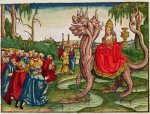
I'm exposing the Antichrist Character & nature of the RCC, trying to enlighten people, to the Babylon of ;


Rev 17:5 – “And upon her forehead was written a name, Mystery, Babylon the great, the mother of harlots and abominations.
"Babylon is portrayed as a corrupt, idolatrous system that leads people astray.

"the mother of harlots" are the apostate "Protestant Christian churches"

Rev 18:2‑3 – “... the great city ... her sins are piled up to heavenher merchants shall weep and mournfor no man buyeth their merchandise any more."
The fall of Babylon is linked to its economic and religious influence.

Rev 14:8 – “Babylon the great is fallen…”A prophetic proclamation of judgment against the entity called Babylon.

These passages do not name any specific denomination; the imagery is intentionally symbolic, pointing to a system that exalts itself over God and persecutes true worship. ( NOT the people )

When proponents combine the biblical text, they typically follow this line of reasoning:

  1. Biblical Symbolism – Revelation describes a powerful, idolatrous “Babylon” that dominates world commerce and religion (Rev 17‑18).
  2. Historical Correlation – The Roman‑Catholic Church historically wielded immense political, economic, and religious influence, especially during the Middle Ages and the era of the papal states.
  3. The Classical Protestant Reformers, (& Adventist today) – Explicitly identifies the papacy as the “great harlot” and “Babylon,” providing a prophetic interpretation that aligns the biblical symbols with the Catholic institution.
Thus, within this framework, the Roman‑Catholic Church is presented as the fulfillment of the “Babylon” prophecy.
Which is WHY WE, carrying on the Protestant Reformation message, being commissioned by God, are proclaiming the Three Angels Message of Rev 14

Rev 14:7 Saying with a loud voice, Fear God, and give glory to him; for the hour of his judgment is come: and worship him that made heaven, and earth, and the sea, and the fountains of waters.
v8 And there followed another angel, saying, Babylon is fallen, is fallen, that great city, because she made all nations drink of the wine of the wrath of her fornication.
v9 And the third angel followed them, saying with a loud voice, If any man worship the beast and his image, and receive his mark in his forehead, or in his hand,
v10 The same shall drink of the wine of the wrath of God, which is poured out without mixture into the cup of his indignation; and he shall be tormented with fire and brimstone in the presence of the holy angels, and in the presence of the Lamb:
v11 And the smoke of their torment ascends up for ever and ever: and they have no rest day nor night, who worship the beast and his image, and whoever receives the mark of his name.
v12 Here is the patience of the saints: here are they that keep the commandments of God, and the faith of Jesus.


Babylon = Of Rev 18:3 "For all nations have drunk of the wine of the wrath of her fornication, and the kings of the earth have committed fornication with her, and the merchants of the earth are waxed rich through the abundance of her delicacies.
4 And I heard another voice from heaven, saying, Come out of her, my people, that you be not partakers of her sins, and that you receive not of her plagues.
5 For her sins have reached to heaven, and God has remembered her iniquities.

These following identifications are drawn directly from the Book of Revelation KJV and the core of the Seventh‑day Adventist understanding of the end‑time conflict described in Revelation 13–19, based on scripture and the understanding of Bible Prophecy inherited from the Classical Protestant Reformers.

The Dragon (Satan) empowers the Beast (papal authority); the False Prophet ( today's apostate Protestant churches ) enforces the Beast’s mark; together they constitute the spiritual Babylon that dominates the world.
  • Dragon = Satan, the originator of all deception.
  • First Beast = Roman‑Catholic papacy (the political‑religious power that claims divine authority).
  • Second Beast / False Prophet = Apostate clergy that promulgates the papal “mark” and enforces religious conformity.
  • Babylon the Great = The worldwide empire built around the papal system, encompassing its economic, political, and doctrinal influence; it is the “mother of harlots” and will be judged and destroyed at Christ’s second coming.
Blessing in your understanding, Folks.
When Revelation was written (late 1st century), Babylon was a code word for Rome — the pagan empire that persecuted Christians.
Early Christian writers like 1 Peter 5:13 The chosen one at Babylon sends you greeting, as does Mark, my son

Peter and Mark were at Rome that time.
So “Babylon” meant pagan Rome, not the later Catholic Church (which didn’t yet exist in that form).

The “Catholic Church = Babylon” Claim arose much later — particularly among some Protestant reformers in the 1500s–1600s.
 
You and I are thought of true followers of Jesus. Which one is Cain? The sin of Cain was not on offering inappropriate sacrifice. It was his jealousy and anger over Abel.
The "SIN" of Cain was his presumption, his self pride ~>.... his "disobedience" to the Will of God, just like Adam & Eve, by his not following God's directions and offering the atoning Blood of the Lamb, which foreshadows the Atoning Blood of the Son of God, as is the Gospel, of redemption and the propitiation of Jesus. ~>"The act by which God, through the sacrificial death of Jesus Christ, satisfied His righteous wrath against sin and made reconciliation between Himself and sinful humanity possible."

Cain's "jealousy and anger over Abel." was just a continuing statement of Cain's selfishness, rebellion and disobedience, to God's Law of Love, which later was codified as the 10 Commandments, stone tablets, handed down at Sinai, and later written in our hearts of flesh, by Jesus the Christ, exemplified by His Righteousness.
ΙΧΘΥΣΙΧΘΥΣΙΧΘΥΣΙΧΘΥΣΙΧΘΥΣΙΧΘΥΣΙΧΘΥΣΙΧΘΥΣΙΧΘΥΣΙΧΘΥΣΙΧΘΥΣΙΧΘΥΣΙΧΘΥΣΙΧΘΥΣΙΧΘΥΣΙΧΘΥΣΙΧΘΥΣΙΧΘΥΣΙΧΘΥΣΙΧΘΥΣΙΧΘΥΣ
 
When Revelation was written (late 1st century), Babylon was a code word for Rome — the pagan empire that persecuted Christians.
Early Christian writers like 1 Peter 5:13 The chosen one at Babylon sends you greeting, as does Mark, my son

Peter and Mark were at Rome that time.
So “Babylon” meant pagan Rome, not the later Catholic Church (which didn’t yet exist in that form).

The “Catholic Church = Babylon” Claim arose much later — particularly among some Protestant reformers in the 1500s–1600s.
You can rationalize your disobedience and way you want ...There are millions of different excuses, for NOT believing and following Christ.
I'm just here expressing Truth ... and will let the Holy Spirit, do the heavy lifting :-)
 
You can rationalize your disobedience and way you want ...There are millions of different excuses, for NOT believing and following Christ.
I'm just here expressing Truth ... and will let the Holy Spirit, do the heavy lifting :)
Continue with you Cathoilic-Babylon painting.....
Screenshot 2025-11-01 194828.jpg
You'll find good markets among the Protestants.
 
  • Like
Reactions: Follower777
There is nothing in John 20:23 indicating to me that Jesus was "giving authority" to the disciples to forgive sins committed against God. Elsewhere in scripture Jesus instructs His disciples that it is their duty to forgive sins against themselves for which they had received an apology , and warned them that there would be awful repercussions for disciples withholding forgiveness from someone who had said sorry,. He also commands us to do the best we can to be at peace with all men before praying or giving an offering to God , taking our complaints about unforgiven offences to the person concerned privately, then with two or three others and then to the church to give the offender all possible opportunities to apologise, or to learn from others that I was the unreasonable one who should apologise.

I'm not going to pretend that I personally understand well enuf to give understanding from my own knowledge on, "How Jesus was "giving authority" to the disciples to forgive sins committed against God." Sorry ! I don't personally have time to do a study, into this matter... but what I CAN do is a quick AI search of Adventist writings and the KJV.. on this matter, which MIGHT help you with your enlightenment.

John 20:23 (KJV) reads:
“Whom ye shall receive, the same shall bless you, and if any sin be committed against them, they shall be forgiven.”​
The wording of this verse—especially the phrase “if any sin be committed against them”—has been understood by many Adventist writers, as a clear indication that Jesus conferred a specific authority on His disciples (and, by extension, on the church) to pronounce forgiveness of sins. Below is a concise synthesis of how the biblical text support that view.
1. The biblical basis in John 20:23
Element What the text says Implication “Whom ye shall receive”The disciples receive the Holy Spirit (cf. Acts 2).The authority comes through the Spirit’s empowerment.“the same shall bless you”The one who receives the Spirit also blesses the believers.Blessing here is linked to the granting of spiritual gifts.“if any sin be committed against them”The “them” refers back to the blessing—the act of forgiving.The clause sets up a conditional: when a sin is committed against the blessing (i.e., the forgiveness offered), then it shall be forgiven.“they shall be forgiven”The decisive statement of forgiveness.The verb is in the passive voice, indicating that the forgiveness is effected by the authority given, not merely declared.

Thus, the structure of the verse presents a two‑step process: (1) the disciples receive the Spirit and are empowered to bless, and (2) when a sin is brought before that blessed authority, the forgiveness is enacted. The logical flow suggests that the disciples are not merely witnesses but active agents endowed with the power to bind and loose—an authority that mirrors the one Jesus gave Peter in Matthew 16:19 (“...the keys of the kingdom of heaven…”).
2. This passage is the foundation for the church’s ministry of forgiveness. Key excerpts include:
  1. “The Lord gave the apostles the power to bind and loose.”
    In The Great Controversy, Ellen White writes that the words “if any sin be committed against them” are a direct commission to the apostles to exercise the authority to declare forgiveness (p. 442). She connects this authority with the broader New Testament teaching that the church is the “means of salvation” (see Testimonies for the Church, vol. 6, p. 102).
  2. “Forgiveness is a work of the Holy Spirit.”
    In Steps to Christ (chapter 5), she notes that the disciples’ receipt of the Holy Spirit equips them to mediate the atonement—that is, to apply Christ’s sacrifice on behalf of sinners. The “blessing” spoken of in John 20:23 is therefore the Spirit‑enabled proclamation of forgiveness (p. 71).
  3. “The authority to forgive is not personal but corporate.”
    White stresses that the authority belongs to the body of believers, not to any individual alone. She writes, “The whole church is the instrument through which the blood of Christ is applied to the sinner” (Education, p. 215). This aligns with the plural “they” in the verse, indicating a shared responsibility among the disciples.
These passages collectively illustrate how John 20:23 is seen as Jesus’ explicit delegation of the forgiveness ministry to His followers. This treats the verse as the scriptural anchor for the Adventist belief that the church, empowered by the Holy Spirit, can pronounce forgiveness of sins—a function that continues today through the preaching and sacramental life of the church.
3. How the two sources converge
  1. Authority originates from Christ – The KJV text and White’s commentary locate the source of the authority in Jesus’ command. The disciples receive it through the Holy Spirit, underscoring divine origin rather than human initiative.
  2. The authority is exercised corporately – The plural pronouns (“they”) in the verse and White’s emphasis on the “whole church” point to a collective, not individual, exercise of forgiveness.
  3. Forgiveness is a declarative act tied to the atonement – The verse’s promise that “they shall be forgiven” is understood by White as the application of Christ’s atoning sacrifice via the Spirit‑empowered disciples.
  4. Continuity with other biblical passages – The authority to bind and loose (Matt 16:19) and the priestly role of the church (Heb 10:19‑22) reinforce the same principle, creating a consistent biblical theology that White affirms throughout her writings.
4. Practical implication for believers
  • Recognition of the church’s role: When a believer confesses sin within the community of faith, the church—guided by the Holy Spirit—can pronounce forgiveness, reflecting the authority granted in John 20:23.
  • Responsibility to seek reconciliation: Since forgiveness is a corporate ministry, individuals are encouraged to bring their sins before the body of believers (e.g., in pastoral counseling, confession, or communal prayer) so that the promised forgiveness may be actualized.
  • Assurance of divine backing: The authority is not a human invention; it is rooted in Christ’s command and the Spirit’s presence, providing confidence that the forgiveness pronounced is truly effective.
In summary, John 20:23 in the KJV presents a clear formula: the disciples receive the Holy Spirit, they are empowered to bless, and when a sin is presented to that blessed authority, forgiveness follows. Jesus granting the church the authority to forgive sins, a power that is both spiritually sourced and collectively exercised. Together, the biblical text and White’s exposition affirm that the disciples (and the continuing church) are entrusted with the sacred ministry of proclaiming forgiveness on behalf of God.

NOW ! from this AI study search ... I understand John 20:23 a bit better ...
Thank you for the question
 
I'm not going to pretend that I personally understand well enuf to give understanding from my own knowledge on, "
You said you don't have much knowledge on this, but you speak a lot on this!
So, should readers take you point seriously??
 
The "SIN" of Cain was his presumption, his self pride ~>.... his "disobedience" to the Will of God, just like Adam & Eve, by his not following God's directions and offering the atoning Blood of the Lamb, which foreshadows the Atoning Blood of the Son of God, as is the Gospel, of redemption and the propitiation of Jesus. ~>"The act by which God, through the sacrificial death of Jesus Christ, satisfied His righteous wrath against sin and made reconciliation between Himself and sinful humanity possible."


This kind of interpretation and theology has no ground.


(1)his "disobedience" to the Will of God, just like Adam & Eve, by his not following God's directions
I see in Genesis 1-4, God has no instructions given to Abel and Cain on how to offer a sacrifice.


(2)offering the atoning Blood of the Lamb, which foreshadows the Atoning Blood of the Son of God, as is the Gospel, of redemption and the propitiation of Jesus.

How could Cain know that blood sacrifice of Abel's lamb foreshadowed the Atoning Blood of the Son of God?
There was no Noah, no Abraham, no Moses and no scripture of Leviticus. No Jesus as well. They were not on the stage yet.
You cannot put this as sin onto Cain.

Like the modern Germans to blame their grandfathers to vote Hitler onto power which brought a disaster to mankind in Europe. Don't turn yourself wise after the event and be the Monday morning quarterback.
 
I see you know little about Protestant China Inland Mission in the 18th century, after the Opium War to Boxer Rebellion. Quite a number of Protestant missionaries lost their life, faced violence, suspicion, and anti-foreign uprisings in China. You are saying here: 'those missionaries were not real Christians.' What a shame on you !!

Only those advocating violence and hate.
 
I'm not going to pretend that I personally understand well enuf to give understanding from my own knowledge on, "How Jesus was "giving authority" to the disciples to forgive sins committed against God." Sorry ! I don't personally have time to do a study, into this matter... but what I CAN do is a quick AI search of Adventist writings and the KJV.. on this matter, which MIGHT help you with your enlightenment.

John 20:23 (KJV) reads:
“Whom ye shall receive, the same shall bless you, and if any sin be committed against them, they shall be forgiven.”​
The wording of this verse—especially the phrase “if any sin be committed against them”—has been understood by many Adventist writers, as a clear indication that Jesus conferred a specific authority on His disciples (and, by extension, on the church) to pronounce forgiveness of sins. Below is a concise synthesis of how the biblical text support that view.
1. The biblical basis in John 20:23
Element What the text says Implication “Whom ye shall receive”The disciples receive the Holy Spirit (cf. Acts 2).The authority comes through the Spirit’s empowerment.“the same shall bless you”The one who receives the Spirit also blesses the believers.Blessing here is linked to the granting of spiritual gifts.“if any sin be committed against them”The “them” refers back to the blessing—the act of forgiving.The clause sets up a conditional: when a sin is committed against the blessing (i.e., the forgiveness offered), then it shall be forgiven.“they shall be forgiven”The decisive statement of forgiveness.The verb is in the passive voice, indicating that the forgiveness is effected by the authority given, not merely declared.

Thus, the structure of the verse presents a two‑step process: (1) the disciples receive the Spirit and are empowered to bless, and (2) when a sin is brought before that blessed authority, the forgiveness is enacted. The logical flow suggests that the disciples are not merely witnesses but active agents endowed with the power to bind and loose—an authority that mirrors the one Jesus gave Peter in Matthew 16:19 (“...the keys of the kingdom of heaven…”).
2. This passage is the foundation for the church’s ministry of forgiveness. Key excerpts include:
  1. “The Lord gave the apostles the power to bind and loose.”
    In The Great Controversy, Ellen White writes that the words “if any sin be committed against them” are a direct commission to the apostles to exercise the authority to declare forgiveness (p. 442). She connects this authority with the broader New Testament teaching that the church is the “means of salvation” (see Testimonies for the Church, vol. 6, p. 102).
  2. “Forgiveness is a work of the Holy Spirit.”
    In Steps to Christ (chapter 5), she notes that the disciples’ receipt of the Holy Spirit equips them to mediate the atonement—that is, to apply Christ’s sacrifice on behalf of sinners. The “blessing” spoken of in John 20:23 is therefore the Spirit‑enabled proclamation of forgiveness (p. 71).
  3. “The authority to forgive is not personal but corporate.”
    White stresses that the authority belongs to the body of believers, not to any individual alone. She writes, “The whole church is the instrument through which the blood of Christ is applied to the sinner” (Education, p. 215). This aligns with the plural “they” in the verse, indicating a shared responsibility among the disciples.
These passages collectively illustrate how John 20:23 is seen as Jesus’ explicit delegation of the forgiveness ministry to His followers. This treats the verse as the scriptural anchor for the Adventist belief that the church, empowered by the Holy Spirit, can pronounce forgiveness of sins—a function that continues today through the preaching and sacramental life of the church.
3. How the two sources converge
  1. Authority originates from Christ – The KJV text and White’s commentary locate the source of the authority in Jesus’ command. The disciples receive it through the Holy Spirit, underscoring divine origin rather than human initiative.
  2. The authority is exercised corporately – The plural pronouns (“they”) in the verse and White’s emphasis on the “whole church” point to a collective, not individual, exercise of forgiveness.
  3. Forgiveness is a declarative act tied to the atonement – The verse’s promise that “they shall be forgiven” is understood by White as the application of Christ’s atoning sacrifice via the Spirit‑empowered disciples.
  4. Continuity with other biblical passages – The authority to bind and loose (Matt 16:19) and the priestly role of the church (Heb 10:19‑22) reinforce the same principle, creating a consistent biblical theology that White affirms throughout her writings.
4. Practical implication for believers
  • Recognition of the church’s role: When a believer confesses sin within the community of faith, the church—guided by the Holy Spirit—can pronounce forgiveness, reflecting the authority granted in John 20:23.
  • Responsibility to seek reconciliation: Since forgiveness is a corporate ministry, individuals are encouraged to bring their sins before the body of believers (e.g., in pastoral counseling, confession, or communal prayer) so that the promised forgiveness may be actualized.
  • Assurance of divine backing: The authority is not a human invention; it is rooted in Christ’s command and the Spirit’s presence, providing confidence that the forgiveness pronounced is truly effective.
In summary, John 20:23 in the KJV presents a clear formula: the disciples receive the Holy Spirit, they are empowered to bless, and when a sin is presented to that blessed authority, forgiveness follows. Jesus granting the church the authority to forgive sins, a power that is both spiritually sourced and collectively exercised. Together, the biblical text and White’s exposition affirm that the disciples (and the continuing church) are entrusted with the sacred ministry of proclaiming forgiveness on behalf of God.

NOW ! from this AI study search ... I understand John 20:23 a bit better ...
Thank you for the question

There is no mention of power being given to the disciples when they received the Holy Spirit on resurrection Sunday evening. In fact they are told to wait in Jerusalem until they receive power from heaven. What they did receive with the Holy Spirit on resurrection Sunday was revelation: the ability to understand how scripture prefigured and prophesied Jesus ministry, death and resurrection., and to understand the teaching Jesus has been giving them for three years. Among those were His teaching about the need for disciples to forgiver others before praying for God to exercise His power on their behalf; and His teaching on forgiving our offenders who say sorry,, on the basis that God has forgiven us a far greater debt than any one person owes us.

So your, or Ellen White's, presumption that John 20 is about some Holy Spirit gift of forgiving in God's stead, rather than about the Holy Spirit enlightening understanding so that the disciples understand and practice forgiveness toward their offenders to bnng the body into harmony and unity for the endowment of power and deliverance gifts at Pentecost, is entirely unpersuasive.
 
There is no mention of power being given to the disciples when they received the Holy Spirit on resurrection Sunday evening. In fact they are told to wait in Jerusalem until they receive power from heaven. What they did receive with the Holy Spirit on resurrection Sunday was revelation: the ability to understand how scripture prefigured and prophesied Jesus ministry, death and resurrection., and to understand the teaching Jesus has been giving them for three years. Among those were His teaching about the need for disciples to forgiver others before praying for God to exercise His power on their behalf; and His teaching on forgiving our offenders who say sorry,, on the basis that God has forgiven us a far greater debt than any one person owes us.

So your, or Ellen White's, presumption that John 20 is about some Holy Spirit gift of forgiving in God's stead, rather than about the Holy Spirit enlightening understanding so that the disciples understand and practice forgiveness toward their offenders to bnng the body into harmony and unity for the endowment of power and deliverance gifts at Pentecost, is entirely unpersuasive.

You opened a portal for RC and EW.
 
I've given this more time this morning and reread your post. A few comments in the order of what I've highlighted above:
  • I think this interim grace is interesting in the sense you've mentioned and possibly in a broader sense that we just don't have record of - i.e. all of what went on with the Apostles for the approx. 50 days after John20.
  • I'm hesitant about this second highlight. I see your point, but they're being sent out commissioned to forgive or retain based in what's been forgiven or retained. I'm not sure the personal judgment is what's in view. Or maybe it is but it's not only what's in view.
  • I at this point agree with the third highlight. They may have declarative authority, but only in line with the Gospel. But even here there are issues. I don't recall any place in the NC where we see Apostles or Disciples forgiving or retaining sins in a salvific sense. They're proclaiming, teaching, commanding repentance and believing, but forgiving and retaining sins? Only God has all the facts and knows the heart.
  • Which brings in another thought; I see you were in Matt18. What about Matt18:15-20 in Church Judiciary matters? Leadership is commissioned to both forgive and to retain in such proceedings. Paul for example did exercise such authority in Corinth. Forgiveness and retention post-resurrection and then ascension is done pursuant to the perfected aspect of what Christ had/has accomplished. Matt18:20 so frequently used in the broadest of sense is in the context of Church Judicial Hearings and Paul is later very critical of those who treat this judicial function lightly 1Cor6.

I appreciated @Gideon300 's insight #195 into the distinction between our forgiving others sins and our forgiving others of the consequences of their sins.

It seems to me that when God says he forgives and forgets our sins, He does not mean that our past sins will no longer have enduring ramifications for us. There are still consequences that work out in our lives. And the servant whose debt was forgiven, who then refused to forgive, the master was able to remember the forgiven debt and reactivate it. So, it seems that there is an interim period after our request for forgiveness where God releases us from any need to make up for our sins, which grace period may be ended, if we subsequently withhold mercy from others.

As I mentioned to @Follower777 , #330 , the disciples were told later that they needed to wait in Jerusalem to receive power, so it seems premature to be linking this receiving of the Holy Spirit with their receiving power to forgive sins on God's behalf. Arguably, the context is that as the Father sent Jesus, not to condemn the world but to save it, and not to reject those who were offending against Him, but to forgive them and continue to offer reconciliation to them, just so Jesus was sending the disciples out on Resurrection Sunday in the same spirit of forgiveness and long-suffering. He was possibly saying,
"I came to you with an attitude of long-suffering mercy; and now I am sending you our from here to display the same long-suffering mercy. If you exercise this long-suffering mercy toward one another, then once you have exorcised your animosities from your midst, you will be able to pray effectively, because I have already warned you that when you pray you need to have forgiven, so that your Father in heaven will forgive you and your prayers will become effectual.

What do we make of Paul not forgiving John Mark for abandoning the team at some point, retaining his sin, but Barnabas forgiving His sin? Which one's judgment was God obliged to conform in heaven?

I think that just as an offender against God is forgiven, but that forgiveness may be later rescinded if they are merciless to others, the individual after taking the issue to the offender, then with two or three to the offender and then with the church to the offender, and the offender is found in the wrong and remains unrepentant, the church and the individual may 'treat the unrepentant as a heathen". What God, who sees all that is in the offenders heart, does toward the offender in terms of forgiveness may not necessarily equate to what the church has decided. He is not bound to forgive or to blame according to the church's judgment.

I think the "whatsoever you bind on earth will be bound in heaven" passages are about binding spiritual powers, not about forgiving sins.
 
You opened a portal for RC and EW.
Maybe I should have not mentioned the words Roman Catholic and Protestant in the OP. My bad.

I agree with Charlie Kirk, that the answer to false claims is civil discussion, not censorship. The RC's know the site rules of engagement. It is possible for them to argue the meaning of the texts from the texts themselves, without promoting RC sectarian writings. I think high Anglicans and other Christian sects also embrace the so called sacrament of confession, and the idea that ordained ministers have power to bestow divine forgiveness.
 
I've given this more time this morning and reread your post. A few comments in the order of what I've highlighted above:
  • I think this interim grace is interesting in the sense you've mentioned and possibly in a broader sense that we just don't have record of - i.e. all of what went on with the Apostles for the approx. 50 days after John20.
  • I'm hesitant about this second highlight. I see your point, but they're being sent out commissioned to forgive or retain based in what's been forgiven or retained. I'm not sure the personal judgment is what's in view. Or maybe it is but it's not only what's in view.
  • I at this point agree with the third highlight. They may have declarative authority, but only in line with the Gospel. But even here there are issues. I don't recall any place in the NC where we see Apostles or Disciples forgiving or retaining sins in a salvific sense. They're proclaiming, teaching, commanding repentance and believing, but forgiving and retaining sins? Only God has all the facts and knows the heart.
  • Which brings in another thought; I see you were in Matt18. What about Matt18:15-20 in Church Judiciary matters? Leadership is commissioned to both forgive and to retain in such proceedings. Paul for example did exercise such authority in Corinth. Forgiveness and retention post-resurrection and then ascension is done pursuant to the perfected aspect of what Christ had/has accomplished. Matt18:20 so frequently used in the broadest of sense is in the context of Church Judicial Hearings and Paul is later very critical of those who treat this judicial function lightly 1Cor6.
2 Corinthians 2: 5-11
"Now if anyone has caused grief, he has not grieved me but all of you—to some degree, not to overstate it. The punishment imposed on him by the majority is sufficient for him. So instead, you ought to forgive and comfort him, so that he will not be overwhelmed by excessive sorrow. Therefore I urge you to reaffirm your love for him.

My purpose in writing you was to see if you would stand the test and be obedient in everything. If you forgive anyone, I also forgive him. And if I have forgiven anything, I have forgiven it in the presence of Christ for your sake, in order that Satan should not outwit us. For we are not unaware of his schemes."

It was not Paul who forgave the sinner. It was the church of Corinth. Paul for sure encouraged them, but he did not have the right to compel them.
 
(1)
You put the execution of Spanish ascetic Priscillian and several of his followers under the blame of Roman Catholic Church as if it was nothing to do with the Protestant.
Before 1517, the Roman Catholics and the Protestants were the same church. Was Jesus on leave from 1st century, leaving the Catholic Church to do evil and wrong teaching until 1517 he resumed duty? From then he chose Martin Luther to start a new,real church?

So, Protesrants were still accountable for the execution of Christains with erronousc doctrines. There was blood in their hands too.
Have you never heard of the Eastern Orthodox sect which also co-existed alongside the Roman Catholic sect., both emerging out of the diverse communities of the church universal and both making claims to apostolic succession and authentic tradition. Can you produce documentary evidence the first ever claim of any bishop of Rome to being the supreme bishop over all other bishops? Something other than and later than,
"You are Petros (a rock) and upon this petra (bedrock) I will build my church, And the gates of hades will not prevail against it." Which does not on its face identify Petros as the petra." Contextually, Peter's confession,"You are the Christ, the Son of God" looks like the bedrock upon which the church is founded.
 
Can you produce documentary evidence the first ever claim of any bishop of Rome to being the supreme bishop over all other bishops? Something other than and later than,
".

Good point raised! This is the usual argument put up by Orthodox Christians against the supremacy of Church of Rome.


(1)
There are a few bible references on it.

I give you one first:
In (1 peter 5:1) Peter was addressing Christian believers, often called "elect resident aliens" or "exiles of the Dispersion," who were scattered throughout the Roman provinces of Pontus, Galatia, Cappadocia, Asia, and Bithynia.

He wrote:
So I exhort the presbyters among you, as a fellow presbyter and witness to the sufferings of Christ and one who has a share in the glory to be revealed. Tend the flock of God in your midst, [overseeing] not by constraint but willingly, as God would have it, not for shameful profit but eagerly. Do not lord it over those assigned to you, but be examples to the flock. And when the chief Shepherd is revealed, you will receive the unfading crown of glory.

Though Peter was not saying "I am your boss.", he was actually assigning duties and telling the presbyters what to do.

(2) a piece of document outside the bible:
Pope Clement (88-97) wrote to the Church in Corinth in the year 96 to tell them to make changes in their attitudes and practices. This letter, often referred to as the "Letter to the Corinthians," addresses issues of discord and division that had arisen within the Corinthian community. This letter is important because it indicates that the author was acting has the head of the Christian Church and that it was centered in Rome."


(I can have more evidences if you so request for them.)
 
"You are Petros (a rock) and upon this petra (bedrock) I will build my church, And the gates of hades will not prevail against it." Which does not on its face identify Petros as the petra." Contextually, Peter's confession,"You are the Christ, the Son of God" looks like the bedrock upon which the church is founded.

(1)
Jesus says “You are Petros”, directly addressing Simon by name.
If Jesus were referring to Himself, He would have said something like:“I am the rock,”
not“You are the rock.”

So grammatically, the statement “You are Petros” can only describe Peter, not Jesus.


(2)Throughout Scripture, when God changes someone’s name, it signifies a new divine mission:
Abram → Abraham (Genesis 17:5)
Jacob → Israel (Genesis 32:28)
Simon → Peter (Matthew 16:18)

If Jesus were referring to Himself, the name change would make no sense — Jesus is not renaming Himself, but commissioning Peter.

The phrase “You are Petros” is a declaration of Peter’s new identity and role.
 
  • Like
Reactions: OLDBUTNEW
That's what I am asking you to ponder:
Which of the 40,000+ denominations holds the 'only one HOLY SPIRIT'?
Ah the 40K+ denominations argument. It's been proven false so many times, yet Catholics still repeat it. They also refuse to remove the plank in their own eye. There are way more than 40K differences from Catholic church to Catholic church, the only difference is they just don't change the name over the door.
 
There are way more than 40K differences from Catholic church to Catholic church, the only difference is they just don't change the name over the door.
Please elaborate on this.
Are you saying the difference in the Church name, names of priests serving ..etc are one of those 40K differences?