Finneyists among us

  • Christian Chat is a moderated online Christian community allowing Christians around the world to fellowship with each other in real time chat via webcam, voice, and text, with the Christian Chat app. You can also start or participate in a Bible-based discussion here in the Christian Chat Forums, where members can also share with each other their own videos, pictures, or favorite Christian music.

    If you are a Christian and need encouragement and fellowship, we're here for you! If you are not a Christian but interested in knowing more about Jesus our Lord, you're also welcome! Want to know what the Bible says, and how you can apply it to your life? Join us!

    To make new Christian friends now around the world, click here to join Christian Chat.
Twist not scripture lest ye be like satan.

[video=youtube;VqcTpDZ62ao]http://www.youtube.com/watch?v=VqcTpDZ62ao

Not sure what that statement or that video means? Please explain.

And I saw thrones, and they sat upon them, and judgment was given unto them: and I saw the souls of them that were beheaded for the witness of Jesus, and for the word of God, and which had not worshipped the beast, neither his image, neither had received his mark upon their foreheads, or in their hands; and they lived and reigned with Christ a thousand years.
 
In Church History we studied Finney and the other evangelists of that era. Yes, Southern Baptists do get many of their wrong theologies from the man. Like altar calls and sinner's prayer. I never read a thing against the man, but just reading what he believed convinced me he was too off course to be any use to God, regardless of the so-called revivals he led.

His second blessing, which was when the "saint" achieved sinless perfection tipped me off to the error of his ways. I do think it was nice he was involved in social movements, but that has nothing to do with his horrible theology, which the western church has inherited in so many bad ways.

As the founder of Methodism, he developed a "method" whereby people could be saved, discipled and then perfected. Except that denies the need for the Holy Spirit, especially since God has his own ways, and they are not "methods" but rather the working of the Holy Spirit to transform our lives - a process that goes on till the day we die.

Very interesting to read some of the deeper theologies of this man. And glad to have moved from Arminianism to a belief in a sovereign God!

Finney wasn't a methodist (at least not the methodist religion we think of in terms of John Wesley). A call to make a profession is not unlike a call to baptism or a call to come hear the gospel. Any such action can be corrupted, as we see the Baptists have done - why - no strong foundation - no scriptural grounding. I agree that an altar call (see zone's short review of some of the 'methods' of altar calls in an earlier post) is a method. Just another act of man that can be corrupted - sad but true. This is the why the gospel comes first, which convicts a person by the Holy Spirit. A person should go home and study after such an encounter with the word of god, study, contemplate and pray. Maybe next week, aside from emotion and intensity, make a profession - when the spirit, not the emotion moves. I see these "Crusades" such as The Billy Graham stadium altar calls and the Scottish foot-a-baal fella McCartney of Promise Keepers ... just no good.

Finney did not found a church or religion, named no doctrine after himself or made claims in his own name. Was that church history study done in a Bible College or in Sunday school or just what - it left me a little confused. Thanks for posting ...
 
Finney wasn't a methodist (at least not the methodist religion we think of in terms of John Wesley). A call to make a profession is not unlike a call to baptism or a call to come hear the gospel.

hi DA - Finney took Wesley's methods to new heights of pragmatism.
really, DA - anyone can read what he really believed and practiced, and read of the fruits of it - the burned over districts etc - along with his own confession at the end that what "did" didn't WORK. he blamed the people.

he quietly slipped back into Law practice...if i recall.

even Asa Mahan of Oberlin has issues with Finney's despotic stuff re; his 'disciples"...yet felt a need to sweep so much under the carpet - due to the man having become larger than life. and Oberlin being an established institution.

this idea where you have to "go to " where the revivals are is totally unBiblical for NT Christianity.

anyway...revival this and that.

just.....preach....Law & Gospel....consistently and faithfully and the let the Lord WORK.
(just my opinion, but hey....makes sense)
 
Originally Posted by Digital_Angel_316
If you confess with your mouth that Jesus is Lord and believe in your heart that God raised him from the dead, you will be saved.
Twist not scripture lest ye be like satan.

Truly. Man's abuse of this scripture does not negate its veracity.

Unfortunately, the order of events Paul stated in Romans 10:9 is not sequentially correct because confession before belief is meaningless. I wonder how things would have been different if he had stated it like this.

If you believe in your heart that God raised [Jesus] from the dead, and confess with your mouth that “Jesus is Lord”, you will be saved. For with the heart one believes into righteousness, and with the mouth one confesses into salvation. Romans 10:9-10​
 
Finney wasn't a methodist (at least not the methodist religion we think of in terms of John Wesley). A call to make a profession is not unlike a call to baptism or a call to come hear the gospel. Any such action can be corrupted, as we see the Baptists have done - why - no strong foundation - no scriptural grounding. I agree that an altar call (see zone's short review of some of the 'methods' of altar calls in an earlier post) is a method. Just another act of man that can be corrupted - sad but true. This is the why the gospel comes first, which convicts a person by the Holy Spirit. A person should go home and study after such an encounter with the word of god, study, contemplate and pray. Maybe next week, aside from emotion and intensity, make a profession - when the spirit, not the emotion moves. I see these "Crusades" such as The Billy Graham stadium altar calls and the Scottish foot-a-baal fella McCartney of Promise Keepers ... just no good.

Finney did not found a church or religion, named no doctrine after himself or made claims in his own name. Was that church history study done in a Bible College or in Sunday school or just what - it left me a little confused. Thanks for posting ...

Yes, you are right. Thinking of England, not America. But he did use Wesley's "methods". So I guess that is what is important. Not using the Holy Spirit, which was my thought behind the post!
 
Truly. Man's abuse of this scripture does not negate its veracity.

Unfortunately, the order of events Paul stated in Romans 10:9 is not sequentially correct because confession before belief is meaningless. I wonder how things would have been different if he had stated it like this.

If you believe in your heart that God raised [Jesus] from the dead, and confess with your mouth that “Jesus is Lord”, you will be saved. For with the heart one believes into righteousness, and with the mouth one confesses into salvation. Romans 10:9-10​

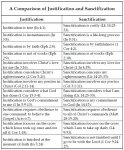
Where in the doctrinal discussions are we seeing "man's abuse of the scripture"? This is the essence of the issue - first hearing that leads to belief (for faith cometh by hearing, and hearing by the word of God), which leads to conviction, a desire to learn more, an understanding of repentance, and a realization that the teachings of Jesus are The Way to salvation. This is called Justification. When one believes these things they are compelled in spirit to profess (confess) and to immerse themselves (baptismo) in study and practice of the scriptures. This is sanctification.
 
Finney was a Presbyterian. Presbyters at least lay claim to instruction in and ability to instruct others in Scripture. In Bible believing full gospel churches, children are brought up in the scriptural teachings. They need not be compelled by any means to make a profession other than by means of the teachings themselves and the encouragement to study and contemplate which through the Holy Spirit works in a person. To teach or admonish then other Presbyterians or those claiming Bible beliefs is different than a teaching to a general laity or those only modestly or peripherally aware of scripture principles.

"Revival" in terms of quickening the spirit of the spiritually sleeping is different than a general teaching to the masses of men. The Parable of the Sower does a good job describing how that gospel is to be spread, and to let the seed of the word fall where it may. Jesus preached a sermon on the mount and a sermon on the plain for that reason, context of audience. Revival in the sense of Finney's time was much different that Crusades in our time - the sermons in the stadium types.

I am not defending Finney in any sense. But the subject is a good platform to discuss the issues and doctrines that many today still do not have a grasp of (apostasy abounds, secularism abounds). It is useful I believe to also understand the context in which Finney taught, the times, the social issues, the cults, the coming civil war and etc. It is also useful to distinguish religions from cults of which there were many then, and now, over 150 later, those cults have come to full blossom to bring destruction on mankind. Finney laid out a theology, that can at least still be critiqued, something many other religions reduce to a doctrinal statement of one page or so. The encouragement is to study the word and make a personal decision based on one's study and to join a body of believers in living and sharing the doctrinal truths of Jesus's teachings.

Zone, I agree that the spirit works, before, during and after a person comes to an understanding of scripture. whether it is in justification or in sanctification the work of the Holy Spirit is critical and comes based on the Gospel truths. Sometimes a person may think themselves justified or having an understanding of scripture so as to have a seed of faith, enough so they at least sit under a teacher and maybe seek for themselves in personal study. They may submit to baptism based on pressure from a religion, only later to come to a fuller understanding, one which may even compel them to leave the church / religion they are in. This is the seed of hope that we have that there may be enough teachings even in apostate churches, that when the truth and fulness of God's word is taught, that it may quicken the dead and awaken the sleeping and thus minimize the zombie apocalypse (so that some may be saved).

Many good points have been brought out in this thread - I hope that there will be more discussion and perhaps some consensus and closure that goes beyond Finney this or Calvin this, or Spurgeon said and etc, but a personal understanding of the doctrines we should all be coming to and a fuller understanding and acceptance of.

The opening post cited an Essay and it's author. I think a look at that person's teachings relative to Finney's can be illuminating and should make us aware of the root of what Finney was warning about - the cults - freemasonry, the protocols (implicitly), the campbellites/church of christ, the Mormons, Jesuits, perhaps the SDA, certainly the Davidians and etc - the coming civil war, the enslavement of people in both mind and body and the need for each of us in such a forum to become a little more of a presbyter ourselves.
 
Finney was a Presbyterian.

Finney was a pseudo-Presbyterian. When the Presbyterian council that determined his qualifications to be a Presbyterian minister asked him if he professed adherence to Westminster Confession of Faith, he plainly deceived them to make them think that he did. From his own pen:

Unexpectedly to myself they asked me if I received the [Westminster] Confession of faith of the Presbyterian church. I had not examined it;—that is, the large work, containing the Catechisms and Presbyterian Confession. This had made no part of my study. I replied that I received it for substance of doctrine, so far as I understood it. But I spoke in a way that plainly implied, I think, that I did not pretend to know much about it. However, I answered honestly, as I understood it at the time [Charles Finney, The Memoirs of Charles Finney: The Complete Restored Text (Grand Rapids: Academie, 1989), 53-54].​

Then afterwards when he had read the Confession of Faith and realized that he didn't agree with it, he didn't do the honorable thing and resign from the Presbyterian church, but proceeded to undermine its doctrines and teachings.

Many good points have been brought out in this thread - I hope that there will be more discussion and perhaps some consensus and closure that goes beyond Finney this or Calvin this, or Spurgeon said and etc, but a personal understanding of the doctrines we should all be coming to and a fuller understanding and acceptance of.

This thread is really only about Finney. If you want to swim in a bigger pool I suggest you start another thread. I started this thread to form a baseline of Finney's doctrines against which current beliefs can be compared.
 
In Church History we studied Finney and the other evangelists of that era. Yes, Southern Baptists do get many of their wrong theologies from the man. Like altar calls and sinner's prayer. I never read a thing against the man, but just reading what he believed convinced me he was too off course to be any use to God, regardless of the so-called revivals he led.

His second blessing, which was when the "saint" achieved sinless perfection tipped me off to the error of his ways. I do think it was nice he was involved in social movements, but that has nothing to do with his horrible theology, which the western church has inherited in so many bad ways.

Here's an example of this kind of thinking in this forum (excerpted below) - http://christianchat.com/bible-discussion-forum/77652-perfection-holyness-purity.html#post1271312

My friend do you see that a SAINT is NOT IN CHRISTS BODY YET? Saints needs to be EDIFIED (brought into the Body of Chrsit still) They are NOT EDIFIED YET... They are NOT PERFECT MEN YET... THEY ARE NOT TO THE FULNESS OF CHRSIT JESUS YET.... Only AFTER they are perfected they ARE... To be edified with Christ is the PERFECT MAN.

Please believe this Scripture... PLEASE DO! A saint is not perfect YET!!!! But only a SAINT can be perfected... no sinner can be perfected... the stages is..... SINNER - SAINT -JESUS MAN (perfect man)
 
Who is Dr.Mike, Mr. Hor ton?
Michael's teaching clearly reflect his education and PH.D. work at Oxford and Yale. Because of this, he enjoys the praise of the main stream media and the theologians of Oxford and Yale.

The Rev. Dr. Michael S. Horton is the J. Graham Machen professor of systematic theology and apologetics at Westminster Seminary California.

Michael S. Horton does not fit the traditional mole of Calvinism. He is more of evolving open mined neo-Presbyterians that is moving Calvinist away from the strict interpretation of the Westminster Conversion of Faith. Horton is almost the exact opposite of J. Graham Machen who led the culture wars against liberalism at Princeton. The theology of Michael Horton is very mainstream in the thinking of the liberal Presbyterian USA Church. He provides theology to explain away the importance of keeping the moral laws and downplays the Calvinist perspective of obeying the Ten Commandments. Keeping of the moral law and encouraging others to do so, is not consistent with the defined religion of Michael S. Horton.

The third paragraph of this comment is a copy/paste from Christiancitizens.org > Michael Horton Professor at Westminster Seminary. They are a group whose main goals seem to be getting conservative politicians elected, and promoting public display of the 10 commandments. They take issue with Dr. Horton because of his "teaching that the moral law and Ten Commandments are not fully applicable to today". They call the 10 commandments the "Foundation of our Faith", which is a shameful witness considering the fact that the bible calls Christ the foundation of our faith.

For no one is able to lay another foundation than the one which is laid, which is Jesus Christ. 1 Corinthians 3:11​
 
Last edited:
One example of how blasphemous this man's theology was.


"Neither is the atonement, nor anything in the mediatorial work of Christ, the foundation of our justification, in the sense of the source, moving or procuring cause." Charles Finney, Systematic Theology, p. 375,376
 
Last edited:
One example of how blasphemous this man's theology was.

It is no more blasphemous that the Westminster Confession which teaches that remaining steadfast is an automatic product rooted in the efficacy of Unconditional Election and a Limited Atonement...

I. They, whom God has accepted in His Beloved, effectually called, and sanctified by His Spirit, can neither totally nor finally fall away from the state of grace, but shall certainly persevere therein to the end, and be eternally saved.[1]

II. This perseverance of the saints depends not upon their own free will, but upon the immutability of the decree of election, flowing from the free and unchangeable love of God the Father;[2] upon the efficacy of the merit and intercession of Jesus Christ,[3] the abiding of the Spirit, and of the seed of God within them,[4] and the nature of the covenant of grace:[5] from all which arises also the certainty and infallibility thereof.[6]

III. Nevertheless, they may, through the temptations of Satan and of the world, the prevalency of corruption remaining in them, and the neglect of the means of their preservation, fall into grievous sins;[7] and, for a time, continue therein:[8] whereby they incur God's displeasure,[9] and grieve His Holy Spirit,[10] come to be deprived of some measure of their graces and comforts,[11] have their hearts hardened,[12] and their consciences wounded;[13] hurt and scandalize others,[14] and bring temporal judgments upon themselves.[15]
Ch.17 WCF
Westminster Confession of Faith

The Reformers completely threw the aspect of "cooperating" with God right out the window. They were so scared of infringing on the sovereignty on God that man could have no part whatsoever in salvation.

Pretty much the same thing as Finney taught when you dig into his theology. After all Finney was a Reformer too who was never able to extricate himself completely from its errors.

Look at the quote above for it plainly excuses ongoing sinning/rebellion to God due to the remaining inward corruption. The only difference between the "Elect" and the "non-Elect" is that the Elect will keep turning back to God between their bouts of sinning. That precept is really no different to the sin/repent/sin/repent methodology in both Wesleyian/Arminian and Finneyism/Moral Government theology. While the Wesleyian's and Moral Government proponents are opposed to the U and P of the TULIP (even though Finney upheld it) in all practicality their theology is the same as that of the Calvinists, for they teach the sin/repent/sin/repent methodology.

In regards to the quote from the WCF above it can be clearly seen that there is no such thing as "escaping the corruption that is in the world through lust" (2Pet 1:4) in Reformed Theology. Instead they teach that you never escape because the corruption is actually an inbuilt birth defect which cannot be overcome until one is actually glorified. Thus any concept of genuine purity of heart in salvation has to be denied. Purity of heart is utterly inconceivable to these people.

What a tragedy. A tragedy evident in this thread within the context of "oppositions of knowledge so called." The false paradigm of Finney's Theology versus Reformed Theology. Both actually exist within the same framework of the system of error which has overtaken this world.
 
What a tragedy. A tragedy evident in this thread within the context of "oppositions of knowledge so called." The false paradigm of Finney's Theology versus Reformed Theology. Both actually exist within the same framework of the system of error which has overtaken this world.

Finney's teachings are far more in line with yours than the reformers. In some respects they are identical. So any false paradigm at work is more likely the result of you trying to avoid the similarities between your and his doctrines. Your beliefs were not of themselves the impetus for this thread (because no one IMO really cares what you say), but you of all people more closely align with his doctrines than anyone here that I am aware of.
 
Last edited:
One example of how blasphemous this man's theology was.
"Neither is the atonement, nor anything in the mediatorial work of Christ, the foundation of our justification, in the sense of the source, moving or procuring cause." Charles Finney, Systematic Theology, p. 375,376

That's right! Tis why I believe the issue is not of Finney or Spurgeon, Calvin or Luther- the issue is an understanding of Justification, the spirit that leads us to that enlightenment, from faith that cometh by hearing, and hearing by the word of God. A non-justified church-goer who is repentant, even ascetic still has no root in the truth of understanding. A "good person" who is or is not a church-goer apart from the justification of the teachings of Jesus is still lost. A good review of the concepts of doctrinal justification and the path that leads to that, not of works or mere claims, but of the Holy Spirit seems to be missing in your understanding. Perhaps you could cite some additional works from the good Doctor Mister Hor ton in regard to these concepts.

Justification1.jpgI-love-this-grace-thing.jpg
 
That's right! Tis why I believe the issue is not of Finney or Spurgeon, Calvin or Luther- the issue is an understanding of Justification, the spirit that leads us to that enlightenment, from faith that cometh by hearing, and hearing by the word of God. A non-justified church-goer who is repentant, even ascetic still has no root in the truth of understanding. A "good person" who is or is not a church-goer apart from the justification of the teachings of Jesus is still lost. A good review of the concepts of doctrinal justification and the path that leads to that, not of works or mere claims, but of the Holy Spirit seems to be missing in your understanding. Perhaps you could cite some additional works from the good Doctor Mister Hor ton in regard to these concepts.

Like I said before, this thread is to form a baseline of Finney's teachings as means of comparison to current beliefs. If you want to demonstrate how his teachings do or don't align with sound doctrine, then please feel free to do so. If, on there other hand, your intent is to hijack this thread and divert it into discussions of other people's doctrines (e.g., Horton), then please move on and start your own thread.
 
Last edited:
Finney's teachings are far more in line with yours than the reformers. In some respects they are identical. So any false paradigm at work is more likely the result of you trying to avoid the similarities between your and his doctrines. Your beliefs were not of themselves the impetus for this thread (because no one IMO really cares what you say), but you of all people more closely align with his doctrines than anyone here that I am aware of.

The only reason you say that is because I don't believe you really understand my perspective and that you also have an uncritical approach to the tenets of Reformed Theology.

If you did not have an uncritical approach to the Reformed system you would clearly be willing to address the clear shortcomings within the context of "escaping the corruption that is in the world through lust" and "heart purity" as it applies to Reformed Theology. Both of those biblical precepts are pretty much elephants standing in the room which are completely ignored, the only exception really being diversionary canned responses.

What I do have in common with Charles Finney is that he and me both deny the Augustinian notion of inability due to some kind of inherited corruption passed down from Adam which necessitates that people sin. On that point I am in agreement with Finney. Yet the Mormon's, Eastern Orthodox, many Adventists, and the early church writers all agreed on this point (first 200 years pretty much, before the Latin Fathers). Does such an agreement make me a Mormon or an Eastern Orthodox? Finney undid himself in clinging to his Reformed Roots by trying to mix his rejection of inability with Unconditional Election and Perseverance of the Saints. In other words he contradicted himself. So just like Wesley he spoke volumes on holy living and purity yet he did not understand the purging process that takes place when a sinner approaches God in truth. Wesley's solution was the Second Act of Grace whilst Finney's was Perseverance. Both theologies obfuscate the death of the old man to a large degree.

My theology is not even close to what Finney taught and for you to believe that it is just goes to show that you either do not understand Finney or you don't understand me. It is not really of great surprise because your critique of Finney involves utilising the writings of others as opposed to using your own words. In effect you are really just parroting theologians.

I'd love to see you broach the subject of "escaping the corruption that is in the world through lust" and what it means to you. If one is to go through my post history and read all the responses I doubt they will find a single response where anyone addressed that issue. Just like directly addressing heart purity and what that actually means. People avoid it like the plague.
 
Last edited:
Like I said before, this thread is to form a baseline of Finney's teachings as means of comparison to current beliefs. If you want to demonstrate how his teachings do or don't align with sound doctrine, then please feel free to do so. If, on there other hand, your intent is to hijack this thread and divert it into discussions of other people's doctrines (e.g., Horton), then please move on and start your own thread.


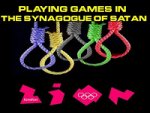
Horton was cited in the opening post. I am comparing scripture with assertions on the teachings of Finney as they have been asserted here so far. I am not advocating for (or against) Finney, but rather doing just what you ask - comparing his teachings as asserted to the scriptures. You may want to question the motives of some of Finney's detractors is all, with Horton you may find yourself in the not too distant future in the Synagogue of Satan, kissing pictures of Jesus. The background and setting on Finney I believe is important in the sense of context and audience. Press on with doctrines you find questionable, it is good that we should study them.

gz_SATAN-GAMES.jpg
 
Further [short] background on Upstate New York relative to the times of Finney's teachings or the great revival:

In 1654, the Jesuits started establishing missions among the Iroquois. In 1656 Sainte Marie among the Iroquois (originally known as Sainte-Marie-de-Ganentaa or St. Mary's of Ganantaa) was the first of these new missions to be established, located among the Onondagas under Father Simon Le Moyne. Within thirteen years, the Jesuits had missions among all five Iroquois nations, in part imposed by French attacks against their villages in present-day New York state.

Best-accounting-schools.com:
le-moyne-college.png
LeMoyne%20Logo%20Full%202c.jpg
 
A Finney teaching for review, commentary, critique:

[SIZE=+1]LECTURES ON REVIVALS OF RELIGION[/SIZE]

[SIZE=+1]by The Rev. CHARLES G. FINNEY[/SIZE]

[SIZE=+1]LECTURE XXII [/SIZE]

[SIZE=+2]GROWTH IN GRACE[/SIZE]

TEXT--But grow in grace and in the knowledge of our Lord and Saviour Jesus Christ.--2 Pet. iii.18.

Reference Link -->>
GROWTH IN GRACE by Charles G. Finney