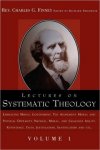
Finneyists among us

  • Christian Chat is a moderated online Christian community allowing Christians around the world to fellowship with each other in real time chat via webcam, voice, and text, with the Christian Chat app. You can also start or participate in a Bible-based discussion here in the Christian Chat Forums, where members can also share with each other their own videos, pictures, or favorite Christian music.

    If you are a Christian and need encouragement and fellowship, we're here for you! If you are not a Christian but interested in knowing more about Jesus our Lord, you're also welcome! Want to know what the Bible says, and how you can apply it to your life? Join us!

    To make new Christian friends now around the world, click here to join Christian Chat.
"...subsequent to the commencement of moral agency, and previous to regeneration, the moral depravity of mankind is universal."

"the moral depravity of the unregenerate is without any mixture of moral goodness or virtue, that while they remain unregenerate, they never in any instance or in any degree, exercise true love to God and to man."


C. G. Finney,
Lectures on Systematic Theology - pp 247, 248
(reprint of 1878 ed., Minneapolis, MN:
Bethany House Publishers, 1994)

9781591603603_p0_v1_s260x420.JPG
 
Last edited:
"...subsequent to the commencement of moral agency, and previous to regeneration, the moral depravity of mankind is universal."

"the moral depravity of the unregenerate is without any mixture of moral goodness or virtue, that while they remain unregenerate, they never in any instance or in any degree, exercise true love to God and to man."


C. G. Finney,
Lectures on Systematic Theology - pp 247, 248
(reprint of 1878 ed., Minneapolis, MN:
Bethany House Publishers, 1994)

You either don't understand Finney's view on inherited, inherent corruption or you're being dishonest. In Finney's mind there was no such thing as a sinful nature inherited from Adam. Instead he said that the moral depravity of unregenerate men resulted from their own wrong moral choices. In other words, he said that their corruption came from sins they committed, rather than their committed sins coming from a corrupted, sinful nature.
 
I don't deny the corruption of men. I deny that men are BORN ALREADY condemned and in rebellion to God.

I deny that infants are depraved, wicked, condemned and enemies of God. Infants are INNOCENT and are neither righteous nor unrighteous. They are upright in their hearts because they know no sin because the sin that cuts one off from God is any act of known rebellion, ie. choosing evil when you know it is evil. Not falling short due to ignorance like when a baby demands a toy or throws a tantrum.

Augustine taught that unelect infants go to hell. Likewise John Calvin taught the same thing. Many other Calvinists slide around the issue to varying degrees but they all confess as truth that babies are guilty before God, they just differ in that some believe that the blood may be applied in some way.

OK. Well that is basically what I meant, except for the righteous/unrighteous part. btw I don't care what Augustine believed. He doesn't define my arguments for me. As far as I'm concerned, what he believed is irrelevant.

List of common beliefs held by skinski and Finney:

  • Denial that men are born with a sinful nature
 
only problem with that DA, is: why the evil desire? (without a fallen nature)
where'd that come from?
skinski will go to the gnostics and apostate judaism...do you?

Evil desire comes from an evil nature. Amoral nature and moral law are the inventions of fallen man. GOD slices much more finely than that.
 
Yet the issue found in both Wesleyian Theology and Reformed Theology is in how they teach "act of the will." Due to both systems upholding the notion of birth depravity, with Reformers it is total whilst with Wesleyian's it is partial, both systems by necessity teach the notion of inability.

Thus The Gospel is approached with this notion of inability in mind. Reformed Theology uses "Irresistible Grace" as the means of offsetting inability whilst the Arminian/Wesleyian side use "Prevenient Grace" as the means to offset inability. Reformed Theology teaches that the rebellion to God never stops (as indicated in the quote from the WCF above) whilst the Arminiam/Wesleyian side generally teach "Entire Sanctifcation" where the inward corruption due to birth depravity is gradually purged out completely (very similar to what Cobus teaches).

The Bible does not teach inability because from beginning to end men are presented with a choice of who will they serve?

Jos_24:15 And if it seem evil unto you to serve the LORD, choose you this day whom ye will serve; whether the gods which your fathers served that were on the other side of the flood, or the gods of the Amorites, in whose land ye dwell: but as for me and my house, we will serve the LORD.

We get to choose. Many people err in thinking giving men "choice" somehow infringes on the grace of God but it does not because Grace is the free provision by which God draws us but we have to comply with faith. This is why Paul connects "working together with God" to "grace being effectual."

2Co 5:21 For he hath made him to be sin for us, who knew no sin; that we might be made the righteousness of God in him.
2Co 6:1 We then, as workers together with him, beseech you also that ye receive not the grace of God in vain.

To work together with God is a choice that God compels us to make but does not force us to do so.

Many will object and claim "faith is a gift." Yet they negate that the "means" of receiving this gift is due diligence on the part of an individual. (Heb 11:6). God does not make people diligently seek Him but He rewards all those who do so with the gift of faith.

The gift of God is eternal life THROUGH Jesus Christ but the means of abiding in the "through" is always a choice. That is why we are all acountable for our rebellion to God because it is something we freely chose to do.

Sinners and Saints are not robots. They are individuals with the capacity to choose. Of course sinning hardens the heart and can lead one into a situation where godly sorrow working repentance that leads to salvation may not be found. That is why we ought not take for granted the grace of God for it does not abide on sinners forever.

You make some good points. The problem with Cobus' belief though (as I understand it) is that he believes the flesh becomes new, and is unable to sin.
 
Evil desire comes from an evil nature. Amoral nature and moral law are the inventions of fallen man. GOD slices much more finely than that.

Evil desires coming from our fallen nature which is subject to suggestion of fallen angels called demons.Every desire have his demon or every demon have his desire.
Major subject in Orthodoxy are thoughts.Everything coming from them.If we accept them we will act by them and our lifes are determined by our thoughts.
 
Look at Article 4 above. That document blames sin on a birth defect. How can any individual be held responsible for their sin if they sin by necessity? Adam made me do it? Really?

Nothing wrong with article 4. That's just the way it is. However, your characterization is wrong. We don't sin by necessity; we sin by ignorance and choice. We are certainly disposed to that end, but we are responsible for our own choices. Adam hasn't made us do anything, but his sin sure has stacked the deck against us. That's the harsh reality of GOD's holiness and the fallen conditions that we have been imprisoned in. That is why it took GOD himself to come and rescue us.

How can someone come clean in repentance if in their heart they honestly believe that their sin is not really their fault? How can someone forsake a birth nature? The Bible clearly says in many places that we are to forsake unrighteousness as a condition of mercy being granted, how is that possible if one is unable to forsake unrighteousness due to a birth defect?

We can't forsake our birth nature. That is what grace and the holy spirit are all about. To lift us up from our fallen condition to do the works of GOD. So forsaking unrighteousness has to mean the forsaking of something that we can actually forsake, like yielding to the fallen nature and practising sin.

Reformed Theology has revered the Gospel in teaching that we get saved first and then we can repent and forsake our wickedness.

Virtually everything in the OT is a shadow, type, and pattern of Christ (especially the law). Per your above comment, the children of Israel were saved out of bondage in Egypt in their sins. They were saved simply by believing and obeying GOD's directive of shedding blood and abiding indoors.
 
you have NO evidence that Jesus experienced "sexual desire".
none.

in order to experience sexual desire, He would have had to look upon a woman and lust OR to fantasize.

God and Man in human flesh....GOD EXPERIENCED SEXUAL DESIRE? nah.

i'm sorry skinski, but Emmanuel did not experience sexual desire for wretched filthy human beings He came to die for.
walking in the midst of filth...and experiencing sexual desire for it?

let's have your documentation that He did.

ya....born without sin into a world of a heaping steaming mass of vile sinners....and he wants sex.

eh....see ya.

Jesus was a male that had male sex organs with testosterone. Of course he had sexual desires (which is a natural and normal physical desire and essential for procreation) like all men. Just like he had all the other natural, physical desires of the flesh that are essential for eating and discharging waste. Jesus was tempted in every way we are tempted not in every way except sexual temptation: “….but was in all points tempted as we are.”

You do not know the male anatomy: A man does not have to look and “fantasize” about having sex with a woman before experiencing sexual desires. A man can have sexual desire without fantasizing and in absence of any woman. The appearance of a beautiful woman can cause sexual desire without fantasizing and that is the way it’s supposed to be. If it wasn’t that way mankind would not be able to be “fruitful and multiply.”

 
I am very interested to hear your perspective on what "having escaped the corruption that is in the world through lust" means?
...
My understanding is that when we come to Christ through repentance and faith we lay aside our old way of doing things and therefore submit ourselves to God. Thus we are no longer being led around by the natural passions of the human body as our god but rather yield our body as a living sacrifice to God.
...
In all the time I have posted on this forum I don't believe I have seen a single response ever address "having escaped the corruption in the world through lust." The reason for this, in my mind, is that most people believe such a thing is impossible whilst we are in flesh bodies due to an underlying belief of inward depravity inherited from Adam thus they simply ignore all the verses in regards to a manifest state of the old man being crucified with the passions and desires.

Care to address it? Or will you let it slide off and speak about something else?

Escaping the corruptions of the world is standing apart from iniquity by abiding in the holy spirit through faith. The spirit will not sin, so following it is obedience and righteousness. However, my body can sin (not must sin) because it is corrupted and weak due to mankind having been separated from GOD at the garden; the knowledge of GOD does not reside in my flesh, so it is incapable of perfectly doing GOD's will. I am left with a choice: do what the impulses of my flesh say (which are contrary to the spirit), or do what the spirit says (which is the will of GOD). Due to the nature that I have received through Christ, I choose to put to death the impulses of the flesh and walk according to the spirit. This is what it means to die daily, and to carry one's cross. This is what it means to walk uprightly in holiness, even though I have a sinful nature.
 
Last edited:
Jesus was a male that had male sex organs with testosterone. Of course he had sexual desires (which is a natural and normal physical desire and essential for procreation) like all men. Just like he had all the other natural, physical desires of the flesh that are essential for eating and discharging waste. Jesus was tempted in every way we are tempted not in every way except sexual temptation: “….but was in all points tempted as we are.”

You do not know the male anatomy: A man does not have to look and “fantasize” about having sex with a woman before experiencing sexual desires. A man can have sexual desire without fantasizing and in absence of any woman. The appearance of a beautiful woman can cause sexual desire without fantasizing and that is the way it’s supposed to be. If it wasn’t that way mankind would not be able to be “fruitful and multiply.”


fallen man John Doe walks through red light district.
he is approached by working girls. tempted by them to sin.
he may or may not be interested.
he may be tempted and sin.
he may in fact be repulsed by the suggestion, yet have compassion on them.
that is fallen John Doe.

Sinless Perfect Jesus walks through red light district.
He is approached by working girls. tempted by them to sin.
is there a remote possibility Jesus Christ would be interested?

both men were tempted.
one man was also God.

the very suggestion, for example, that Jesus was tempted by/into homosexual desires (how something like this is possible if we believe Christ was without sin i don't know) is required for Him to understand the fallen human condition - being tempted in all points as we are - yet without sin just amazes me.

being tempted does not, for Jesus, imply in any way the leaning toward or remote inclination to sin.

it means He knows what it is to be tempted (i.e.) BY sinful people or satan to lust - not what it is like to lust.

the implication that God has experienced sin (been tempted BY SIN) is unspeakable.

i won't be discussing this beyond this post - each fallen human can ponder for themselves where the dividing line between a biological sexual impulse, and lust is.

 
fallen man John Doe walks through red light district.
he is approached by working girls. tempted by them to sin.
he may or may not be interested.
he may be tempted and sin.
he may in fact be repulsed by the suggestion, yet have compassion on them.
that is fallen John Doe.

Sinless Perfect Jesus walks through red light district.
He is approached by working girls. tempted by them to sin.
is there a remote possibility Jesus Christ would be interested?

both men were tempted.
one man was also God.

the very suggestion, for example, that Jesus was tempted by/into homosexual desires (how something like this is possible if we believe Christ was without sin i don't know) is required for Him to understand the fallen human condition - being tempted in all points as we are - yet without sin just amazes me.

being tempted does not, for Jesus, imply in any way the leaning toward or remote inclination to sin.

it means He knows what it is to be tempted (i.e.) BY sinful people or satan to lust - not what it is like to lust.

the implication that God has experienced sin (been tempted BY SIN) is unspeakable.

i won't be discussing this beyond this post - each fallen human can ponder for themselves where the dividing line between a biological sexual impulse, and lust is.

What happens is that people want to bring Jesus down,what gets left out is that Jesus was tempted by the same roots of temptation,IE the lust of the eyes,the lust of the flesh and the pride of life ALL temptations come through those three ways,no exception. Jesus was tempted by all three in the wilderness. He was tempted on all three points. He was tempted on the same roots of temptation as we all are.

Adam and Jesus: tempted in every way with different results

One intriguing verse for me is Hebrews 4:15 which says, "For we do not have a high priest who is unable to sympathize with our weaknesses, but one who in every respect has been tempted as we are, yet without sin." This high priest is Jesus. The Bible is telling us that Jesus, as a man, was tempted in all ways that we are and yet was able to stand strong against these temptations and did not sin. We therefore can take comfort in the fact that Jesus understands fully what we are going through. And we have Jesus as a model of someone who can withstand the temptations of sin without succumbing to them.

But wait a minute: how was Jesus tempted in every respect? Was he tempted in all the ways that man can be tempted? He wasn't tempted by drugs, was he? He wasn't tempted by bribes or offers of power. So how can we say he was tempted in every respect?

For me, one helpful lecture from Dr Bruce Ware helped to explain what this meant. He said to take a step back and compare the way Satan tempted Adam and the way Satan tempted Jesus. Recall that in the garden of Eden, Satan came to tempt Adam and Eve by asking them to eat the fruit that God had commanded not to eat.
Genesis 3:1–6
Now the serpent was more crafty than any other beast of the field that the Lord God had made. He said to the woman, “Did God actually say, ‘You shall not eat of any tree in the garden’?” And the woman said to the serpent, “We may eat of the fruit of the trees in the garden, but God said, ‘You shall not eat of the fruit of the tree that is in the midst of the garden, neither shall you touch it, lest you die.’” But the serpent said to the woman, “You will not surely die. For God knows that when you eat of it your eyes will be opened, and you will be like God, knowing good and evil.” So when the woman saw that the tree was good for food, and that it was adelight to the eyes, and that the tree was to be desired to make one wise, she took of its fruit and ate, and she also gave some to her husband who was with her, and he ate.
How did Satan tempt Adam and Eve? He tempted them in three ways.
1) The fruit was good for food. Adam and Eve didn't need that fruit. They had a thousand other fruits and vegetables to eat. God had given them a huge variety to enjoy but now Satan was suggesting that God wasn't meeting their physical needs but the fruit could.
2) The fruit was a delight to the eyes. Now this is not simply that the fruit was good to look at. This was more of covetousness. Like how a Ferrari is a delight to the eyes. What was going on in Adam's and Eve's minds was, "I want that fruit even though God said I can't it. I want it. I'm greedy. I want more than what is mine."
3) The fruit was desirous to make one wise. Eating the fruit held the promise that Adam and Eve could be like God. This temptation spoke to their pride. They could be like God!
We know what happened to Adam and Eve. They sinned. These three sins represented categories of sin that affect everyone: 1) we are more concerned with our physical needs (food, drink, sex, pleasure, etc.) than with God; 2) covetousness is something that affects everyone and 3) we are full of pride and think we can be our own God. We can fit all sin pretty much into these three categories.
Now let's examine how Satan tempted Jesus. In Matthew 4, we read that Jesus was lead into the wilderness by the Spirit and after fasting for 40 days and nights, the devil came to tempt him. Forty days is long time to be deprived of food. Can you imagine how Jesus must have felt physically at that point?
How did Satan tempt him? He said, "If you are the Son of God, command these stones to become loaves of bread.” (Matthew 4:3). Satan was appealing to Jesus to satisfy his physical needs. Jesus' response is a model for us: being satisfied in God is better than being satisfied by things in this world. Jesus answered, “It is written, ‘Man shall not live by bread alone, but by every word that comes from the mouth of God.’” (Matthew 4:4). So the score was Jesus 1: Adam 0. What I mean is, Adam failed on that temptation. Rather than taking pleasure in God's command, he decided to get pleasure instead from the fruit.
Then Satan tempted Jesus with the third category of sin: pride. He said, "If you are the Son of God, throw yourself down, for it is written, ‘He will command his angels concerning you,’ and ‘On their hands they will bear you up, lest you strike your foot against a stone.’” (Matthew 4:5–6). In other words, Satan was asking Jesus to prove he was the Son of God. He was appealing to Jesus' pride. Satan was saying, "You're supposed to be God! Prove it!" Jesus did not fall for that but quoted Scripture to deflect the temptation: "Again it is written, ‘You shall not put the Lord your God to the test.’” (Matthew 4:7). Jesus 2: Adam 0.
Finally, Satan pulled out the second category of temptation. This time he appealed to covetousness. "Again, the devil took him to a very high mountain and showed him all the kingdoms of the world and their glory. And he said to him, “All these I will give you, if you will fall down and worship me.” (Matthew 4:8–9)
Even though the world belongs to the Lord, Satan is the present ruler of the world. He could give it all to Jesus as he was suggesting. In a sense, this was Jesus' mission. He came to take back what belonged to God. And Satan was offering it to him the easy way: worship me, then you wouldn't need to go through the pain of the cross to gain the world back. It was a tempting offer. Satan was offering the world to Jesus.
Once more, Jesus refused to be tempted. He said, “Be gone, Satan! For it is written, 'You shall worship the Lord your God and him only shall you serve.’” (
Matthew 4:10) Jesus 3: Adam 0.
Romans 5:18–19
Therefore, as one trespass led to condemnation for all men, so one act of righteousness leads to justification and life for all men. For as by the one man's disobedience the many were made sinners, so by the one man's obedience the many will be made righteous.
We call Jesus the second Adam. He is the first man to have a righteousness equal to God's. Jesus himself bought us that righteousness with his blood. What Adam failed to do, Jesus did. Thus the writer of Hebrews can refer to Jesus as "one who in every respect has been tempted as we are, yet without sin." Jesus was tempted in the same categories of sin that we are: physical needs, covetousness and pride. Yet, he did not succumb but led a life without sin.
Jesus, as a man, did not live his life on earth using his divine power. Instead, he deliberately came to live a real human life, as one of us, to experience the limitations and struggles of our life, to undergo the temptations we encounter. But to do this, he could not live truly as a man while also using power that he alone would have as God. To live by his power as God, he would not and could not live as one of us. So instead, as a man, he relied on the Spirit of God to grant him all that he needed to live life faithfully and to carry out everything that the Father sent him to do. In this way, He really is an example to us of how to live for God as people.
1 Peter 2:21
To this you were called, Christ…leaving you an example, that you should follow in his steps.
John 13:15
I have set you an example that you should do as I have done for you.
Matthew 11:29
Take my yoke upon you and learn from me…
1 John 2:6
whoever says he abides in him ought to walk in the same way in which he walked.
As a man, empowered by the Spirit, he fulfilled his calling. And before he left he told his disciples the most amazing thing. He said that the Spirit who had been on him would also be on them. What joy for us, to be rid of Adam's nature, and to receive the righteousness of Christ and to live by the same Holy Spirit he relied upon. Thanks be to God!


Jesus was tempted in every way in like manner,does not mean He was tempted by everything,but by the same three avenues of temptation we are tempted by.
 
Paul is pretty careful to say:

Romans 8:3
For what the law was powerless to do because it was weakened by the flesh, God did by sending his own Son in the likeness of sinful flesh to be a sin offering.

a real man? absolutely. like all other men? no.

....

Hebrews 7
25Therefore He is able also to save forever those who draw near to God through Him, since He always lives to make intercession for them. 26For it was fitting for us to have such a high priest, holy, innocent, undefiled, separated from sinners and exalted above the heavens; 27who does not need daily, like those high priests, to offer up sacrifices, first for His own sins and then for the sins of the people, because this He did once for all when He offered up Himself.


separate—rather, "separated from sinners," namely, in His heavenly state as our High Priest above, after He had been parted from the earth, as the Levitical high priest was separated from the people in the sanctuary (whence he was not to go out), Le 21:12. Though justifying through faith the ungodly, He hath no contact with them as such. He is lifted above our sinful community, being "made higher than the heavens," at the same time that He makes believers as such (not as sinners), "to sit together (with Him) in heavenly places" (Eph 2:6). Just as Moses on the mount was separated from and above the people, and alone with God. This proves Jesus is God. "Though innumerable lies have been forged against the venerable Jesus, none dared to charge Him with any intemperance" [Origen]. - JFBBC


Christ was not only ἅγιος, but ὅσιος, personally and inwardly holy (Christians in the New Testament are all called ἅγιος, but not all ὁσίοι: for the use of which word, el. Titus 1:8; Acts 2:27; Acts 13:34, where it is applied to Christ, τὸν ὅσιον σου: and Revelation 15:4-16:5, where it is applied to God as his special attribute, ὅτι μόνος ὅσιος); Christ was actually free from evil (ἄκακος) and undefiled (ἀμίαντος). by any contact of sin; and as such he has passed to God's actual presence (cf. διελελύθοτα τοὺς οὐρανοὺς, Hebrews 4:14), separated forever from the world of sinners. - Pulpit
 
Never mind the fact that Satan set the bar so much higher with Jesus,and that Satan himself was the one to do so and not one of his minions. :rolleyes:
 
Never mind the fact that Satan set the bar so much higher with Jesus,and that Satan himself was the one to do so and not one of his minions. :rolleyes:

well, i guess this is where ppl enter into gnostic dualism - the great battle between good and evil - God & Satan...with the outcome uncertain.

the spiritual warfare crowd falls into this.
as well as those who think "and greater works than these will he do" means greater miracles etc...instead of a greatly expanded CHURCH due to His Power from on High affirming the Divinely infallible message....the Gospel.

you're pretty informed about Paul's journeys:)
amazing to see that map....wow.
 
You either don't understand Finney's view on inherited, inherent corruption or you're being dishonest. In Finney's mind there was no such thing as a sinful nature inherited from Adam. Instead he said that the moral depravity of unregenerate men resulted from their own wrong moral choices. In other words, he said that their corruption came from sins they committed, rather than their committed sins coming from a corrupted, sinful nature.

quote_icon.png
Originally Posted by Digital_Angel_316
"...subsequent to the commencement of moral agency, and previous to regeneration, the moral depravity of mankind is universal."

"the moral depravity of the unregenerate is without any mixture of moral goodness or virtue, that while they remain unregenerate, they never in any instance or in any degree, exercise true love to God and to man."


C. G. Finney,
Lectures on Systematic Theology - pp 247, 248
(reprint of 1878 ed., Minneapolis, MN:
Bethany House Publishers, 1994)

Res ipsa loquitur


Res ipsa loquitur - Wikipedia, the free encyclopedia
 
This post is about Charles Hodge, but I must begin by giving some background. In my article “Finney and the ‘New Measures’”, I shared some of the strange practices that entered into the America church in the mid 19th century. In short, subjective experience replaced Church as the nexus of Protestant religion, giving rise to the popular Gnostic notion that “Christianity is a relationship not a religion” (a notion I respond to HERE).

This point was not lost on Philip Schaff, who expressed concern that the popular revivalism of his day (discussed under the rubric of Methodism), was replacing objective means of grace such as the sacraments with “subjective means and exciting impressions”. When describing revivalism (discussed under the rubric of Methodism) for his native German audience, he said

“In worship, Methodism is not satisfied with the usual divinely ordained means of grace. It really little understands the use of the Sacraments, though it adheres traditionally to infant baptism, and four times a year celebrates the Lord’s Supper, as a simple commemoration. It has far more confidence in subjective means and exciting impressions, than in the more quiet and unobserved but surer work of the old church system of educational religion.”

Robin's Readings and Reflections: Is Charles Hodge Also Among the Gnostics?
 
That's correct except temptation is internal, not external. Everything that a man perceives about the world is internal to his mind. So the move from temptation to evil desire is an inward corruption through an act of the will. That is the sinful nature that every man has inherited from Adam, and why the old nature must die.

ID - one's primal reaction to the desires of the flesh (works of the flesh - the natural man) the desire to please / satiate the five senses; eye bait, ear bait, nose bait, tongue bait, touch bait
EGO - one's primal reaction to the desires of the mind, spirits or attitudes of man; De-mon - Pride, Envy, Gluttony, Sloth, Lust, Avarice, Wrath
SUPER-EGO - The database of principles and precepts of right living - i.e. the gospel - that monitors and regulates the Flesh and Mind Desires -- Be ye transformed by the renewing of your mind

romans12.jpg
b805979153.jpg
world%20church%20influence.jpg