I just now was reading an article, which said...
Space junk
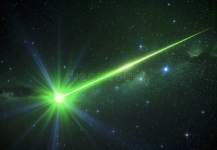
Maybe the bright flash you just saw was space junk? Perhaps. The number of orbital rocket launches and satellites has increased rapidly in recent years, and this has resulted in some spectacular reentries, which are often discarded rocket stages.
Like meteors, space junk travels at vast speeds as it travels through the atmosphere and it begins burning up spectacularly. Also like meteors, you can see colours indicative of the materials burning up, such as steel and aluminium. However, there are a few things that distinguish space junk from meteors.
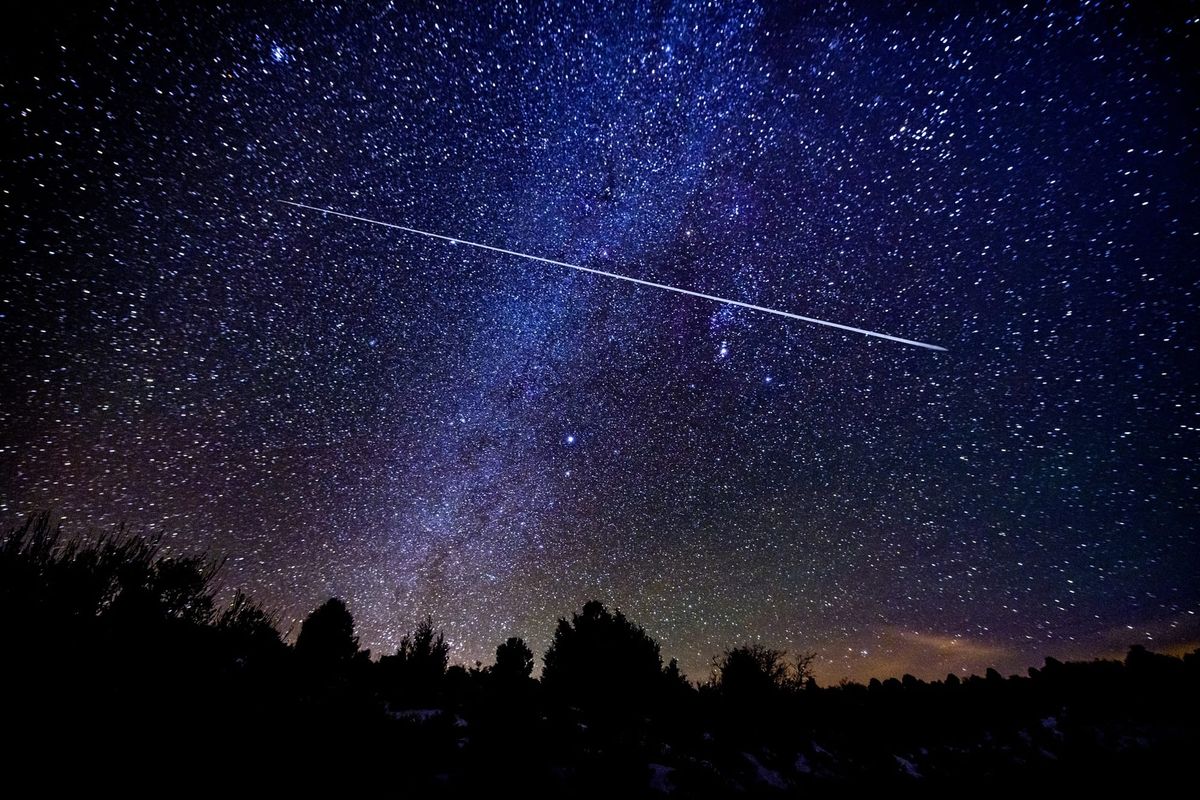
When rockets and satellites are launched into orbit, they typically travel along paths that roughly follow Earth’s curvature. So when space junk begins to enter the atmosphere, it’s often travelling almost horizontally.
Space junk also travels at slower speeds than shooting stars and meteorites, entering Earth’s atmosphere at roughly 8km/s rather than tens of kilometres per second.
Because of these factors, space junk can take minutes to enter the atmosphere and travels hundreds of kilometres in the process. Over this time, the space junk will slow down and break up into pieces, and the more solidly constructed parts might make it down to Earth.
The slower pace of space junk fireballs gives people time to grab phones, take footage and post on social media, perhaps with a little colourful commentary added for good measure.
There are tell-tale clues to help you work out what just blazed overhead.

lens.monash.edu









 And obviously, the other stars in the sky appeared smaller - it was just the moving green one that was big.