
Says the person who won't obey Jesus....
God isn't fooled.
🕊
So smug. Where did markss say that he does not want to obey God?So defensive!
Just simply say you don't want to obey God.


Says the person who won't obey Jesus....
God isn't fooled.
🕊
So smug. Where did markss say that he does not want to obey God?So defensive!
Just simply say you don't want to obey God.

So then the disobedient are not "in Christ", and are not saved? In that their disobedience demonstrates that they were not saved to begin with?It is required in the sense that Jesus Himself connects doing the Father’s will with entering the kingdom. He said, “Not every one that saith unto me, Lord, Lord, shall enter into the kingdom of heaven; but he that doeth the will of my Father” in the Gospel of Matthew 7:21.
So it is not about earning salvation like wages. It is about whether our faith is real. If someone refuses to do the Father’s will, Jesus says they will not enter the kingdom. He also said, “Why call ye me, Lord, Lord, and do not the things which I say?” in the Gospel of Luke 6:46.
If a person does not do the Father’s will, it shows they are rejecting His authority. And Jesus makes it clear that those who reject His words will be judged by them (John 12:48).
So obedience is not payment for salvation, but without it, a person shows they are not truly submitting to Christ.
It's just self-affirmation. I suggest ignoring it.So smug. Where did markss say that he does not want to obey God?
We can't earn our righteousness even as the result of having perfect obedience to the Law of God because it was never given as a way of earning our righteousness in the first place, but rather it was given to describe the life of a righteous person as it describes the life of Christ, so it is what we get to become a doer of by being given the gift of righteousness through faith.This is answered simply in saying that if the Law could have made men righteous, Jesus wouldn't have had to die. He did have to die, because the Law cannot make men righteous, neither then nor now.
Much love!
In 1 John 2:6, those who are in Christ are obligated to walk in the same way that he walked. If someone is choosing to be doer of disobedience, then how can they be considered to be saved from not being a doer of disobedience?So then the disobedient are not "in Christ", and are not saved? In that their disobedience demonstrates that they were not saved to begin with?
Much love!
This is answered simply in saying that if the Law could have made men righteous, Jesus wouldn't have had to die. He did have to die, because the Law cannot make men righteous, neither then nor now.
Much love!
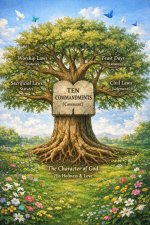
The Bible never listed which laws are part of the moral law and never even refers to that as being a subcategory of law. The existence of the moral law would imply that that we can be acting morally while disobeying the laws that aren't in that subcategory, however, there are no examples in the Bible disobedience to God being described as moral and I see no justification for thinking that it can ever be moral to disobey God. Morality is in regard to what we ought to do and we ought to embody God's character traits, so all of God's laws are inherently moral laws. Legislators give laws in accordance with their understanding of what ought to be done, so for someone to claim that some of God's laws are not moral laws would be to claim that God made a moral error about what ought to be done when He gave those laws and is therefore to claim to have greater moral knowledge than God.The Law given through Moses was not a random list of rules. At its heart stand the Ten Commandments. They are like the trunk of a tree. From that trunk came many branches, laws that applied those commandments to daily life in Israel.
For example, the command not to steal grows into laws about honest business. The command not to bear false witness grows into laws about justice and truth in court. The command to honor father and mother grows into laws about family order and care. Many of these flow directly from the moral law written by God.
God's righteousness and justice are reflected in civil matters and His holiness is reflected in ceremonial matters, so those are all moral issues. For example, we are told to be holy for God is holy (1 Peter 1:16), which is a quote from Leviticus where God was giving instructions for how to do that, which includes refraining from eating unclean animals (Leviticus 11:44-45), so that is reflecting God's character, which is a moral issue.Some laws were clearly tied to Israel’s civil life as a nation. Others were connected to the temple, sacrifices, purity rituals, and things that pointed forward. Those had a purpose for their time. But the moral foundation, the Ten Commandments, reflects God’s character. They were spoken by God Himself and written on stone. They show what love for God and love for neighbor looks like.
I was not suggesting that Jesus broke the law, but rather I brought up him not following the laws in regard to giving birth or to having a period to show that he was not obligated to follow every single law. and that there was no sin in him not following those laws.Jesus did not break God’s law. He fulfilled it perfectly. The claim that He did not obey laws about childbirth or a woman’s cycle misunderstands the law itself. Those instructions were given to women in specific situations. Jesus never sinned. He said, “I do always those things that please him” in the Gospel of John 8:29. He also said He did not come to destroy the Law but to fulfill it in the Gospel of Matthew 5:17.
The content of a gift can be the experience of doing something, such as giving someone the opportunity to experience driving a Ferrari, where the gift intrinsically requires them to do the work of driving it in order to have the experience of driving it, but where doing that work contributes nothing towards earning the opportunity to drive it. Our salvation from sin would be incomplete if we were only saved from the penalty of our sin while our lives continued to be aimed towards being doers of sin, so there is an aspect of our gift of salvation that we are experiencing in the present by repenting and redirecting our lives towards being doers of the Law of God. We can't earn our righteousness, salvation, or eternal life even as the result of having perfect obedience to the Law of God, but rather it was given in order to teach us what is intrinsically required in order to experience those gifts.Now about salvation. We are not saved by trying to earn righteousness through perfect rule-keeping. But that does not mean obedience no longer matters. Jesus said, “If ye love me, keep my commandments” in the Gospel of John 14:15. Obedience is not the price of salvation. It is the fruit of a changed heart.
When someone is indwelt by the Holy Spirit, the law of God is no longer just words on stone. It becomes written on the heart. A person who truly loves God will naturally seek to live in a way that reflects His commandments, especially those moral commands that define sin and righteousness.
So yes, many of the laws that flow from the Ten Commandments can still be lived out today, because they express timeless moral truth. Not as a way to earn life, but as the evidence that God has already given new life within.
Jesus is God's Word made flesh, so saying that he is the law of the NC is not different than saying that God's Word is the law of the NC. Jesus said that man shall not live by bread alone but by every word that comes from the mouth of God (Matthew 4:4), so there are not good grounds for thinking that the law of the NC is not in perfect accordance with every word that comes from the mouth of God.Agree. And thereby, Jesus is the law of the NC.
God remembering our sin no more is not contrary to the objection of the Mosaic Covenant. God's character traits are eternal, therefore any instructions that God has given for how to know Him through embodying His character traits are eternal and cumulatively valid. For example, God's righteousness is eternal (Psalm 119:142) therefore all of God's righteous laws are eternal (Psalm 119:160), and if the way to embody God's righteousness were to ever change, then God's righteousness would not be eternal. So Hebrews 7:12 could not be referring to a change of the law in regard to its content such as with it becoming righteous to commit adultery or sinful to do charity, but rather the context is speaking about a change of the priesthood, which would also require a change of the law in regard to its administration. A priesthood that is administered by God's Word made flesh is in perfect accordance with following God's Word.I would respectfully suggest that it would be impossible for the laws internalized upon the heart under the NC to be the laws of the OC just residing in a new location. The reason for this I believe is that the laws of the NC are the means by which the objective of the NC was achieved. So, they cannot work against nor be contrary to it, otherwise, there would be an irreconcilable contradiction between means and objective. We are informed in Heb 8:12 and 10:17, the objective of the NC (for those whom God places under the NC), is their sins and iniquities He will remember no more. It would be impossible for OC law to achieve that because it leads to judgment not life. In addition, we are also informed in Heb 7:12, that the laws of the NC, would be changed from the OC laws, however, a transference of location does not make those laws new.
[Heb 8:12 KJV] 12 For I will be merciful to their unrighteousness, and their sins and their iniquities will I remember no more.
[Heb 10:17 KJV] 17 And their sins and iniquities will I remember no more.
[Heb 7:12 KJV] 12 For the priesthood being changed, there is made of necessity a change also of the law.

The Bible never listed which laws are part of the moral law and never even refers to that as being a subcategory of law. The existence of the moral law would imply that that we can be acting morally while disobeying the laws that aren't in that subcategory, however, there are no examples in the Bible disobedience to God being described as moral and I see no justification for thinking that it can ever be moral to disobey God. Morality is in regard to what we ought to do and we ought to embody God's character traits, so all of God's laws are inherently moral laws. Legislators give laws in accordance with their understanding of what ought to be done, so for someone to claim that some of God's laws are not moral laws would be to claim that God made a moral error about what ought to be done when He gave those laws and is therefore to claim to have greater moral knowledge than God.
God's righteousness and justice are reflected in civil matters and His holiness is reflected in ceremonial matters, so those are all moral issues. For example, we are told to be holy for God is holy (1 Peter 1:16), which is a quote from Leviticus where God was giving instructions for how to do that, which includes refraining from eating unclean animals (Leviticus 11:44-45), so that is reflecting God's character, which is a moral issue.
I was not suggesting that Jesus broke the law, but rather I brought up him not following the laws in regard to giving birth or to having a period to show that he was not obligated to follow every single law. and that there was no sin in him not following those laws.
The content of a gift can be the experience of doing something, such as giving someone the opportunity to experience driving a Ferrari, where the gift intrinsically requires them to do the work of driving it in order to have the experience of driving it, but where doing that work contributes nothing towards earning the opportunity to drive it. Our salvation from sin would be incomplete if we were only saved from the penalty of our sin while our lives continued to be aimed towards being doers of sin, so there is an aspect of our gift of salvation that we are experiencing in the present by repenting and redirecting our lives towards being doers of the Law of God. We can't earn our righteousness, salvation, or eternal life even as the result of having perfect obedience to the Law of God, but rather it was given in order to teach us what is intrinsically required in order to experience those gifts.
In Luke 10:25-28, Jesus said that the way to inherit eternal life is by obeying the greatest two commandments, and something that we inherit is a gift, so he was speaking about what is intrinsically required in order to experience the gift of eternal life, not about the way to be good enough to earn it as the result. In Titus 2:11-13, the content of our gift of salvation is described as being trained by grace to do what is godly, righteous, and good, and to renounce doing what is ungodly, so we are not required to have first done those works in order to earn our salvation as the result and we are not required to do those works as the result of having first been saved, but rather we are intrinsically required to be a doer of those works because God graciously teaching us to experience being a doer of them is part of the content of His gift of salvation.
God remembering our sin no more is not contrary to the objection of the Mosaic Covenant. God's character traits are eternal, therefore any instructions that God has given for how to know Him through embodying His character traits are eternal and cumulatively valid. For example, God's righteousness is eternal (Psalm 119:142) therefore all of God's righteous laws are eternal (Psalm 119:160), and if the way to embody God's righteousness were to ever change, then God's righteousness would not be eternal. So Hebrews 7:12 could not be referring to a change of the law in regard to its content such as with it becoming righteous to commit adultery or sinful to do charity, but rather the context is speaking about a change of the priesthood, which would also require a change of the law in regard to its administration. A priesthood that is administered by God's Word made flesh is in perfect accordance with following God's Word.
No matter how you may parse it, Jesus spoke in terms of "the Law and the Prophets", reflecting God's covenant with Israel (all that you say we will do), and James was specific and clear, the Law is a single thing, that you either keep or you do not. You do not have the privilege to subdivide the Law according to your views.So the issue is not whether we can disobey some of God’s laws and still be moral. The issue is that Scripture itself shows that some commands were temporary and symbolic, while the commandments that define love for God and neighbor reflect His unchanging character. Those remain the foundation of righteous living.

So you say. Your words reveal you, not me. This is your presumption, displayed for all.
Much love!
Yes. That is exactly what Jesus teaches.So then the disobedient are not "in Christ", and are not saved? In that their disobedience demonstrates that they were not saved to begin with?
Much love!

The Bible does not list which laws are part of the ceremonial, civil, or moral law, and never even refers to those as being subcategories of law, so they are not derived from the Bible. We are free to create whatever subcategories of law that we want and to decide for ourselves which laws we think best fit into or subcategories if it helps us to better conceptualize them, but we should not interpret the Bible as if its authors has in mind a set of laws that we created. For example, I could categorize God's laws based on which part of the body is most commonly used to obey/disobey them, such as with the law against theft being a hand law, but just because I can do that does not establish that any of the authors of the Bible used the same categories or that they would agree with me that the law against theft best fits as a hand law. So if I were to interpret Jesus as rebuking the Pharisees for using hand laws to control people, then I would be making the same sort of error that you are making. Jesus set a sinless example for us to follow of how to walk in obedience to the Law of God, so he was much more zealous for obedience to it than the Pharisees were.
The fact that something is considered to be a civil or ceremonial law does not mean that it is not also a moral law, such as in regard to marriage. Morality is in regard to what we ought to do and we ought to embody God's character traits, so all of God's laws are inherently moral laws. Legislators give laws in accordance with their understanding of what ought to be done, so for someone to claim that some of God's laws are not moral laws is to claim that God made a moral error when He gave those laws and is therefore to claim to have greater moral knowledge than God.
In Matthew 4, Jesus consistently preceded a quote from what was written by saying "it is written...", but in Matthew 5, he preceded a quote from what the people had heard being said by saying "you have heard that it was said...", so his emphasis on the different form of communication is important. Jesus was not sinning in violation of Deuteronomy 4:2 by making changes to what was written, but rather he was fulfilling the law by correcting what the people had heard being said and by teaching how to correctly obey it as it was originally intended. In Leviticus 19:17, it commands not to hate our brother, so Jesus was not raising the bar. Likewise, if we correctly understand what is being commanded by the 7th and 10th Commandments against committing adultery and coveting in our hearts, then we won't lust after a married woman in our hearts.
Some of God's laws appear to conflict with each other, such as when God commanded to rest on the Sabbath while also commanding priests to make offerings on the Sabbath (Numbers 28:9-10), however, it was not the case that priests were forced to sin by breaking the law no matter what they chose to do but that the lesser command was never intended to be understood as preventing the greater command from being obeyed. This is why Jesus said in Matthew 12:5-7 that priests who did their duties on the Sabbath were held innocent, why David and his men were held innocent, and why Jesus defended his disciples as being innocent.
While I agree that there is a distinction between the Ten Commandments snd the other laws there is nothing in the Bible that suggests that distinction is between which laws are immoral to disobey. All of God's laws have the same moral authority regardless of whether He wrote them or spoke them.You are right that the Bible does not use the label “moral law” as a technical category. But Scripture clearly shows distinctions in how certain laws were given and treated. The Ten Commandments were spoken directly by God, written by His finger on stone, and placed inside the ark (Exodus 31:18; Deuteronomy 10:1–5). The other laws were written by Moses in a book and placed beside the ark (Deuteronomy 31:24–26). That difference is not accidental.
God's Word points toward God's Word made flesh because he is the embodiment of it and it teaches us how to know him, so we should live in a way that points towards him by following his example of embodying it rather than a way that points away from him. Jesus fulfilled the law by teaching how to correctly obey it. In Exodus 20:6, God wanted His people to love Him and obey His commandments, so obedience to God has always been an internal matter of the heart and God has always disdained it when His people honored Him with their lips while their hearts were far from Him (Isaiah 29:13). In Mark 7, Jesus was having a conversation in regard to the traditions of the elders about whether someone could become common by eating bread with unwashed hands, which should not be conflated with the commands of God.All of God’s commands are righteous, but some were tied to Israel’s priesthood, sacrifices, and ritual purity. Those pointed forward. Jesus fulfilled what pointed to Him (Matthew 5:17). He also shifted the focus from external ritual to the heart, teaching that what truly defiles a person comes from within (Mark 7:18–23). That shows a difference between ceremonial shadows and moral realities.
God's character traits are eternal, therefore any instructions for how to embody His character traits are also eternal, and the only way those instructions can be temporary is if God's character traits are also temporary. Something being symbolic does not mean that it is not also moral. The way to love God is by embodying His character traits, so the way to love justice is by being a doer of justice, the way to love holiness is by being a doer of His instructions for how to be holy, and so forth. In other words, the goal of everything that God has instructed is to teach us how to love different aspects of His character traits, which is why the Bible repeatedly states in both the OT and the NT that the way to love God is by obeying His commandments. God has not given any commandments that do not define love of Him and neighbor or that do not reflect His unchanging character.Regarding salvation, Jesus never taught that obedience earns eternal life. But He never separated eternal life from obedience either. He said, “this do, and thou shalt live” (Luke 10:28), “If ye love me, keep my commandments” (John 14:15), and “he that doeth the will of my Father” will enter the kingdom (Matthew 7:21). Obedience is not the payment for salvation. It is the evidence of a changed heart.
So the issue is not whether we can disobey some of God’s laws and still be moral. The issue is that Scripture itself shows that some commands were temporary and symbolic, while the commandments that define love for God and neighbor reflect His unchanging character. Those remain the foundation of righteous living.
There is a difference between the Bible listing which laws are part of those categories and you deciding to group laws in a way that makes sense to you. If a group of people were to create lists of which laws they thought were part of the ceremonial, civil, or moral law, then they would end up with a wide variety of lists and none of those people should interpret the Bible as if its authors had in mind a set of laws that they just created. For example, I've spoken with a number of people who consider just the Ten Commandments to be the moral law and everything else to be the ceremonial law, or people who also include the laws in regard to sexual misconduct as being moral laws, or people who debate whether or not the Sabbath is a moral or a ceremonial law. Is marriage a ceremonial, civil, or moral issue? You get to decide. You said that civil laws are how we treat our neighbor, so you would classify the law against murder as being a civil law while others might classify it as a moral law. The command to love our neighbor as ourselves is found in Leviticus 19:18 and is how a Priest is to act, so is that a ceremonial, civil, or moral law? You get to decide however you want for all of God's laws and what you decide is likely not going to exactly match what others decide."The Bible does not list which laws are part of the ceremonial, civil, or moral law,"
That is not true The bible tell us what laws Priest are to follow and men and women.
all laws that are no of the 10 Commandments are found in Levitous which are ceremonial meaning how a Priest is to act and work then Civil laws how to treat your neighbor . Moral laws is what offends GOD. Civil is what offends men.

That isn't what salvation means.We can't earn our righteousness even as the result of having perfect obedience to the Law of God because it was never given as a way of earning our righteousness in the first place, but rather it was given to describe the life of a righteous person as it describes the life of Christ, so it is what we get to become a doer of by being given the gift of righteousness through faith.
In 1 John 2:6, those who are in Christ are obligated to walk in the same way that he walked. If someone is choosing to be doer of disobedience, then how can they be considered to be saved from not being a doer of disobedience?
Exactly!That isn't what salvation means.
The law was not "given to describe the life of a righteous person as it describes the life of Christ".
Scripture tells us plainly why the Law was given: because of transgressions (Galatians 3:19).

