The Rejection of Obedience

  • Christian Chat is a moderated online Christian community allowing Christians around the world to fellowship with each other in real time chat via webcam, voice, and text, with the Christian Chat app. You can also start or participate in a Bible-based discussion here in the Christian Chat Forums, where members can also share with each other their own videos, pictures, or favorite Christian music.

    If you are a Christian and need encouragement and fellowship, we're here for you! If you are not a Christian but interested in knowing more about Jesus our Lord, you're also welcome! Want to know what the Bible says, and how you can apply it to your life? Join us!

    To make new Christian friends now around the world, click here to join Christian Chat.
in Matthew 5:48 the word translated “perfect” is τέλειος (teleios), not τέλος (telos), though teleios is directly derived from telos. Jesus is using a word built on the idea of goal, end, completion, maturity — not flawlessness.

I disagree with the AI because either complete or perfect is a good translation. But we are not limited to the lexicon in order to understand what Jesus means. As I demonstrated in my previous post, perfect love, which is possible for anyone to do, is enemy love. We can obey Jesus' command to love our enemies whenever we want. The only question is, "What do you want?"
First: It's reply:
First, τέλειος being related to τέλος does not mean “not flawlessness.” That's an etymological argument, not how lexical meaning works. τέλειος can describe something perfect or without deficiency relative to its standard, as well as something complete or mature. The context determines which sense is functioning.

Second, Matthew 5:48 is the conclusion of more than one isolated command. Throughout Matthew 5 Jesus repeatedly takes righteousness to its full standard: anger as well as murder, lust as well as adultery, complete truthfulness, righteous responses to mistreatment, and finally love even toward enemies. Then He says, “Therefore, you are to be perfect, as your heavenly Father is perfect.”

Now for my response:
The lexicon shows translation options, and you choose which word applies via context as to the meaning. Like the example I gave earlier, the difference between the right to bear arms vs oh there's a bear! Context chooses the right meaning for the word and if you take an english word from the lexicon and try and fit it there, it creates issues for meaning that the rest of the chapter is not saying.

Again, the context behind "complete" gives the impression that something is progressing. You literally said it yourself, "He is talking about full‑grown love — love that mirrors God’s own character." Hence the bolded words you used.

Definition of the word Complete: The word complete means having all necessary parts, finished, or total. It works as an adjective (whole, absolute) or a verb (to finish, or to make whole). Meaning, you don't start out complete, you are brought through growth to eventually become complete.

So I ask you: Do you believe the Father had to grow in love? Because if you do, then the english word "complete" is the right translation choice. Since we are to be as the Father is, and do what the Father does. If you do not, then you have to concede that your word choice is in error. It's why you will NEVER see a single translation that translates the word τέλειος as "complete".
 
First: It's reply:
First, τέλειος being related to τέλος does not mean “not flawlessness.” That's an etymological argument, not how lexical meaning works. τέλειος can describe something perfect or without deficiency relative to its standard, as well as something complete or mature. The context determines which sense is functioning.
Of course we begin with what the word CAN mean, which is a range of ideas. But we use the context to narrow down the meaning to what Jesus meant to say.
Second, Matthew 5:48 is the conclusion of more than one isolated command.
Not really. Jesus explicitly defines what he means by "perfect" in the verses just ahead of it. To be perfect like God is perfect is to love our enemies just like God does.
Again, the context behind "complete" gives the impression that something is progressing.
Sure, it can mean that, but it can mean something else. Suppose I have a checkerboard with one piece missing. If I add a button so my child and I can play, the set isn’t flawless, but it is complete — it fulfills its purpose. It is whole enough to do what a checker set is meant to do.

In the same way, love is complete (teleios) when it does what love is meant to do — extend itself even toward enemies. Enemy‑love doesn’t make love “better”; it reveals what love truly is when it reaches its intended goal.
 
  • Like
Reactions: DavidLamb
Of course we begin with what the word CAN mean, which is a range of ideas. But we use the context to narrow down the meaning to what Jesus meant to say.

Not really. Jesus explicitly defines what he means by "perfect" in the verses just ahead of it. To be perfect like God is perfect is to love our enemies just like God does.

Sure, it can mean that, but it can mean something else. Suppose I have a checkerboard with one piece missing. If I add a button so my child and I can play, the set isn’t flawless, but it is complete — it fulfills its purpose. It is whole enough to do what a checker set is meant to do.

In the same way, love is complete (teleios) when it does what love is meant to do — extend itself even toward enemies. Enemy‑love doesn’t make love “better”; it reveals what love truly is when it reaches its intended goal.
Okay so you believe God had to grow in some manner then (like love) and wasn't perfect from the start. I don't believe that at all, but you are entitled to your opinion.
 
Okay so you believe God had to grow in some manner then (like love) and wasn't perfect from the start. I don't believe that at all, but you are entitled to your opinion.
No. I'm telling you that our English word "Complete" doesn't necessarily imply growth as you seem to suggest. “Perfect” in Matthew 5:48 is the Greek word teleios, which means complete, whole, or mature, not flawless. This is grounded directly in the Greek lexicons and interlinear sources.

So when He says:

“Be teleioi as your heavenly Father is teleios,”
He is saying:

Let your love be complete — extending even to enemies — just as the Father’s love is complete.
The confusion often comes from mixing up telos with teleios. Telos means an end, goal, or intended purpose, and in Greek thought it carries the idea of growth toward maturity — a thing reaches its telos when it becomes what it was meant to be. Teleios, the word Jesus uses in Matthew 5:48, describes something that has reached that goal: it is complete, whole, mature. So when Jesus says our love should be “perfect,” He is not talking about flawlessness but about love that has grown to its full purpose — love that extends all the way to enemies, just as the Father’s love does.

Jesus is not talking about growth to maturity here. He isn't suggesting that God's love grew to maturity or that our love grows to maturity. He is saying that if we love our friends only, our love is incomplete. If we love our enemies then our love is complete.
 
No. I'm telling you that our English word "Complete" doesn't necessarily imply growth as you seem to suggest. “Perfect” in Matthew 5:48 is the Greek word teleios, which means complete, whole, or mature, not flawless. This is grounded directly in the Greek lexicons and interlinear sources.

So when He says:


He is saying:

Let your love be complete — extending even to enemies — just as the Father’s love is complete.
The confusion often comes from mixing up telos with teleios. Telos means an end, goal, or intended purpose, and in Greek thought it carries the idea of growth toward maturity — a thing reaches its telos when it becomes what it was meant to be. Teleios, the word Jesus uses in Matthew 5:48, describes something that has reached that goal: it is complete, whole, mature. So when Jesus says our love should be “perfect,” He is not talking about flawlessness but about love that has grown to its full purpose — love that extends all the way to enemies, just as the Father’s love does.

Jesus is not talking about growth to maturity here. He isn't suggesting that God's love grew to maturity or that our love grows to maturity. He is saying that if we love our friends only, our love is incomplete. If we love our enemies then our love is complete.
That's not a definition, that's a lexicon option. Again, you're singling out a word and choosing to alter a whole bunch of stuff to fit your narrative. Literally 99% of translators disagree with you. Again, you're entitled to your opinion, but you're wrong. You're changing the context + changing the definition of a literal English word + altering the applied context of the sentence all to fit your narrative.

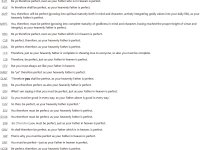
Screenshot 2026-08-16 095339_edited.jpg
 
That's not a definition, that's a lexicon option. Again, you're singling out a word and choosing to alter a whole bunch of stuff to fit your narrative.
No, that is not what I am doing. What I am doing is reading the text in context and allowing Jesus to define the word for me.

Many English translations render Jesus’ word as “perfect,” but our English term is not inspired — the Greek word teleios is. And teleios does not mean “flawless”; it means complete, whole, mature, something that has reached its intended goal. That matters here, because Jesus is not telling me to achieve moral flawlessness like God. He is telling me that my love must reach its full, intended expression — it must include everyone, even enemies, just as God’s love includes everyone. In the context of Matthew 5, “perfect” love is complete love, love that refuses to stop at the boundaries of comfort or reciprocity. So when Jesus says, “Be teleios as your Father is teleios,” He is not demanding sinless perfection; He is calling for wholehearted, all‑embracing love that mirrors the Father’s indiscriminate generosity.

Our understanding of any biblical word must come from its context, not from the range of meanings it might have in English. The inspired meaning of teleios is determined by the argument Jesus is making in Matthew 5, and the context supports the interpretation I’m giving. Jesus has just described the Father’s love as extending to the righteous and the unrighteous alike — He sends sun and rain on both. That is the Father’s teleios love: complete, not selective. Therefore, when Jesus commands His disciples to be teleios, He is not shifting topics or introducing a demand for flawless moral performance. He is concluding His teaching on enemy‑love. The context itself defines the word: teleios means love that has reached its full, intended scope, love that embraces even those who oppose us. Any interpretation that treats “perfect” as “flawless” ignores the flow of Jesus’ argument and detaches the word from the very passage that gives it meaning.

This is why context is not optional in interpretation. A word’s meaning is not discovered by looking at a dictionary entry alone; it is discovered by watching how the author uses the word in the movement of the text. In Matthew 5, Jesus is pressing His disciples toward mature, whole, all‑embracing love, not toward sinless perfection. The context itself safeguards the meaning.
 
I've noticed over the decades such a negative reaction to the idea of obedience which tends to stem from the OSAS crowd.

For sake of argument, let's take salvation off the table because I don't want to turn this into a salvation debate. I want the sole focus to be about obedience.

Why, is there such a rejection for obedience?
Obedience to whom?
To what?

I am obedient to God.
If a man is being obedient to God?
And, He has the gift to teach?
I would be obedient to God to learn from that teacher.

There are people who have power lust.
It is sinful.
They love to thumb the "obedience" hammer on their pulpit.
Demanding obedience as they would have it.

We are to be obedient to God.
Therefore, we must be obligated to first learn who and what God is.
Give me a good teacher who is wise and knows how to teach the Word of God.
Not religious rules and regulations to be obedient to.

Some never learn.
 
Obedience to whom?
To what?

I am obedient to God.
If a man is being obedient to God?
And, He has the gift to teach?
I would be obedient to God to learn from that teacher.

There are people who have power lust.
It is sinful.
They love to thumb the "obedience" hammer on their pulpit.
Demanding obedience as they would have it.

We are to be obedient to God.
Therefore, we must be obligated to first learn who and what God is.
Give me a good teacher who is wise and knows how to teach the Word of God.
Not religious rules and regulations to be obedient to.

Some never learn.
Yes, obedience to God, not man.
 
  • Like
Reactions: 2Christ and Genez
I didn't accuse anybody. I wouldn't do such a thing. I was asking a question, not accusing. Sorry that you seem to have misunderstood. Nor have I excused sin because of our imperfection. My post started with these words: "Yes, of course Christians must strive for holiness, and I have tried to emphasize the fact that I am certainly not saying that we shouldn't bother about obeying God quite the opposite!" Can you tell me what I wrote that made you think that I was accusing anybody, or that I was seeking to excuse sin, so that if I worded something carelessly and gave those impressions, I can try to avoid doing so in future. Thank you.

I already quoted it:

Let me ask you, do you claim to be sinless? To live every moment of your life loving God with all your heart, all your soul, all your mind, and all your strength?

Why even ask me that question when we weren't even talking about that.

Anyway, obeying God isn't about earning salvation. It's about making God happy as a result of your salvation. It's no longer about us anymore, it's about Him and living your life with Him.


Hello David, Many do make this mistake, that is to say that people who promote obedience by following what Christ commanded us are sinless and promote this. this is absolutely false and it is used as a common excuse but is not, no one here promotes this sinless perfection only God/Jesus is perfect.

He totally deflected to that and won't acknowledge that we should make God happy by being obedient to Lord Jesus.

Why won't people do that? We're saved, right? Salvation results in obedience to God because of the Holy Spirit He gives us. And the more you submit to God and and obey Him, the more you love Him and want to make Him happy.

But no, all they're care about is if obedient people claim they have sinless perfection. Not their personal walk with God to make Him happy. :oops:


🕊️
 
No, that is not what I am doing. What I am doing is reading the text in context and allowing Jesus to define the word for me.

Many English translations render Jesus’ word as “perfect,” but our English term is not inspired — the Greek word teleios is. And teleios does not mean “flawless”; it means complete, whole, mature, something that has reached its intended goal. That matters here, because Jesus is not telling me to achieve moral flawlessness like God. He is telling me that my love must reach its full, intended expression — it must include everyone, even enemies, just as God’s love includes everyone. In the context of Matthew 5, “perfect” love is complete love, love that refuses to stop at the boundaries of comfort or reciprocity. So when Jesus says, “Be teleios as your Father is teleios,” He is not demanding sinless perfection; He is calling for wholehearted, all‑embracing love that mirrors the Father’s indiscriminate generosity.

Our understanding of any biblical word must come from its context, not from the range of meanings it might have in English. The inspired meaning of teleios is determined by the argument Jesus is making in Matthew 5, and the context supports the interpretation I’m giving. Jesus has just described the Father’s love as extending to the righteous and the unrighteous alike — He sends sun and rain on both. That is the Father’s teleios love: complete, not selective. Therefore, when Jesus commands His disciples to be teleios, He is not shifting topics or introducing a demand for flawless moral performance. He is concluding His teaching on enemy‑love. The context itself defines the word: teleios means love that has reached its full, intended scope, love that embraces even those who oppose us. Any interpretation that treats “perfect” as “flawless” ignores the flow of Jesus’ argument and detaches the word from the very passage that gives it meaning.

This is why context is not optional in interpretation. A word’s meaning is not discovered by looking at a dictionary entry alone; it is discovered by watching how the author uses the word in the movement of the text. In Matthew 5, Jesus is pressing His disciples toward mature, whole, all‑embracing love, not toward sinless perfection. The context itself safeguards the meaning.
The AI that helped you write this and you are still incorrect. Again, I reject this "and teleios does not mean “flawless”; it means complete, whole, mature, something that has reached its intended goal". As I stated earlier, the words you are giving are lexicological, not definition words and you're trying to pass it off as definition words.

I hope you aren't using AI to forge your beliefs off of because AI isn't always correct. Specially in this case, it isn't. If it's using strongs, then it's ignoring some things, but if you want to use it as "complete" then here's what strongs says:
téleios (an adjective, derived from 5056 /télos, "consummated goal") – mature (consummated) from going through the necessary stages to reach the end-goal, i.e. developed into a consummating completion by fulfilling the necessary process (spiritual journey).

So the Father had to go through a process according to you in order to reach "completeness".

Again, you can believe that, but I believe the Father didn't have to go through anything at all and was always perfect.

I prefer Blue Letter because the lexicon is more well rounded. Here's all the options:
  • brought to its end, finished
  • wanting nothing necessary to completeness
  • perfect
  • that which is perfect
    1. consummate human integrity and virtue
    2. of men
      1. full grown, adult, of full age, mature

And they are just that, options depending on context. And the AI comes to the wrong conclusion because you start off with a false premise that the definition is "complete". The word perfect is a summation of the ENTIRE chapter. Not just the surrounding verses on loving your neighbor. Go further up the chain to verses 17-20 which is talking about law obedience:

“Do not think that I came to destroy the Law or the Prophets. I did not come to destroy but to fulfill. 18For assuredly, I say to you, till heaven and earth pass away, one tittle will by no means pass from the law till all is fulfilled. 19Whoever therefore breaks one of the least of these commandments, and teaches men so, shall be called least in the kingdom of heaven; but whoever does and teaches them, he shall be called great in the kingdom of heaven. 20;For I say to you, that unless your righteousness exceeds the righteousness of the scribes and Pharisees, you will by no means enter the kingdom of heaven.
Then Jesus gets specific, about murder, adultery, oaths, and turning the other cheek. The entire summation then ends with be perfect as your heavenly Father is perfect.

Now, I'd like to actually have a conversation with YOU and not an AI. Because you aren't bringing up points against what I'm saying, you're just repeating what YOU are saying and that's going no where and a waste of my time.
 
Yes, obedience to God, not man.
Keep in mind...

The Pharisees were using the very Law of Moses as if it were a law of man.
Yet, they were telling Jews that it was the way to inherit eternal life.

That is one reason I tend to be leery of those who put the main emphasis upon obedience
without understand how the Holy Spirit will enable what true obedience we manifest before God.
That enabling power by the Spirit is in the Bible referred to as 'grace.'

Too many have been told that grace is simply God's unmerited favor.
What does that mean?
What they fail to realize is that grace is supernatural enabling power from God.
God grace grants power to make us able to be and to do as God desires for us to be!

But by the grace of God I am what I am, and his grace toward me was not in vain.
On the contrary, I worked harder than any of them, yet not I, but the grace of God
that was with me. 1 Corinthians 15:10​
But he said to me, “My grace is sufficient for you, for my power is made perfect in weakness.”
Therefore I will boast all the more gladly about my weaknesses, so that Christ’s power may
rest on me. 2 Corinthians 12:9​
.......
 
Keep in mind...

The Pharisees were using the very Law of Moses as if it were a law of man.
Yet, they were telling Jews that it was the way to inherit eternal life.

That is one reason I tend to be leery of those who put the main emphasis upon obedience
without understand how the Holy Spirit will enable what true obedience we manifest before God.
That enabling power by the Spirit is in the Bible referred to as 'grace.'

Too many have been told that grace is simply God's unmerited favor.
What does that mean?
What they fail to realize is that grace is supernatural enabling power from God.
God grace grants power to make us able to be and to do as God desires for us to be!

But by the grace of God I am what I am, and his grace toward me was not in vain.
On the contrary, I worked harder than any of them, yet not I, but the grace of God
that was with me. 1 Corinthians 15:10​
But he said to me, “My grace is sufficient for you, for my power is made perfect in weakness.”
Therefore I will boast all the more gladly about my weaknesses, so that Christ’s power may
rest on me. 2 Corinthians 12:9​
.......
Grace is not a supernatural power. Grace is God's mercy on us. God's instructions and corrections through the Holy Spirit is what helps us with obedience, but obedience requires compliance from us. There is no "make us" like you suggest. God will not force you to be obedient, just as He will not force you to accept or follow Him.

I think people put too much emphasis on everything that is from God, and turn it into some type of "power" in and of itself, to use as a means to argue like humans don't need compliance or obedience. "Say this prayer and Satan will flee!!" "Hold a cross up and demons will cower in fear!" It's turning scripture into witchcraft.
 
  • Like
Reactions: 2Christ
Do we ever wonder why an omniscient power who made us in deficit ,unable to understand the things of God, expects us to please him by obeying rules the nature he imbued us with cannot comprehend?
 
Grace is not a supernatural power. Grace is God's mercy on us.

First off. God's mercy is mercy.

What you have come to believe is what many men teach today.
I used to hear it too when first starting out.
Many are still trying to figure out what grace actually is.


But, what about what the Bible says?
Please read what Scripture tells us.

But he said to me, My grace is sufficient for you, for my power is made perfect in weakness.”
Therefore I will boast all the more gladly about my weaknesses, so that Christ’s power may
rest on me. 2 Corinthians 12:9


But by the grace of God I am what I am, and his grace toward me was not in vain.
On the contrary, I worked harder than any of them, yet not I, but the grace of God
that was with me. 1 Corinthians 15:10

Do the Scriptures agree with what some men have told us that it is God's mercy?

But he said to me, “My grace is sufficient for you, for my power is made perfect in weakness.”
Therefore I will boast all the more gladly about my weaknesses, so that Christ’s power may
rest on me. 2 Corinthians 12:9

It took me a while to adjust to this.

grace and peace ..........
 
  • Like
Reactions: GRACE_ambassador
Do we ever wonder why an omniscient power who made us in deficit ,unable to understand the things of God, expects us to please him by obeying rules the nature he imbued us with cannot comprehend?
The enabling power of Grace is offered to make us become capable to comprehend what we naturally can not.
For grace to do God's desired work in us it would require exposing ourselves to accurate teaching.

We will all get some teachings that will be accurate enough to carry us in the baby stage of growth.
But, Paul warned us that most teachers in the last days of the church age will not teach what is accurate and true to the extent that we will be able to mature in Christ.

For the time will come when they will not put up with sound doctrine.
Instead, to suit their own desires, they will gather around them a great number of teachers
to say what their itching ears want to hear.
2 Timothy 4:3​


Sound doctrine hurts at times.
It refuses to compromise and is honest about what we do not want to accept, but which is needed to be understood.

here is why many will seek after teachers to tell them what they want to hear.

“For my thoughts are not your thoughts,
neither are your ways my ways,”
declares the Lord.
“As the heavens are higher than the earth,
so are my ways higher than your ways
and my thoughts than your thoughts.

Isaiah 55:8-9

When accurately taught, Sound doctrine will teach things that we may wish weren't so.
Again. That is why it tells us.....

For the time will come when they will not put up with sound doctrine.
Instead, to suit their own desires, they will gather around them a great number of teachers
to say what their itching ears want to hear.
2 Timothy 4:3​
That is why we are told that at times we must work out our own salvation in fear and trembling.​
Grace and peace ........​
 
I already quoted it:


Why even ask me that question when we weren't even talking about that.
I asked because the things you have written could suggest that you do believe that it is possible to be perfectly sinless in this life. But it was asking, not accusing. I didn't say something like "You believe that you are perfectly sinless," did I? That would have been an accusation. Asking a question is not accusing.
Anyway, obeying God isn't about earning salvation. It's about making God happy as a result of your salvation. It's no longer about us anymore, it's about Him and living your life with Him.
I agree with that.
He totally deflected to that and won't acknowledge that we should make God happy by being obedient to Lord Jesus.

Why won't people do that? We're saved, right? Salvation results in obedience to God because of the Holy Spirit He gives us. And the more you submit to God and and obey Him, the more you love Him and want to make Him happy.

But no, all they're care about is if obedient people claim they have sinless perfection. Not their personal walk with God to make Him happy. :oops:
If by "He" you mean me, I certainly do agree that Christians should seek to please God by obeying Him, including, as Paul puts it to the Ephesians, doing those good works that God has prepared that we should walk in them (see Ephesians 2:10)
 
First off. God's mercy is mercy.

What you have come to believe is what many men teach today.
I used to hear it too when first starting out.
Many are still trying to figure out what grace actually is.


But, what about what the Bible says?
Please read what Scripture tells us.

But he said to me, My grace is sufficient for you, for my power is made perfect in weakness.”
Therefore I will boast all the more gladly about my weaknesses, so that Christ’s power may
rest on me. 2 Corinthians 12:9


But by the grace of God I am what I am, and his grace toward me was not in vain.
On the contrary, I worked harder than any of them, yet not I, but the grace of God
that was with me. 1 Corinthians 15:10

Do the Scriptures agree with what some men have told us that it is God's mercy?

But he said to me, “My grace is sufficient for you, for my power is made perfect in weakness.”
Therefore I will boast all the more gladly about my weaknesses, so that Christ’s power may
rest on me. 2 Corinthians 12:9

It took me a while to adjust to this.

grace and peace ..........
No, grace is not the same as mercy. Both are connected. Grace is God granting a sinner something he/she does not deserve. For example, forgiveness, eternal life, adoption as sons. Mercy is God withholding the punishment we do deserve.
 
  • Heart
Reactions: GRACE_ambassador
Grace is not a supernatural power. Grace is God's mercy on us. God's instructions and corrections through the Holy Spirit is what helps us with obedience, but obedience requires compliance from us. There is no "make us" like you suggest. God will not force you to be obedient, just as He will not force you to accept or follow Him.

I think people put too much emphasis on everything that is from God, and turn it into some type of "power" in and of itself, to use as a means to argue like humans don't need compliance or obedience. "Say this prayer and Satan will flee!!" "Hold a cross up and demons will cower in fear!" It's turning scripture into witchcraft.
I agree we obey because we love God and its the choice we make, GOD gave us that choice, he clearly said so;

Deu 30:14 But the word is very near you; it is in your mouth and in your heart, so that you may obey it.

Deu 30:15 See, I have set before you today life and goodness, as well as death and disaster.

Deu 30:16 For I am commanding you today to love the LORD your God, to walk in His ways, and to keep His commandments, statutes, and ordinances, so that you may live and increase, and the LORD your God may bless you in the land that you are entering to possess.

Deu 30:17 But if your heart turns away and you do not listen, but are drawn away to bow down to other gods and worship them,

Deu 30:18 I declare to you today that you will surely perish; you shall not prolong your days in the land that you are crossing the Jordan to possess.

Deu 30:19 I call heaven and earth as witnesses against you today that I have set before you life and death, blessing and cursing. Therefore choose life, so that you and your descendants may live.
 
  • Heart
Reactions: Delvianna
No, grace is not the same as mercy. Both are connected. Grace is God granting a sinner something he/she does not deserve. For example, forgiveness, eternal life, adoption as sons. Mercy is God withholding the punishment we do deserve.
You are repeating a commonly held belief that does not agree with what Paul tells us grace is.

Please read these from Paul.

But he said to me, “My grace is sufficient for you, for my power is made perfect in weakness.”
Therefore, I will boast all the more gladly about my weaknesses, so that Christ’s power may
rest on me. 2 Corinthians 12:9
But by the grace of God I am what I am, and his grace toward me was not in vain.
On the contrary, I worked harder than any of them, yet not I, but the grace of God
that was with me. 1 Corinthians 15:10

Can you perceive what Paul said?

My grace is sufficient for you, for my power is made perfect in weakness.” Therefore,
I will boast all the more gladly about my weaknesses, so that Christ’s power may rest on me."

Grace is not mercy.
It is not simply "unmerited favor. "

Grace is enabling power.
Power that God gives a humble believer.
Power to think, and to do as God's Word will instruct us.
Find a good teacher. Not one that simple sounds good to your way of thinking.

We will find ourselves able to do what may seem to be the right thing to do.
But, the power to do so?
Is from God.
Grace in action!
 
You are repeating a commonly held belief that does not agree with what Paul tells us grace is.

Please read these from Paul.

But he said to me, “My grace is sufficient for you, for my power is made perfect in weakness.”
Therefore, I will boast all the more gladly about my weaknesses, so that Christ’s power may
rest on me. 2 Corinthians 12:9
But by the grace of God I am what I am, and his grace toward me was not in vain.
On the contrary, I worked harder than any of them, yet not I, but the grace of God
that was with me. 1 Corinthians 15:10

Can you perceive what Paul said?

My grace is sufficient for you, for my power is made perfect in weakness.” Therefore,
I will boast all the more gladly about my weaknesses, so that Christ’s power may rest on me."

Grace is not mercy.
Yes, that is what I said, that grace is not mercy.
It is not simply "unmerited favor. "
Did Paul deserve the power, and the grace that God told him was sufficient for him?
Grace is enabling power.
Power that God gives a humble believer.
Power to think, and to do as God's Word will instruct us.
Find a good teacher. Not one that simple sounds good to your way of thinking.
Grace sometimes shows itself in power, sometimes salvation itself, as Paul wrote in Ephesians 2:

NKJV Eph 2:8 For by grace you have been saved through faith, and that not of yourselves; it is the gift of God,

We will find ourselves able to do what may seem to be the right thing to do.
But, the power to do so?
Is from God.
Grace in action!
Yes, undeserved favour. By nature we are all sinners, and the wages of sin is death. When God gives us strength, salvation, power, help to live our Christian lives, it is by grace, not something we merit or deserve.
 
  • Heart
Reactions: GRACE_ambassador