Finneyists among us

  • Christian Chat is a moderated online Christian community allowing Christians around the world to fellowship with each other in real time chat via webcam, voice, and text, with the Christian Chat app. You can also start or participate in a Bible-based discussion here in the Christian Chat Forums, where members can also share with each other their own videos, pictures, or favorite Christian music.

    If you are a Christian and need encouragement and fellowship, we're here for you! If you are not a Christian but interested in knowing more about Jesus our Lord, you're also welcome! Want to know what the Bible says, and how you can apply it to your life? Join us!

    To make new Christian friends now around the world, click here to join Christian Chat.
I don't disagree there is a blending in Finney's doctrine of Justification and Sanctification which can seem confusing. Justification in choosing the path of Jesus (and therefore his teachings) is true and proper. Sanctification is about walking that path. When a person CLAIMS justification in Jesus, but walks a different path (not speaking here of perfectionism, occasional stumbles or drifting off the path which results in recognition of same, confession, repentance and a re-commitment to that same path we are justified in walking), a person is no longer justified as a "saved sinner", which for many religions is the essence of the name-it, claim-it, Act, moment or event of a dunking experience.

A faith in the teaching and works of Jesus also calls us to take up our cross and following Him. Jesus is no scapegoat for our sins, but rather, willingly paid the price of his own life to teach us the doctrines to follow. Following Jesus is not a work of the law, but rather a commitment to self control, self denial, moderation or temperance as a fruit of the spirit - by which followers will be known. Faith and Belief are ACTIVE and require a walk, not a work.

sooo.....the scapegoat was NOT a type for Jesus:confused: - it certainly was.

you mean Jesus didnt pay for your sins, take your sins away, reconcile you to God, having become a curse - for you (in your stead) since you were in fact already cursed (condemned):confused:

He wasnt a guilt offering; a sin offering; the propitiation for our sins:confused:

you do sound a teeny bit like Finney - more like Jesus was an example.

you did reference the spirit - is that the Holy Spirit you meant DA
 
Last edited:
You said in a thread awhile back you weren't a Calvinist, so if you don't have TULIP you can't meaningfully call yourself reformed. Baptist maybe, but not reformed.

That being said, I really don't care what your "Street creds" are. The fact is, finney started this sinner's prayer, getting saved at the altar every week, re-saved ten times this month garbage that runs amock in the Southern Baptist convention and most evangelical churches in this country. He denied the righteousness of God. It sounds to me you have more of a personal attachment to him, than a brotherly attachment.

This is certainly a good thing, when you preach the Gospel. Being that Finney denied the righteousness of God, his preaching might as well have been Islam, or Catholicism. Pelagianism is a heresy.

Again, an understandable confusion. A profession of faith is a requirement of an enlightened believer, not unlike the Baptism discussion we are having concurrently in other threads. Finney did insist on the making of a profession - in order to combat the 'faith alone', name-it, claim-it, jesus-did-it-all-for-me-rock-on, Sunday-go-to-church-salvation (aka Lordship salvation), dunkin' do-nuts baptism is salvation = OSAS and such like approaches to 'justification' that is easily verified in a person's walk (sanctification).

It is why, with so much regret, Charles Spurgeon preached on Baptismal Regeneration (see BradC's thread), not to say Baptism was unimportant, or unnecessary, but that it is not salvific to the person who merely wants to join a club to infiltrate and morally corrupt it for their own gain. Finney had a similar problem with the name-it, claim-it folks in regard to making a verbal, public profession. The problem is not so much Baptism or Profession (or maybe even Dedication), but people's identification and association with them as an event, rather than a mindset change. Why? Because of the primal human nature of man, to seek affirmation and accompaniment and to not have any responsibility for it, rather, often projecting that responsibility (or blame) on a figurehead or idol they create (aka scapegoating).

Remember the setting stated in an earlier post, there is much more to say about it, and what it has manifest itself into today - one example, Campbellites in Upstate New York, mostly (now) Davidian or Roman folks who are now the Church of Christ in its many and various forms (apologies and correction for an earlier statement about Church of Christ "headquarters", technically they deny any such organizational form, only slightly different from the Baptists and their non-headquarters Southern Baptist and various other Conventions).

obama_tucc.jpg


Again, an understandable confusion. A profession of faith is a requirement of an enlightened believer, not unlike the Baptism discussion we are having concurrently in other threads. Finney did insist on the making of a profession - in order to combat the 'faith alone', name-it, claim-it, jesus-did-it-all-for-me-rock-on, Sunday-go-to-church-salvation (aka Lordship salvation), dunkin' do-nuts baptism is salvation = OSAS and such like approaches to 'justification' that is easily verified in a person's walk (sanctification).

It is why, with so much regret, Charles Spurgeon preached on Baptismal Regeneration (see BradC's thread), not to say Baptism was unimportant, or unnecessary, but that it is not salvific to the person who merely wants to join a club to infiltrate and morally corrupt it for their own gain. Finney had a similar problem with the name-it, claim-it folks in regard to making a verbal, public profession. The problem is not so much Baptism or Profession (or maybe even Dedication), but people's identification and association with them as an event, rather than a mindset change. Why? Because of the primal human nature of man, to seek affirmation and accompaniment and to not have any responsibility for it, rather, often projecting that responsibility (or blame) on a figurehead or idol they create (aka scapegoating).


but.....youre leaving out the sanctifying work of the Spirit DA.

Romans 8:14
For those who are led by the Spirit of God are the children of God.

agó: to lead, bring, carry
Original Word: ἄγω
Part of Speech: Verb
Transliteration: agó
Phonetic Spelling: (ag'-o)
Short Definition: I lead
Definition: I lead, lead away, bring (a person, or animal), guide, spend a day, go.

Thayer's Greek: 71. ἄγω (agó) -- to lead, bring, carry - click Thayers

Strong's Greek 71
69 Occurrences - look at all of them:)

Strong's Greek: 71. ἄγω (agó) -- to lead, bring, carry
 
sooo.....the scapegoat was NOT a type for Jesus:confused: - it certainly was.

you mean Jesus didnt pay for your sins, take your sins away, reconcile you to God, having become a curse - for you (in your stead) since you were in fact already cursed (condemned):confused:

He wasnt a guilt offering; a sin offering; the propitiation for our sins:confused:

you do sound a teeny bit like Finney - more like Jesus was an example.

you did reference the spirit - is that the Holy Spirit you meant DA


No, Jesus couldn't be scapegoated, would not accept that approach - John 10:

[SUP]11 [/SUP]“I am the good shepherd. The good shepherd lays down his life for the sheep. [SUP]12 [/SUP]The hired hand is not the shepherd and does not own the sheep. So when he sees the wolf coming, he abandons the sheep and runs away. Then the wolf attacks the flock and scatters it. [SUP]13 [/SUP]The man runs away because he is a hired hand and cares nothing for the sheep.

[SUP]17 [/SUP]The reason my Father loves me is that I lay down my life—only to take it up again. [SUP]18 [/SUP]No one takes it from me, but I lay it down of my own accord. I have authority to lay it down and authority to take it up again. This command I received from my Father.”


Finneyist? - NO! .... Biblical? YES!
 
Finney did insist on the making of a profession - in order to combat the 'faith alone', name-it, claim-it, jesus-did-it-all-for-me-rock-on, Sunday-go-to-church-salvation (aka Lordship salvation), dunkin' do-nuts baptism is salvation = OSAS and such like approaches to 'justification' that is easily verified in a person's walk (sanctification).

The above is more the result of methods that Finney introduced than not.
 
but.....youre leaving out the sanctifying work of the Spirit DA.

Romans 8:14
For those who are led by the Spirit of God are the children of God.

agó: to lead, bring, carry
Original Word: ἄγω
Part of Speech: Verb
Transliteration: agó
Phonetic Spelling: (ag'-o)
Short Definition: I lead
Definition: I lead, lead away, bring (a person, or animal), guide, spend a day, go.

Thayer's Greek: 71. ἄγω (agó) -- to lead, bring, carry - click Thayers

Strong's Greek 71
69 Occurrences - look at all of them:)

Strong's Greek: 71. ἄγω (agó) -- to lead, bring, carry

What comes before the sanctifying work that leads a person to Christ - I think that is what is missing here. It is the essence of name-it, claim-it. Make an outward motion of some sort (dedication, baptism, profession) and claim that thing as salvation, rather than the spirit working through the gospel that one hears that brings (leads, carries) one to that enlightenment, and THEN to a profession of faith and baptism. Let those who have ears to hear, then hear ...
 
It's too easy beating a dead person.
Hope he, Finney, rose from the dead, read this thread and repent or defend his position.
Finney was not the problem. Christians at that time were. They let him speak in error and did not stand up to challenge. They were content with the church setup - a middle man between God and the congregation. They didn't have to read the bible themselves and they sympathized with his mistakes for he's human after all.
There are many Finneys in the pulpit today and history keeps repeating itself.
Yes, there are many "Finneyists" among us.
 
That was an important post for setting the stage of a movement. Realize also that Finney was a Freemason and had a large ministry to the Freemason Community, teaching as it were to their level of [mis]understanding. You are right in noting Joe Smith, and note that he founded Mormonism in the same geographic area, and was inculcated in the Masonic Lodge in Palmyra, NY near Rochester, the lodge still remaining today and Palmyra being a pilgrimage site for Mormonism.
Add The Campbellite Movement (now The Church of Christ, with headquarters in the same geographic area) and John Humphrey Noyes The founder of the Oneida Community.

Realize this geographic area is also home to the Native American Iroquois Nation - The COSMO
Cayuga, Onondaga, Seneca, Mohawk, Oneida Tribes (later Tuscarora) -

Now add the coming civil war, the assassination of Lincoln and all that changed a nation by freemasonry since - not a small thing to lay one's life aside to teach the masons a better gospel than that of Albert Pike. Note that William Seward, the United States Secretary of State under Abraham Lincoln and Andrew Johnson and the engineer of the Alaska Purchase was also from the same geographic locale. I find it interesting as an aside that Finney was raised in Oneida County, New York. After a couple years teaching in New Jersey, he returned to New York to help his mother, who had become seriously ill. Meanwhile, he began studying law and became an apprentice to a judge in Adams, NY. Charles Finney later became President of Oberlin College near Cleveland, Ohio.

Charles Finney | Christian History

Funny...I did a Google search on this & discovered that Finney was a Freemason until he was saved, then denounced it.
 
Yeah, that was pretty mixed around. "I prayed this prayer, now I'm saved" is finney doctrine. It certainly isn't Lordship Salvation.

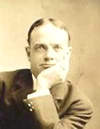
diggsy...your photo indicates you need more fresh air and sunshine.
the taupe jacket doesnt do much for you.

mind you im not wearing my glasses.
 
Yeah, that was pretty mixed around. "I prayed this prayer, now I'm saved" is finney doctrine. It certainly isn't Lordship Salvation.
Just how does Lordship salvation operate in the Light of grace?

For the cause of Christ
Roger
 
Mourner's Seat
A method originated during the 1730s or '40s, which was practically forgotten for about a hundred years. It is documented that in 1741 a minister named Eleazar Wheelock had utilized a technique called the Mourner's Seat. As far as one can tell, he would target sinners by having them sit in the front bench (pew). During the course of his sermon "salvation was looming over their heads." Afterwards, the sinners were typically quite open to counsel and exhortation. In fact, as it turns out they were susceptible to whatever prescription the preaching doctor gave to them. According to eyewitnesses, false conversions were multiplied. Charles Wesley had some experience with this practice, but it took nearly a hundred years for this tactic to take hold.

Cane Ridge
In 1801 there was a sensational revival in Cane Ridge, Kentucky that lasted for weeks. Allegedly, people barked, rolled over in the aisles and became delirious because there were long periods without food in the intense heat. It resulted in the extreme use and abuse of emotions as thousands left Kentucky with wild notions about rebirth. Today it is generally viewed as a mockery to Christianity.

coombs-j-v.jpg


The excesses in Cane Ridge produced expectations for preachers and those seeking religious experience. A Second Great Awakening, inferior to the first, was beginning in America. Preachers were enamored with the idea that they could cause (manipulate) people into conversion. One who witnessed such nineteenth century hysteria was J. V. Coombs who complained of the technique:

"The appeals, songs, prayers and the suggestion from the preacher drive many into the trance state. I can remember in my boyhood days seeing ten or twenty people laying unconscious upon the floor in the old country church. People called that conversion. Science knows it is mesmeric influence, self-hypnotism ... It is sad that Christianity is compelled to bear the folly of such movements." (J.V. Coombs, Religious Delusions, 92ff).

The Cane Ridge Meeting became the paradigm for revivalists for decades. A lawyer named Charles Finney came along a generation later to systemize the Cane Ridge experience through the use of Wheelock's Mourner's Seat and Scripture.

Charles Finney

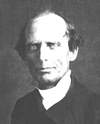
finney-charles.jpg


It wasn't until about 1835 that Charles Grandison Finney (1792-1875) emerged to champion the system utilized by Eleazar Wheelock. Shortly after his own conversion he left his law practice and would become a minister, a lecturer, a professor, and a traveling revivalist. He took the Mourner's Seat practice, which he called the Anxious Seat, and developed a theological system around it. Finney was straightforward about his purpose for this technique and wrote the following comment near the end of his life:

"The church has always felt it necessary to have something of this kind to answer this very purpose. In the days of the apostles, baptism answered this purpose. The gospel was preached to the people, and then all those who were willing to be on the side of Christ, were called out to be baptized. It held the place that the anxious seat does now as a public manifestation of their determination to be Christians"

Finney made many enemies because of this innovation. The Anxious Seat practice was considered to be a psychological technique that manipulated people to make a premature profession of faith. It was considered to be an emotional conversion influenced by some of the preachers' animal magnetism. Certainly it was a precursor to the techniques used by many twentieth century televangelists.
sunday-billy.jpg


In opposition to Finney's movement, John Nevin, a Protestant minister, wrote a book called The Anxious Bench. He intended to protect the denominations from this novel deviation. He called Finney's New Measures "heresy", a "Babel of extravagance", "fanaticism", and "quackery". He also said, "With a whirlwind in full view, we may be exhorted reasonably to consider and stand back from its destructive path." It turns out that Nevin was somewhat prophetic. The system that Finney admitted had replaced biblical baptism, is the vertebrae for the popular plan of salvation that was made normative in the twentieth century by the three Bills --- Billy Sunday, Billy Graham and Bill Bright.

Dwight Moody and R. A. Torrey

moody-dwight.jpg


However, it wasn't until the end of Finney's life that it became evident to everyone and himself that the Anxious Bench approach led to a high fallout rate. By the 1860s Dwight Moody (1837-1899) was the new apostle in American evangelicalism. He took Finney's system and modified it. Instead of calling for a public decision, which tended to be a response under pressure, he asked people to join him and his trained counselors in a room called the Inquiry Room. Though Moody's approach avoided some of the errors encountered in Finneyism, it was still a derivative or stepchild of the Anxious Bench system.

In the Inquiry Room the counselors asked the possible convert some questions, taught him from Scripture and then prayed with him. The idea that prayer was at the end of the process had been loosely associated with conversion in the 1700s. By the late 1800s it was standard technique for 'receiving Christ' as Moody's influence spread across both the United States and the United Kingdom. This was where a systematic Sinner's Prayer began, but was not called as such until the time of Billy Sunday.

- Steven Francis Staten,"The Sinner's Prayer:' Modern apostasy and false teaching that prevents men from being saved"
The Sinner's Prayer: Modern apostasy and false teaching that prevents men from being saved.

 
  • Like
Reactions: HeRoseFromTheDead
.......the spirit working through the gospel that one hears that brings (leads, carries) one to that enlightenment, and THEN to a profession of faith and baptism. Let those who have ears to hear, then hear ...

are any of these NOT the Spirit working:confused:
should they be considered some the Spirits work and others our works:confused:

no matter when you claim regeneration - the new man will do; confess; follow.
right:confused:

this is all the Spirits working.

a false conversion can involve any of the above; some kind profession; desiring and submitting to baptism; knowledge of what the bible says. the bible itself tells us some people will even claim to perform miracles, and do many mighty works in His Name.
 
Just how does Lordship salvation operate in the Light of grace?

For the cause of Christ
Roger

the whole Lordship thing needs a new name, due to the abuse and distortion of it by recent persons (who were actually part of the Neo-Pentecostal Movement).

Roger, as a dispensationalist, this might help you:

...

The non-Lordship teaching is just the tip of a theological iceberg. It is merely a small child of the warped, twisted theological system of Dispensationalism.


I did not find my way out of Dispensationalism easily. It took time and tears and cost me fellowship with some genuine, committed Christian friends. Some of them thought that I was departing from the faith or going liberal. The inward heart struggle to embrace the historic Christian faith involved not only intellectual conflict but also emotional struggle. The many changes were not made in haste, anger, passion, or ecstasy. It did not happen on a weekend. I spent the first ten years of my Christian life immersed in Dispensationalism. I wore out three Scofield Bibles and the fourth was falling apart. I heard Lewis Sperry Chafer in person. The only systematic theology I studied was Dr. Chafer's eight-volume set.


The dispensationalists set up a false antithesis between law and grace. Of course when we are talking about how a person is justified there is real antithesis, and every Christian should recognize this. The error of Dispensationalism in this connection is two-fold. First of all, it applies this sharp antithesis to the successive dispensations and interprets the Mosaic Law as exemplifying law in contrast with grace, and the gospel dispensation as exemplifying grace in contrast with law. Secondly, this antithesis becomes a governing principle which leads Dispensationalism into a false view of the law within the sphere of grace. This erroneous view appears very clearly in the Scofield Reference Bible (pp. 999f, 1002) and also in Chafer's Systematic Theology, (vol. 4, pp. 180-251).

Founders Ministries | Lordship, Non-Lordship and Dispensationalism
 
If you confess with your mouth that Jesus is Lord and believe in your heart that God raised him from the dead, you will be saved.

Twist not scripture lest ye be like satan.

[video=youtube;VqcTpDZ62ao]http://www.youtube.com/watch?v=VqcTpDZ62ao[/video]
 
Yeah, that was pretty mixed around. "I prayed this prayer, now I'm saved" is finney doctrine. It certainly isn't Lordship Salvation.

That is not what it is at all - which is of course the issue. Zone seems to have the general idea -
a false conversion can involve any of the above; some kind profession; desiring and submitting to baptism; knowledge of what the bible says. the bible itself tells us some people will even claim to perform miracles, and do many mighty works in His Name.

A Zombie:
* Can't be Dedicated
* Can't make a Profession

* Can't be Baptized
* Can't even go to Church

* MacArthur says you cannot have infant dedication - the ACT of doing so can be too easily mimicked, identified with and be a gateway to baby-making and churchianity

* Finney, like those above had the same problem with a proper doctrine which involves an action (be it dedication, baptism, church attendance ... or - the feast days for that matter). The fact is, human nature, particular sociopathic human nature, tends to want to please and be pleased. The group dynamic of a social gathering and and action with praise and worship is very powerful and appealing - tis why sporting events, music concerts, and entertainment are so powerful. It is why McReligion and Churchianity that do not have a regenerative spirit from hearing the full gospel message has no guidance and blindly follows.

If you confess with your mouth that Jesus is Lord and believe in your heart that God raised him from the dead, you will be saved.

* Spurgeon is sad to announce (see the opening of his remarks on Baptismal Regeneration in BradC's thread on same) that the mere act of being baptized is a deception for too many and cannot be seen as salvific, though not unimportant or unnecessary.

* Sunday go to church folks have created another idol of an act or action - McReligion and Churchianity. The preacher is not Lord and really can offer no "Lordship Salvation" as such - many preachers are coming out on this too.

Calov_justification+copy.jpg


Abraham Calovius (also Abraham Calov or Abraham Kalau; 16 April 1612 – 25 February 1686) was a Lutheran theologian, and was one of the champions of Lutheran orthodoxy in the 17th century.\
 
Funny...I did a Google search on this & discovered that Finney was a Freemason until he was saved, then denounced it.

Why I Left Freemasonry

By Charles G. Finney, D.D.


When I was converted to Christ I had belonged to the Masonic Lodge in Adams, New York, about four years. During the struggle of conviction of sin through which I passed, I do not recollect that the question of Freemasonry ever occurred to my mind.

But soon after my conversion, the evening came for attendance upon the Lodge, and I went. They, of course, were aware that I had become a Christian and the Master called upon me to open the Lodge with prayer. I did so, and poured out my heart to the Lord for blessings upon the Lodge. I observed that it created considerable excitement. The evening passed away, and at the close of the Lodge I was asked to pray again. I did so, and retired much depressed in spirit. I soon found that I was completely converted from Freemasonry to Christ, and that I could have no fellowship with any of the proceedings of the Lodge. Its oaths appeared to me to be monstrously profane and barbarous.

 
In Church History we studied Finney and the other evangelists of that era. Yes, Southern Baptists do get many of their wrong theologies from the man. Like altar calls and sinner's prayer. I never read a thing against the man, but just reading what he believed convinced me he was too off course to be any use to God, regardless of the so-called revivals he led.

His second blessing, which was when the "saint" achieved sinless perfection tipped me off to the error of his ways. I do think it was nice he was involved in social movements, but that has nothing to do with his horrible theology, which the western church has inherited in so many bad ways.

As the founder of Methodism, he developed a "method" whereby people could be saved, discipled and then perfected. Except that denies the need for the Holy Spirit, especially since God has his own ways, and they are not "methods" but rather the working of the Holy Spirit to transform our lives - a process that goes on till the day we die.

Very interesting to read some of the deeper theologies of this man. And glad to have moved from Arminianism to a belief in a sovereign God!
 
  • Like
Reactions: zone