Mourner's Seat
A method originated during the 1730s or '40s, which was practically forgotten for about a hundred years. It is documented that in 1741 a minister named Eleazar Wheelock had utilized a technique called the Mourner's Seat. As far as one can tell, he would target sinners by having them sit in the front bench (pew). During the course of his sermon "salvation was looming over their heads." Afterwards, the sinners were typically quite open to counsel and exhortation. In fact, as it turns out they were susceptible to whatever prescription the preaching doctor gave to them. According to eyewitnesses, false conversions were multiplied. Charles Wesley had some experience with this practice, but it took nearly a hundred years for this tactic to take hold.
Cane Ridge
In 1801 there was a sensational revival in Cane Ridge, Kentucky that lasted for weeks. Allegedly, people barked, rolled over in the aisles and became delirious because there were long periods without food in the intense heat. It resulted in the extreme use and abuse of emotions as thousands left Kentucky with wild notions about rebirth. Today it is generally viewed as a mockery to Christianity.
The excesses in Cane Ridge produced expectations for preachers and those seeking religious experience. A Second Great Awakening, inferior to the first, was beginning in America. Preachers were enamored with the idea that they could cause (manipulate) people into conversion. One who witnessed such nineteenth century hysteria was J. V. Coombs who complained of the technique:
"The appeals, songs, prayers and the suggestion from the preacher drive many into the trance state. I can remember in my boyhood days seeing ten or twenty people laying unconscious upon the floor in the old country church. People called that conversion. Science knows it is mesmeric influence, self-hypnotism ... It is sad that Christianity is compelled to bear the folly of such movements." (J.V. Coombs, Religious Delusions, 92ff).
The Cane Ridge Meeting became the paradigm for revivalists for decades. A lawyer named Charles Finney came along a generation later to systemize the Cane Ridge experience through the use of Wheelock's Mourner's Seat and Scripture.
Charles Finney
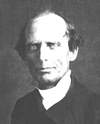
It wasn't until about 1835 that Charles Grandison Finney (1792-1875) emerged to champion the system utilized by Eleazar Wheelock. Shortly after his own conversion he left his law practice and would become a minister, a lecturer, a professor, and a traveling revivalist. He took the Mourner's Seat practice, which he called the Anxious Seat, and developed a theological system around it. Finney was straightforward about his purpose for this technique and wrote the following comment near the end of his life:
"The church has always felt it necessary to have something of this kind to answer this very purpose. In the days of the apostles, baptism answered this purpose. The gospel was preached to the people, and then all those who were willing to be on the side of Christ, were called out to be baptized. It held the place that the anxious seat does now as a public manifestation of their determination to be Christians"
Finney made many enemies because of this innovation. The Anxious Seat practice was considered to be a psychological technique that manipulated people to make a premature profession of faith. It was considered to be an emotional conversion influenced by some of the preachers' animal magnetism. Certainly it was a precursor to the techniques used by many twentieth century televangelists.
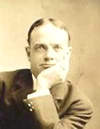
In opposition to Finney's movement, John Nevin, a Protestant minister, wrote a book called The Anxious Bench. He intended to protect the denominations from this novel deviation. He called Finney's New Measures "heresy", a "Babel of extravagance", "fanaticism", and "quackery". He also said, "With a whirlwind in full view, we may be exhorted reasonably to consider and stand back from its destructive path." It turns out that Nevin was somewhat prophetic. The system that Finney admitted had replaced biblical baptism, is the vertebrae for the popular plan of salvation that was made normative in the twentieth century by the three Bills --- Billy Sunday, Billy Graham and Bill Bright.
Dwight Moody and R. A. Torrey
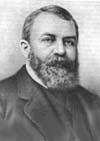
However, it wasn't until the end of Finney's life that it became evident to everyone and himself that the Anxious Bench approach led to a high fallout rate. By the 1860s Dwight Moody (1837-1899) was the new apostle in American evangelicalism. He took Finney's system and modified it. Instead of calling for a public decision, which tended to be a response under pressure, he asked people to join him and his trained counselors in a room called the Inquiry Room. Though Moody's approach avoided some of the errors encountered in Finneyism, it was still a derivative or stepchild of the Anxious Bench system.
In the Inquiry Room the counselors asked the possible convert some questions, taught him from Scripture and then prayed with him. The idea that prayer was at the end of the process had been loosely associated with conversion in the 1700s. By the late 1800s it was standard technique for 'receiving Christ' as Moody's influence spread across both the United States and the United Kingdom. This was where a systematic Sinner's Prayer began, but was not called as such until the time of Billy Sunday.
- Steven Francis Staten,"The Sinner's Prayer:' Modern apostasy and false teaching that prevents men from being saved"
The Sinner's Prayer: Modern apostasy and false teaching that prevents men from being saved.


 - it certainly was.